
What the day feels like
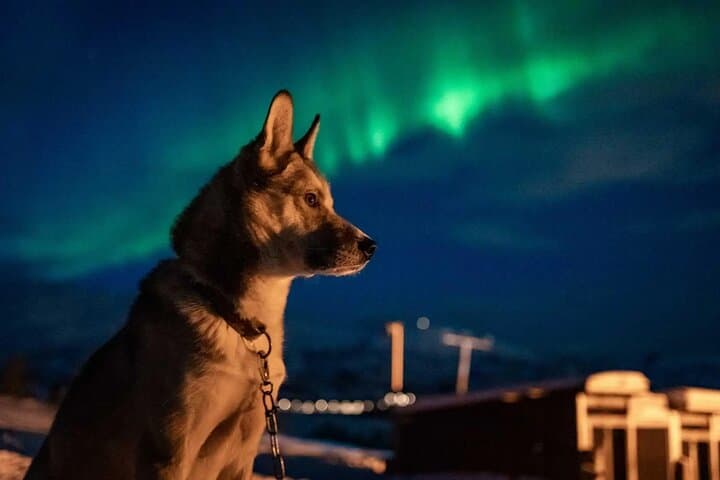
The dogs announce the night before the lights do. At first it’s a low, expectant hum—breath steam, a scrape of paw, a chain of quiet barks that tightens into a chorus as you cross the snow toward the kennel. A guide opens the gate and the yard surges forward: sleek bodies, bright eyes, tongues lolling with winter air. They circle you like a family greeting an outsider who has finally found the right address. Above, the sky waits. This is Tromsø in winter: a black dome pulled taut over the Arctic, and tonight it might split with green.
Northern Lights Husky Visit is a compact, deliberate kind of magic—planned for people who want to feel the narrative of Arctic winter without committing to a multi-day expedition. The Viator tour runs about 4¼ hours (255 minutes), a stretch of evening that includes husky time in the yard, and a stint at an Aurora camp where guides watch the sky from a rural vantage far from city glow. For about $192.53, you get an intimate encounter with the dogs, instruction from experienced handlers, hot drinks by a fire, and one of the best shows on Earth if the aurora decides to perform. Reviews average 4.63 from 154 guests—most praising the dogs and the professionalism of the guides.
Tromsø’s role in aurora lore and polar exploration is hefty. Founded as a trading post and fishing town, the city grew into a staging ground for Arctic science and indigenous Sámi culture; it sits under the auroral oval, the ring of activity where charged particles from the sun meet Earth’s magnetic field and paint the sky. The geology of the region—glacially carved fjords, granite bedrock, and broad coastal exposures—doesn’t create the lights but shapes the viewing experience, with dark ridgelines and frozen bays forming foregrounds for the curtains of green.
Huskies have their own history here: not the sled dogs of a single tradition, but a working lineage shaped by cold, travel, and human necessity. Meeting a dog in the yard is partly tourism and partly a continuation of that partnership—these animals are fed, trained, and socialized, and the handlers insist on respectful interaction: no sudden moves, no uninvited feeding. The visit blends wildlife and human culture—about animal care as much as spectacle.
Practically speaking: expect cold that bites at exposed skin even when you’re moving. Layers and a windproof shell change the experience from numb to memorable. The itinerary typically brings you out of Tromsø into nearby rural dark-sky territory—drive time can be 30–60 minutes depending on where the camp is located—then into the dog yard and out to an open vantage with fire and hot drinks. Guides will give a briefing about aurora basics: it’s a forecast-driven event, visible when solar activity aligns with clear skies and low light pollution. There are no guarantees, but the location and local expertise stack the odds in your favor.
If the lights come, they do it without permission: at first a gray smear, then a ripple, then a fold of neon. Your camera settings matter; so does knowing when to look up and when to listen—because the howl of the dogs under an aurora is as memorable as the sky itself.
Who this trip is for: travelers who want an accessible Arctic experience—no overnight camping or advanced winter skills required, but a readiness for cold conditions and some standing on uneven snow and ice. Families and first-time aurora chasers find it friendly; photographers who want long, carefully controlled exposures will appreciate the stable camp setup and guide assistance.
Booking tips and on-the-ground practicalities: confirm whether transportation from your Tromsø hotel is included (many operators offer pickup), check the group size (smaller groups mean more time with dogs), and review cancellation or transfer policies—this product lists free cancellation, which helps if weather forecasts look marginal. Bring a fully charged phone, but also a spare battery or power bank; cold drains lithium cells fast. Respect the dogs: handlers will direct how to pet, leash, and photograph them. Lastly, be flexible—aurora viewing is part science, part patience, part luck.
Beyond the visit: pair this evening with a daytime exploration—fjords, Tromsø’s Polar Museum, or a short snowshoe—and cap the night at one of the city’s warm, well-stocked breweries or a café serving reindeer stew or arctic char. The roundness of the evening—animals, land, sky, and heat—gives you a tidy, very Norwegian slice of the Arctic.
This is a tour that prioritizes presence. The dogs are immediate and eager; the aurora is distant and indifferent. Between the two, you stand very small and very alert, holding your gloves and your camera and watching lights older than human speech trace themselves across the polar night.
Trail wisdom
Small choices, better day.
Dress in layers
Start with a moisture-wicking base layer, add insulating mid-layers, and finish with a windproof, insulated shell—temps can plunge quickly at night.
Bring spare batteries
Cold drains batteries fast—carry an external battery pack and keep spares warmed inside your jacket.
Respect the dogs
Follow handlers’ instructions when approaching or photographing the huskies—no sudden moves or feeding.
Check pickup details
Confirm whether hotel transfer is included before arrival; meeting points and pickup times can vary by operator.
Local knowledge
Read the place, not just the route.
Watch for native species including Arctic fox, Sea eagles (white-tailed).
Keep an eye out for wildlife during the transition between areas and habitats. Respect distance guidelines.
Operators in the region emphasize responsible dog care and low-impact visitation—respect animal welfare guidelines and follow leave-no-trace principles around campfires and shoreline areas.
Follow the guide's instructions on size limits, ethical handling, and leave-no-trace practices.
Drive to nearby dark-sky ridges for private aurora views. Visit Tromsø’s Polar Museum during the day for context on Arctic exploration
Locally recommended viewpoints and quiet spots known best to local operators.
Tromsø evolved from a fishing and trading hub into a center for Arctic research and exploration; its location under the auroral oval makes it a long-standing aurora viewing gateway.
Maritime roots and regional tradition shape the waterways and working coasts.
Seasonal guide
Four versions of the same landscape.
Spring
Best forLate-season aurora viewing · Fewer tourists · Milder night temps
ChallengesVariable snow cover · Unpredictable daylight hours
Spring brings slightly warmer nights and longer windows for daylight activities, but the aurora season is winding down—good forecasts still produce shows.
Summer
Best forMidnight sun experiences · Dog-yard visits (without aurora)
ChallengesNo aurora during midnight sun · Limited winter operations
Summer offers long days and different local activities, but the Northern Lights season ends—this specific aurora-focused visit is typically offered in colder months.
Fall
Best forEarly aurora season · Crisp nights and fewer crowds
ChallengesCooling temps and early snowfall · Variable road conditions
Fall ushers in the aurora season and often offers clear skies; come prepared for rapidly changing weather and shorter daylight.
Winter
Best forPrime Northern Lights viewing · Snowy landscapes and dog activities · Arctic photography
ChallengesVery cold temps · Limited daylight for daytime sightseeing
Winter is peak time for aurora tours and husky experiences—expect cold conditions but the highest odds for seeing the lights.
Operator details
What the booking data adds.
Included
- ✓Clothes
- ✓Transport (25 minutes one way)
- ✓Dinner
- ✓Hotel pickup and drop-off only at Radisson Blu Hotel
- ✓Local taxes
- ✓Coffee and/or Tea
- ✓Guide
Not included
- —Gratuities
- —Dog Sledding
- —Northern Lights Chase
Good to know
- ✓Wheelchair accessible
- ✓Infants and small children can ride in a pram or stroller
- ✓Suitable for all physical fitness levels
- ✓Vegetarian option is available, please advise at time of booking if required
- ✓Children must be accompanied by an adult
- ✓If you are traveling with small children/infants and require a guaranteed car seat, you must bring your own or arrange for your own transportation. We cannot guarantee the availability of child seats in our transport.
- ✓The tour is sold as a complete package with all services included. Using your own transport is optional, but the price remains the same. Activity cannot be guaranteed in case of late arrival.
- ✓Minimum to run the tour is 2 persons
Pack with intention
What to bring.
Good to know
Common questions.
The tour runs approximately 255 minutes (about 4 hours and 15 minutes), usually starting in the evening to maximize aurora-viewing time.
Plan the edges
The details that make the day easier.
Tromsø (about 69.65°N) sits well above the Arctic Circle and often falls directly under the auroral oval, which is why it’s one of the world’s most dependable places for Northern Lights sightings.
After the tour head to Tromsø’s Ølhallen—the city’s oldest pub—for local beers and reindeer or fish dishes; for a quieter nightcap, try an arctic char or king crab meal at one of the waterfront restaurants to round out your polar evening.
- Closest airport
- Tromsø Airport (TOS)
- Typical drive to campsite
- 30–60 minutes from Tromsø city center
- Cell service
- generally available but can be patchy at remote camps
- Permits
- none required for this commercial tour; confirm transfer options before booking
Join operators who prioritize animal welfare and minimize light and noise pollution; pack out all trash, avoid using flash close to wildlife, and follow handlers’ directions to minimize stress on the dogs.
Explore by topic
Follow the threads.
Keep exploring
Make the story part of the trip.
Set out from Bass Harbor for a private, customizable day on Blue Hill Bay — lighthouses, puffins, seals, and the chance to feel Acadia from the water. Small groups, local captains, unforgettable views.
In four hours you can move from shaded canyon ferns to wind-scoured coastal ridgelines, guided by someone who knows where the light—and the hidden views—live. This private half-day hike on the Monterey Peninsula or Big Sur is compact, curated, and perfect for travelers who want depth without a multiday commitment.
 Related story
Beneath a sky of shifting light, Skaftafell’s ice reads like a map of time. This three-hour guided glacier hike mixes technical instruction with geology and culture: compact, safe, and unforgettable.