
What the day feels like
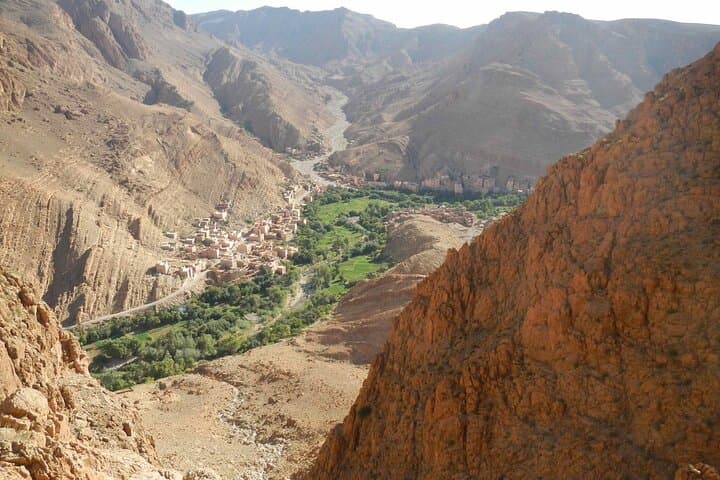
You step from the sun into a throat of stone and for a few hours the world narrows to the sound of water and the cool hush under vertical cliffs. Limestone walls rise like pages of a folded map—gray and orange, streaked with mineral veins—and the Todra River threads a green ribbon of palm, fig and tamarisk along the canyon floor. The air smells faintly of dust, citrus leaves and the mint tea simmering in villages beyond the bend. This is the promise of a half-day in the Todra Gorges: a short, concentrated encounter with the High Atlas where landscape and local life press close.
The Todra Gorges sit at the eastern edge of Morocco’s High Atlas, where tectonic uplift met water and time to carve a canyon that alternates between wide, palm-edged meadows and narrow, cathedral-like clefts. Amazigh (Berber) families have farmed the sun-drenched terraces and irrigated gardens along the Todra for centuries; trading routes threaded through this valley on their way between the desert and mountain passes. Today the route you’ll walk links riverside gardens, a few small kasbahs and viewpoints that look out over a panorama of terraced orchards and the distant jagged skyline of the High Atlas.
Geologically, Todra is limestone and the canyon’s drama comes from the river’s patient cutting combined with the uplift of the Atlas. The gorge compresses and releases—wide where tributaries feed broad gardens, impossibly tight where water found a weakness and gouged walls up to 300 meters high. Those sheer cliffs are what drew climbers and photographers for decades; the walking, by contrast, is more democratic: riverbeds, shaded mule tracks and loose scree that invite slow observation.
Culturally, a half-day here is also a short lesson in Amazigh life. The palm groves are working landscapes—date palms, fruit trees and small irrigated plots fed by traditional khettaras and channels. In Tinghir (sometimes spelled Tinerhir), morning souks swell with produce, textiles and the low-voiced barter of traders who still know the routes up into the mountains. When you finish your hike, you’ll want to sit with a mint tea and a tagine; this landscape tastes like the people who tend it.
Practicalities matter: this is a four-hour activity—long enough to get into the groove of the canyon and return before afternoon heat peaks, but short enough to slot into a larger Morocco itinerary. Expect a mix of dusty tracks, riverbed walking and a few short scrambles over rocks and low boulders; footwear with good traction and ankle support is strongly recommended. The route is flexible—the operator may lead you through wider, shaded sections for a relaxed stroll or push higher on nearby trails for a viewpoint above the gorge. Distances vary by route selection, but most half-day options cover roughly 3–6 miles (5–10 km) with modest elevation change; ask your guide for the exact route and elevation before you go.
Timing is everything. Start early when the light is soft and the gorge still cool; late afternoon can be excellent for photography when the cliffs warm to honey and orange. In summer, avoid midday heat—there’s shade in places but the open terraces bake quickly. In winter the gorge is quiet and crisp; bring layers.
Guides are strongly recommended. Local guides provide context—telling the stories of the kasbahs, showing where to find hidden viewpoints and negotiating the best crossings when water is higher. They also connect you to the community; many hikes begin or end at a family-run guesthouse where you can learn about irrigation practices or sample home-made flatbread.
Be prepared for simple facilities: water should be carried in ample amounts, and a small first-aid kit goes a long way. The trail surface changes often—mud in winter, loose scree in dry months—so expect transitions and give yourself extra time for tricky sections. Respect private fields and the slow pace of village life; stick to established paths and ask before photographing people.
Why do this short hike instead of a longer trek? Because Todra condenses the Atlas experience into a compact, sensory-rich window. In four hours you’ll move from cultivated green to exposed stone, meet families in villages, and get sweeping views without committing to multi-day logistics. It’s an excellent primer for anyone with limited time in Morocco or for groups with mixed stamina.
Safety and sustainability are part of the visit. The canyon is spectacular but not invincible—rockfall happens, so keep an eye overhead in the narrowest sections, and check local advice during or after heavy rains. Pack out what you bring in, support local businesses, and consider tipping guides who share their stories and keep the routes safe and open.
At the trail’s finish, plan on a slow return to Tinghir: a strong mint tea, a tagine or a small café where local farmers trade news. The hike leaves you with a clear feeling of place—the interplay of water and stone, of people and their land—and an easy sense that you’ve seen something both dramatic and lived-in.
Whether you’re a first-time visitor to Morocco or a repeat traveler chasing new slices of the Atlas, a half-day in Todra is a concentrated, doable way to connect with geology, culture and quiet adventure. Come with curiosity, a steady pair of shoes and respect for the people who cultivate the canyon’s narrow edge, and Todra will repay you with shade, silence and a few moments that feel anything but ordinary.
Trail wisdom
Small choices, better day.
Start Early
Begin in the morning to enjoy cool shade and soft light before the canyon heats up; many operators schedule half-day hikes for this reason.
Bring Plenty of Water
Carry at least 1.5–2 liters; the route has few refilling points and temperatures can spike quickly in exposed sections.
Wear Grippy Shoes
Expect riverbed walking and loose scree—trail runners or low-cut boots with solid tread work best.
Hire a Local Guide
A guide enhances safety and cultural insight, and earnings help local families maintain trails and guesthouses.
Local knowledge
Read the place, not just the route.
Watch for native species including Barbary sheep (Aoudad), Griffon vulture or Bonelli’s eagle.
Keep an eye out for wildlife during the transition between areas and habitats. Respect distance guidelines.
The gorge’s palm groves and irrigated gardens are fragile—stay on paths, avoid trampling irrigation channels and support local businesses that practice sustainable agriculture.
Follow the guide's instructions on size limits, ethical handling, and leave-no-trace practices.
A small viewpoint above the gorge reached by a short scramble that offers sweeping terrace views. A family-run guesthouse in Tinghir where you can try home-made flatbread and dates
Locally recommended viewpoints and quiet spots known best to local operators.
The Todra valley has long been inhabited by Amazigh (Berber) communities and served as a corridor between desert trade routes and the High Atlas valleys.
Maritime roots and regional tradition shape the waterways and working coasts.
Seasonal guide
Four versions of the same landscape.
Spring
Best forWildflower displays · Pleasant temperatures · Fuller river flow
ChallengesOccasional rain · Busier weekends
Spring is often the most comfortable season—cool mornings, flowered terraces and a lively river that makes the canyon greener.
Summer
Best forLong daylight hours · Cliff-face photography at golden hour
ChallengesHigh midday heat · Limited shade in open sections
Summer brings heat; schedule hikes for early morning or late afternoon and avoid the midday sun.
Fall
Best forStable weather · Crisp air for clear views · Harvest-time souks
ChallengesCooler evenings · Shortening daylight
Fall offers clear skies and comfortable hiking—ideal for combining the gorge with local markets in Tinghir.
Winter
Best forQuiet trails · Dramatic light on cliffs
ChallengesCold mornings · Potential wet or muddy footing
Winter hikes are quiet and crisp; bring warm layers and waterproof footwear for occasional river swell.
Operator details
What the booking data adds.
Included
- ✓Tea
Not included
- —Lunch
Good to know
- ✓Service animals allowed
- ✓Public transportation options are available nearby
- ✓Not recommended for travelers with spinal injuries
- ✓Not recommended for pregnant travelers
- ✓Not recommended for travelers with poor cardiovascular health
- ✓Travelers should have at least a moderate level of physical fitness
Pack with intention
What to bring.
Good to know
Common questions.
The organized half-day experience is about four hours; exact distance varies by route but many operators cover 5–10 km depending on chosen viewpoints.
Plan the edges
The details that make the day easier.
The cliffs of Todra Gorge reach heights of up to about 300 meters in places, and the valley’s palm groves are irrigated with traditional local channels that have been used for generations.
After your hike, head back to Tinghir for mint tea and a tagine; buy handwoven Amazigh textiles in the souk or sample fresh dates from the valley’s palm groves—guesthouses often serve home-cooked meals that give context to the landscape you walked through.
- Closest airports
- Ouarzazate or Errachidia (regional) — Marrakech is the main international hub (6–8 hour drive). Driving from Tinghir to the trailhead: typically under 20 minutes. Cell service: patchy in the gorge, reliable in Tinghir. Permits: none required for day hikes, but respect private agricultural areas.
Todra’s oasis habitats are sensitive—stay on designated paths, avoid disturbing irrigation channels, pack out all waste, and hire local guides and services to support the valley’s economy.
Explore by topic
Follow the threads.
Keep exploring
Make the story part of the trip.
Set out from Bass Harbor for a private, customizable day on Blue Hill Bay — lighthouses, puffins, seals, and the chance to feel Acadia from the water. Small groups, local captains, unforgettable views.
In four hours you can move from shaded canyon ferns to wind-scoured coastal ridgelines, guided by someone who knows where the light—and the hidden views—live. This private half-day hike on the Monterey Peninsula or Big Sur is compact, curated, and perfect for travelers who want depth without a multiday commitment.
 Related story
Beneath a sky of shifting light, Skaftafell’s ice reads like a map of time. This three-hour guided glacier hike mixes technical instruction with geology and culture: compact, safe, and unforgettable.