
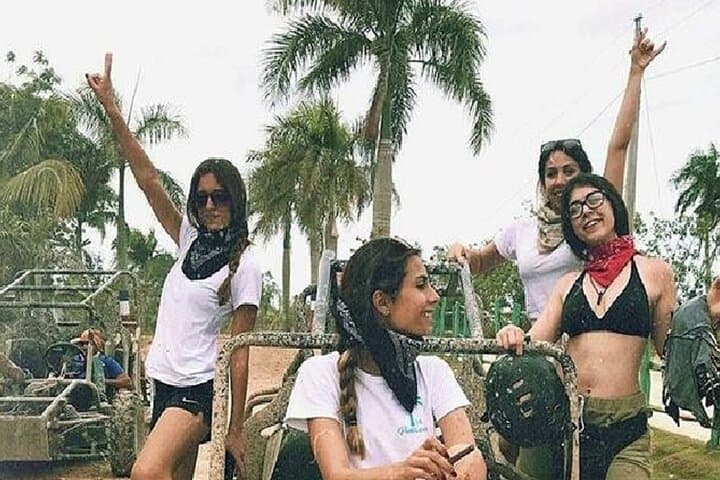
What the day feels like
The first churn of dirt hits your face like a dare. Tires throw arcs of sunlit mud that glitter for a heartbeat before drying into the fine Dominican dust that clings to your hair and your grin. Ahead, the narrow country lane narrows again, framed by hedgerows of sugarcane and the occasional stand of coconut palms, and you can feel the landscape change with every gear shift—from cultivated farmland to a whispering cave hollow where a cool subterranean pool waits—and then, suddenly, the ocean. Macao Beach appears as a wash of amber sand and palm silhouettes, a payoff that makes the ride worth every splattered vestige of the route.
This is a family-friendly off-road loop with Macao Buggies, the sort of excursion that stitches together the Dominican Republic’s layered geography in three sharp chapters: plantation, cave, shore. It’s not a slow travel sermon; it’s kinetic, tactile and short enough to be a fulcrum for a single afternoon or a full three-hour affair depending on what you want out of it. Kids and adults alike trade civility for chaos—kids shriek with delight when the buggy hits a deep rut, adults laugh because those ruts are the reason you can’t help but grin.
Historically, the stretch of land that funnels into Macao Beach was agricultural—cacao, coffee and tobacco once anchored local livelihoods. That heritage is still visible in the plantation stop: a hands-on primer that turns beans and leaves into stories. Mamajuana—an herbal, rum-infused tonic—gets a cultural slot, and for many travelers it’s the most honest souvenir: potent, local and storied.
Geologically, you move from relatively flat coastal plains into the limestone country that yields small caves and subterranean streams. Those caves are modest, not grand caverns, but they offer a welcome contrast to the sun when you step into that cool, echoing air. The cave’s shallow river dares you to jump in; in summer the water feels like a reset button. From there, the ride arcs toward the shore—an abrupt transition where farmland gives way to tamarind-scented breeze and the Atlantic’s blue rim.
Culture here is unabashedly Caribbean: food stalls grilling fish and plantains sit a short walk from the sand, and the cadence of conversation blends Spanish with tourist-English. You’ll also encounter a practical, everyday Dominican rhythm—fishermen mending nets, kids sprinting along the shoreline, and palm-thatched stands selling fresh coconut water. The operators at Macao Buggies point to these touchstones without gloss: the route is meant to be a little rough, a little real.
Why take this over a typical resort day? Because it reconnects you with place. The bumpy lanes and the mud pools are not just thrills; they are the connective tissue between Punta Cana’s tourist face and its working, coastal interior. You feel the geology under your wheels and the culinary history on your tongue during the plantation stop.
Practical matters are straightforward. The trip runs from about 30 minutes to three hours depending on the package and stops; expect light walking, one swim in a shallow cave pool, and time on the beach. The trail is uneven and sometimes rutted—closed-toe shoes are advised—yet physical fitness demands are low: it’s more sensory than strenuous. Bring sunscreen, a change of clothes or a towel for the cave swim, and a small dry bag for your phone.
Safety is pragmatic: rides are led by experienced guides who know the lanes and the weather. If you’re prone to motion sickness, sit in the middle rather than at the back and take motion-sickness remedies beforehand. For families, the operator emphasizes seat belts and supervised swimming.
Timing matters. Early morning or late afternoon runs avoid the midday heat and deliver better light for photos—plus the beach is quieter. The ride is wetter after rain and muddier (which is part of the point), and the cave can be cooler and more tactile when the stream’s flow increases.
For photographers: seal your gear or bring a waterproof case; the most compelling shots come from action—splash arcs, mud-streaked faces, and the moment the trees open onto Macao’s sand. A wide-angle lens for the beach and a fast shutter for the buggy action are ideal.
If you want to stretch an afternoon into a day, pair the buggy run with a surf lesson at Macao (it’s one of Punta Cana’s better beach breaks) or linger on the shore with a local lunch—grilled fish, fried yucca and a cold Presidente. Leave the single-use plastics behind; dunes and coral habitats are fragile and visible from the shore. Walking the sand after the ride, you’ll understand why this stretch is protected by local stewardship efforts and why operators emphasize low-impact routes.
In short: this is a short, salty, fun run that distills the Dominican coast into three energetic chapters. It’s suitable for families and small groups who want a tactile encounter with countryside and coast, and it rewards travelers who like motion, local tastes and a little splash of unpredictability. Ride hard, respect the landscape, and plan a slow meal by the sea afterward—Macao’s payoff is as much in the story you’ll tell as it is in the sand between your toes.
Trail wisdom
Small choices, better day.
Bring a Dry Bag
Protect your phone and wallet—there’s a cave swim and plenty of spray on the buggy route.
Choose Morning or Late-Afternoon Runs
Avoid the mid-day sun for cooler cave swims and softer beach light for photos.
Wear Closed-Toe Shoes
The route can be rutted and muddy; secure footwear prevents slips and keeps toes safe.
Motion-Sickness Precautions
If you get queasy, take antiemetic medicine beforehand and sit centrally in the buggy.
Local knowledge
Read the place, not just the route.
Watch for native species including Iguanas, Brown pelicans.
Keep an eye out for wildlife during the transition between areas and habitats. Respect distance guidelines.
Stick to designated paths to protect coastal dunes and marine life; avoid taking shells or disturbing coral or cave formations.
Follow the guide's instructions on size limits, ethical handling, and leave-no-trace practices.
The small plantation tasting area where you can sample cacao and Mamajuana. A tucked-away fisherman’s hut near the beach that sells the day’s catch grilled
Locally recommended viewpoints and quiet spots known best to local operators.
The Macao corridor transitioned from small-scale cacao and tobacco agriculture to coastal tourism, but local plantations preserve agro-cultural traditions like Mamajuana and cacao processing.
Maritime roots and regional tradition shape the waterways and working coasts.
Seasonal guide
Four versions of the same landscape.
Spring
Best forModerate temperatures · Fewer crowds · Clear beach days
ChallengesOccasional wind · Shorter rain bursts
Spring brings warm, stable weather—good for a full run with beach time and calmer sea conditions.
Summer
Best forLush countryside · Warm water cave swims · Long daylight hours
ChallengesHigher humidity · Afternoon showers · Hot midday sun
Summer makes the countryside green and the cave pool especially refreshing, but plan around afternoon storms.
Fall
Best forQuieter beaches · Good surf windows · Photography with dramatic light
ChallengesTropical storm season risk · More rain some weeks
Early fall can be great for surf and solitude; watch weather forecasts for storm windows.
Winter
Best forDry weather · Lower humidity · Peak beach conditions
ChallengesPeak tourist season crowds · Higher prices
Winter is the most reliably dry and comfortable season—expect busy beaches and book ahead.
Operator details
What the booking data adds.
Included
- ✓Helmet
- ✓Round-trip transportation between the Hotels and the buggy ranch.
- ✓Shower at the Buggy Ranch
- ✓Family buggy, regular buggy, ATV or Terracross.
Not included
- —Photos
- —Tips for the guide
- —Souvenirs
- —Bandanna
- —Sun Blocker Cream.
Good to know
- ✓Not recommended for travelers with spinal injuries
- ✓Not recommended for pregnant travelers
- ✓Not recommended for travelers with poor cardiovascular health
- ✓Travelers should have at least a moderate level of physical fitness
- ✓Refunds will not be issued if pick up transportation is missed due to lateness or no show at the confirmed pick up time.
Pack with intention
What to bring.
Good to know
Common questions.
Yes—operators market it as family-friendly with supervised stops, seat belts in buggies, and an easy cave swim, but check age and height restrictions when booking.
Plan the edges
The details that make the day easier.
Playa Macao is one of the Dominican Republic’s more consistent beach breaks and is popular with local and visiting surfers.
After the ride, head to a beachfront palapa for grilled fish and yucca or try a Mamajuana tasting at the plantation stop—locals often pair a cold Presidente with fried plantains and fresh catch.
- Closest airport
- Punta Cana International Airport (PUJ); Driving distance from airport: ~25–40 minutes depending on traffic; Cell service: good near the beach, intermittent in remote lanes and the cave; Permits: none required for tourists—operator provides necessary safety equipment.
This route passes dune and coastal habitats—pack out trash, use reef-safe sunscreen, and avoid walking on vegetated dunes to minimize erosion and protect nesting areas.
Explore by topic
Follow the threads.
Keep exploring
Make the story part of the trip.
Set out from Bass Harbor for a private, customizable day on Blue Hill Bay — lighthouses, puffins, seals, and the chance to feel Acadia from the water. Small groups, local captains, unforgettable views.
In four hours you can move from shaded canyon ferns to wind-scoured coastal ridgelines, guided by someone who knows where the light—and the hidden views—live. This private half-day hike on the Monterey Peninsula or Big Sur is compact, curated, and perfect for travelers who want depth without a multiday commitment.
 Related story
Beneath a sky of shifting light, Skaftafell’s ice reads like a map of time. This three-hour guided glacier hike mixes technical instruction with geology and culture: compact, safe, and unforgettable.