
What the day feels like
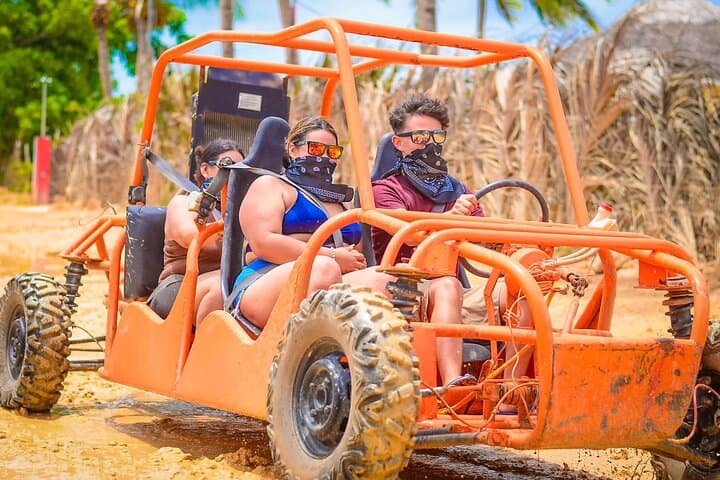
The engine kicks and the world tilts—a grin is the only natural response. You’re not on a beach, though the Caribbean blue is never far; you’re inside a low-slung buggy, tires throwing up herds of dust and clods of mud as the guide guns the throttle and the trail narrows into a ribbon of sugarcane, coffee palms and scrub. In Punta Cana that contrast is part of the point: tropical coastline and five-star resorts sit a short drive from a rural interior where the land still remembers the rhythms of planting, harvesting, and the sudden joy of getting delightfully filthy.
This 4‑hour, 4x4 buggy tour—pickup included—compresses that contrast into a single, fast-moving loop. Most of the time you’re in motion: threaded along sodden tracks after rain, punching through mud pits that spray the roll cage like confetti, and ripping past a coffee plantation where the strong scent of drying beans mixes with exhaust and sea salt carried inland on a warm breeze. The activity is a scramble between controlled speed and the landscape’s insistence on reminding you who’s in charge: a stream dares you to cross it, a washboard section rattles your fillings, and a stand of mature palms leans as if to watch you pass.
The setting—the eastern tip of the Dominican Republic in La Altagracia province—has a recent but intentional history. Punta Cana as a tourist destination was developed starting in the late 1960s and 1970s, when the region’s low-slung coastal lands and generous beaches were transformed from agricultural terrain into resorts and infrastructure, including Punta Cana International Airport (PUJ). What that development didn’t entirely erase was the character of inland roads and plantations. Sugarcane and small family coffee plots still punctuate the landscape; the buggy route threads those working lands and offers a glimpse of the Dominican countryside that vacation postcards rarely show.
Geologically the area is gentle—no alpine climbs here—but the terrain’s personality comes from hydrology and soil. Limestone bedrock and coastal alluvial plains create routes that turn from dust to glue after a thunderstorm, so timing matters. Culturally, the tour brushes past communities centered on small-scale agriculture and roadside commerce; guides often stop at family-run stands to buy fresh mango or to show how local coffee is processed, creating moments that feel less like sightseeing and more like short, kinetic conversations with place.
Why do travelers keep signing up? For some it’s the simple joy of speed on a rough track—an active, accessible adrenaline hit. For others it’s access: the buggy opens up private and rural corridors that are otherwise hard to reach from resort zones. Families and small groups like the format because it’s short but intense, and the operator often includes a pickup from hotels in the Bávaro–Punta Cana corridor, making it a tidy half-day escape.
Practical reality mixes with the theater. The excursion typically runs four hours total, roughly two to three hours in the buggy, with safety briefings and short stops woven in. Expect to get wet and muddy; clothing choices should lean toward quick-dry fabrics and closed-toe shoes. Drivers must pay attention—the vehicles are forgiving but the trail isn’t—and passengers should be ready for dust, splatter, and sudden changes in motion. Operators usually supply helmets and goggles; bring a bandana, sunglasses, and a small dry bag for valuables.
Safety and sustainability go hand-in-hand here. Stick to operator-provided machines and marked routes—off-roading on private fields or sensitive coastal wetlands can accelerate erosion and disturb habitats. Choose companies that respect landowners, compensate for access, and follow sensible waste practices. The best outfits partner with local communities for small stops and explain cultural context rather than staging artificial photo ops.
If you’re planning the trip: schedule it for the morning to avoid the hottest part of the day and to catch firmer ground before afternoon showers soften the tracks. Take a compact camera, but keep it stowed during the muddiest sections; a phone in a waterproof case and an operator’s hand when needed will do the trick. Don’t expect long hikes or technical climbing—this is about motion and experience, not altitude.
By the time you return to the resort pickup point, the buggy’s fingerprints are on your clothes and the grin is stubborn. There’s a neat satisfaction to being briefly, gloriously messy in a place synonymous with sun-on-white-sand serenity. You’ll have seen the other Punta Cana—the one where coffee and sugarcane still matter—and in doing so, come away with an impression that complements the beaches: a place where the land pushes back, and where the best way to meet it is at speed.
Trail wisdom
Small choices, better day.
Morning Runs Are Firmer
Book a morning start to avoid afternoon showers and to take advantage of firmer trails.
Dress for Mud
Wear quick-dry clothes and closed-toe shoes—mud and spray are part of the route.
Protect Your Gear
Use a small dry bag or waterproof phone case; goggles are often provided but sunglasses plus a bandana help.
Respect Private Land
Stay on the operator’s route and avoid wandering onto farmer’s fields at stops.
Local knowledge
Read the place, not just the route.
Watch for native species including Iguanas, Tropical shore and inland birds (eg, kingfishers and herons).
Keep an eye out for wildlife during the transition between areas and habitats. Respect distance guidelines.
Choose operators who stay on established trails and work with landowners; avoid driving on wetlands or collecting plants to reduce erosion and habitat loss.
Follow the guide's instructions on size limits, ethical handling, and leave-no-trace practices.
Short stop at a family-run coffee processing demonstration. Backroad viewpoint over sugarcane fields near Verón
Locally recommended viewpoints and quiet spots known best to local operators.
Punta Cana’s modern tourism development began in the late 1960s and 1970s; the region’s airport and resort build-out transformed former agricultural lands into a major Caribbean destination.
Maritime roots and regional tradition shape the waterways and working coasts.
Seasonal guide
Four versions of the same landscape.
Spring
Best forFirm tracks before heavy rains · Wildflowers along rural roads
ChallengesOccasional showers · Variable mud after rains
Spring offers pleasant temperatures and firmer ground early in the season, but watch for localized rains that can transform tracks into sticky mud.
Summer
Best forLush green scenery · Warm water crossings
ChallengesHigher humidity · Afternoon thunderstorms
Summer brings vivid vegetation and warm weather; schedule tours early to avoid daily downpours.
Fall
Best forFewer crowds · Comfortable temperatures
ChallengesResidual wet ground from hurricane season · Possible route changes
Fall can be quieter for visitors but keep an eye on weather updates—late tropical systems can impact access.
Winter
Best forDry trails · Peak tourist season conveniences
ChallengesHigher demand for tours · Slightly cooler mornings
Winter is generally the most reliable season for dry, stable trails and consistent mornings—book in advance during peak travel windows.
Operator details
What the booking data adds.
Included
- ✓Air-conditioned vehicle
Good to know
- ✓Not recommended for travelers with spinal injuries
- ✓Not recommended for pregnant travelers
- ✓Not recommended for travelers with poor cardiovascular health
- ✓Suitable for all physical fitness levels
Pack with intention
What to bring.
Good to know
Common questions.
Most operators allow licensed drivers to steer, but check in advance; the tour can usually be enjoyed as a passenger without driving.
Plan the edges
The details that make the day easier.
Punta Cana International Airport (PUJ) opened in 1983 and is now one of the busiest airports in the Caribbean, contributing to the region’s rapid tourism growth.
After the ride, head to Bávaro for fresh ceviche or local grilled fish at a seaside paladar, or stop at a roadside stand for ripe mango and Dominican coffee—small food stalls and family-run eateries are where the countryside’s flavor shows up most honestly.
- Closest airport
- Punta Cana International Airport (PUJ)
- Typical driving time from resort corridor
- 20–45 minutes
- Cell service
- good near towns, patchy on some inland tracks
- Permits
- none required for tourists; operator access arranged through private land agreements
Stick to established routes, avoid driving on sensitive wetlands, and support operators who compensate landowners and minimize waste—off-roading can damage habitats if not responsibly managed.
Explore by topic
Follow the threads.
Keep exploring
Make the story part of the trip.
Set out from Bass Harbor for a private, customizable day on Blue Hill Bay — lighthouses, puffins, seals, and the chance to feel Acadia from the water. Small groups, local captains, unforgettable views.
In four hours you can move from shaded canyon ferns to wind-scoured coastal ridgelines, guided by someone who knows where the light—and the hidden views—live. This private half-day hike on the Monterey Peninsula or Big Sur is compact, curated, and perfect for travelers who want depth without a multiday commitment.
 Related story
Beneath a sky of shifting light, Skaftafell’s ice reads like a map of time. This three-hour guided glacier hike mixes technical instruction with geology and culture: compact, safe, and unforgettable.