
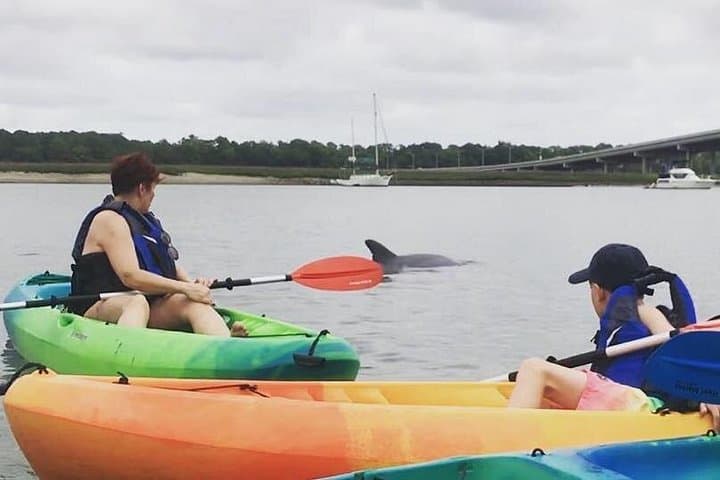
What the day feels like
The sun lifts off the Atlantic in pale gold, and Broad Creek answers with glass—an expanse of tide-slicked water threaded with marsh grass and oyster reefs. Your paddle snaps a clean arc, and the wake fans the reflection of live oaks leaning toward the inlet. This is the kind of morning that makes you slow down by force; the water itself seems to breathe, inviting you into the rhythms of the Lowcountry.
On the <a href="https://app.advcollective.com/local-experts/hilton-head-morning-kayak-eco-tour-broad-creek-wildlife-dolphin-paddle">Hilton Head guided kayak eco tour</a>, mornings are chosen for good reason: calmer winds, fewer boats, and the wildlife that favors soft light. Small groups (fewer than ten kayaks) mean the guide becomes more like a translator—pointing out pluff mud that glues the estuary together, spartina grass standing like sentries, and the clustered terraces of oysters that filter the sound and keep the system clean. You may catch the high, excited clicks of Atlantic bottlenose dolphins as they trace the channels; their dorsal fins slice the tide with practiced ease.
Why Broad Creek matters goes beyond pretty light and obliging marine mammals. Geologically this is a young coastline, formed by the slow accumulation of sand and estuarine deposits where rivers meet the sea. Those sediments feed salt marshes—one of the most productive ecosystems on the planet—cradling juvenile fish, crabs, and an array of migratory birds. Culturally, Hilton Head Island sits within the Sea Islands, a landscape shaped by the histories of rice plantations, maritime labor, and the Gullah-Geechee communities whose language, crafts, and foodways remain an integral part of the place.
The kayak tour is an interpretive walk on water. Guides explain how oysters build reefs that protect shorelines, how spartina tolerates salt and traps silt, and how pluff mud—so named by locals—smells of the sea and supports tiny life that in turn feeds larger predators. You’ll learn to read tides: where the channel narrows, the current picks up speed; where the marsh spreads, the water quiets and birds parade the flats. The experience combines quiet observation with tangible learning—an ecology lesson you feel in your arms as you ferry across a sunlit channel.
Practicalities are straightforward. The outing is a 90-minute, morning paddle, typically priced from about $45, and designed for mixed abilities. Small-group sizes mean more time for questions and better chances to spot wildlife without spooking it. Wear quick-dry clothing, slip on supportive shoes that can get wet, and bring a dry bag for your phone or camera. Expect some mud at the put-in and a few short stretches where you’ll shoulder a kayak on soft sand.
Timing matters. The best wildlife viewings are often in the hour after sunrise, when the water is calm and birds are active. Tidal schedules affect where dolphins concentrate and how wide the mudflats sit; local guides adjust the route accordingly. If your goal is dolphin watching, mention it—guides will steer toward channels where dolphins often hunt and socialize. For birders, the flats host herons, egrets, and skimmers; migratory seasons amplify the chorus.
Safety and stewardship are built into the tour’s DNA. Guides brief paddlers on currents and paddle technique, fit life jackets, and share Leave No Trace practices specific to salt marshes—don’t trample cordgrass, avoid stepping on oyster beds, and carry out all trash. The tour’s small size reduces disturbance to wildlife and creates an intimate atmosphere that rewards curiosity.
Beyond the paddle, Hilton Head’s character is part of the draw. After the tour, a short drive takes you to breakfast spots that serve shrimp and grits or Lowcountry benedicts, or to casual docks where fishermen sell the morning’s catch. The island’s history loles through lanes and museums, and the Gullah-Geechee culture is visible in art, cuisine, and storytelling. The kayak isn’t only a way to cross water; it’s a prop for connecting with place.
Who should sign up? Families with older kids, couples, and solo travelers who want a low-impact, educational water tour will find this ideal. Beginners will appreciate the patient instruction; intermediate paddlers will like the chance to concentrate on wildlife and photography rather than technique. Expect a gently active outing—1.5 hours of steady paddling with frequent stops to listen and learn.
If you go: aim for morning tours to capitalize on calm water and wildlife activity; bring binoculars and a waterproof phone case; be ready for a bit of mud and brilliant light. For a fuller experience, book through local operators who emphasize small groups and conservation-focused interpretation—the kind of local expertise that turns a paddle into a story.
The marsh has its own tempo: a tide chart and a guide’s eye translate it into an itinerary you can trust. When a dolphin surfaces near your bow or a palm-sized crab darts into a hole, you feel part of a system that’s both fragile and durable. You leave with wet shoes, a quieter pace, and a clearer sense of why the Lowcountry’s marshes deserve both admiration and protection. For a compact morning that teaches you to see saltwater in a new way, the <a href="https://app.advcollective.com/local-experts/hilton-head-morning-kayak-eco-tour-broad-creek-wildlife-dolphin-paddle">Broad Creek kayak eco tour</a> is the kind of trip that changes how you understand a place without demanding anything more than your attention and a willingness to paddle.
Trail wisdom
Small choices, better day.
Go Early
Book the morning slot for calmer water, less boat traffic, and peak wildlife activity.
Wear Quick-Dry Layers
Light, moisture-wicking clothing keeps you comfortable; temperatures change quickly on the water.
Protect Your Tech
Use a waterproof case or dry bag—salt and pluff mud are unforgiving to electronics.
Respect the Marsh
Avoid stepping on cordgrass or oyster beds and follow your guide’s routing to minimize impact.
Local knowledge
Read the place, not just the route.
Watch for native species including Atlantic bottlenose dolphin, Great blue heron.
Keep an eye out for wildlife during the transition between areas and habitats. Respect distance guidelines.
The estuary is ecologically sensitive; operators emphasize low-impact practices like staying in channels, avoiding trampling marsh grass, and removing all trash.
Follow the guide's instructions on size limits, ethical handling, and leave-no-trace practices.
Small oyster-reef outcrops visible at low tide—great for learning about reef ecology. Quiet mangrove fingers on the north side of the creek that hold sleepy flocks of herons
Locally recommended viewpoints and quiet spots known best to local operators.
Broad Creek and Hilton Head are part of the Sea Islands, a region shaped by plantation-era economies and the enduring Gullah-Geechee culture—local guides often weave history into eco-interpretation.
Maritime roots and regional tradition shape the waterways and working coasts.
Seasonal guide
Four versions of the same landscape.
Spring
Best forMigration birdwatching · Mild temperatures · Blooming marsh plants
ChallengesOccasional spring storms · Bugs in warmer weeks
Spring brings active shorebirds and comfortable paddling temps—expect migratory flocks and fresh marsh growth, but pack light rain gear.
Summer
Best forDolphin sightings · Longer daylight · Warm water swims (if permitted)
ChallengesHeat and humidity · Afternoon thunderstorms
Summer mornings are hot but rewarding for dolphin and juvenile fish activity; start early to beat the heat and storms.
Fall
Best forCalmer winds · Fewer crowds · Clear visibility
ChallengesCooler mornings · Changing tides
Fall offers crisp mornings and excellent visibility—great for photography and extended wildlife observation.
Winter
Best forQuiet waterways · Sharp light and color · Migratory waterfowl
ChallengesColder water and air · Reduced marine life surface activity
Winter provides serene paddles and striking light; dress warmly and anticipate smaller, fast-moving groups of birds.
Operator details
What the booking data adds.
Included
- ✓Life Jacket for each Participant
- ✓Kayak
- ✓Professional guide
- ✓90 Minute Kayak Experience
- ✓Paddle
Not included
- —Hotel pickup and drop-off
- —Gratuities
Good to know
- ✓Not recommended for travelers with spinal injuries
- ✓Not recommended for travelers with poor cardiovascular health
- ✓Travelers should have at least a moderate level of physical fitness
- ✓Single kayakers must be 14 years + (accompanied by an adult 18 years + within the party)
- ✓Maximum weight is 400lbs per kayak
- ✓Minimum age is 5 years old to participate
Pack with intention
What to bring.
Good to know
Common questions.
No—guides provide basic instruction and the tour uses stable kayaks suitable for beginners.
Plan the edges
The details that make the day easier.
Hilton Head Island and the surrounding Sea Islands are home to Gullah-Geechee culture, which preserves unique language, crafts, and culinary traditions dating to the region’s rice plantation era.
After your paddle, head to a local café for shrimp and grits or Lowcountry-style biscuits; check out island art galleries and markets that feature Gullah crafts to connect the tour to community life.
- Closest airport
- Savannah
- Trailhead
- Broad Creek launch on Hilton Head Island
- Driving distance from Hilton Head town center
- 10–20 minutes
- Cell service
- Varies—good near launch but patchy in narrow creek fingers
- Permits
- None typically required for commercial tours
This estuary is ecologically sensitive—use reef-safe sunscreen, avoid stepping on marsh grass or oyster beds, and pack out all trash to help protect habitat.
Explore by topic
Follow the threads.
Keep exploring
Make the story part of the trip.
Set out from Bass Harbor for a private, customizable day on Blue Hill Bay — lighthouses, puffins, seals, and the chance to feel Acadia from the water. Small groups, local captains, unforgettable views.
In four hours you can move from shaded canyon ferns to wind-scoured coastal ridgelines, guided by someone who knows where the light—and the hidden views—live. This private half-day hike on the Monterey Peninsula or Big Sur is compact, curated, and perfect for travelers who want depth without a multiday commitment.
 Related story
Beneath a sky of shifting light, Skaftafell’s ice reads like a map of time. This three-hour guided glacier hike mixes technical instruction with geology and culture: compact, safe, and unforgettable.