
What the day feels like
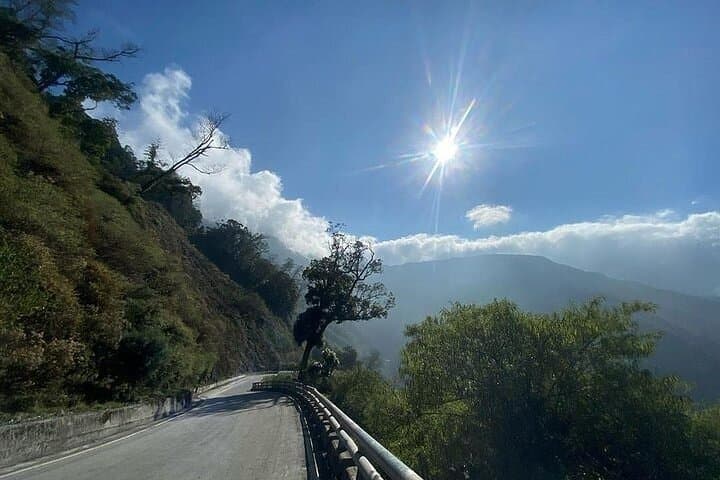
You leave Kaohsiung while the city is still pouring coffee and commuters—an easy glide onto the highway, then a gradual unspooling of urban geometry into green. The first thing you notice is how quickly the air softens: traffic noise thins, buildings give way to pines, and a low, theatrical mist begins to cling to tree trunks. The tour’s first stop, Xinwei Forest Park, greets you with those same theatrics—the mist doesn’t just sit; it moves like a living curtain, parting and closing as if to show different angles of the trail.
This is not a day of summit obsession. It’s an exercise in slow landscape: short walks beneath hinoki and broadleaf canopies, visits to a hillside temple that perches above a glacial-blue pond (Tianchi), and a curious detour through the Kaukau Mountain Jade Museum where local craftsmanship and geology meet in polished displays. The route stitches cultural stops—Changqing Temple’s incense-scented courtyards and roadside shrines—with nature stops that invite you to slow your pace and listen: wind pushing through cypress, a stream daring you to cross on slick stones, a distant bird calling like punctuation.
Geologically, southern Taiwan is a young, active place. The fold-and-thrust dynamics that raised the island are visible in roadside cuts and in the rounded profiles of the low mountains you see from the van. The jade on display at Kaukau comes from the same processes—minerals altered by heat and pressure over millennia, then brought close to the surface by Taiwan’s restless tectonics. Culturally, this tour traces threads of local faith and rural life: temples here are not museum pieces but living rooms of community ritual—lanterns, offerings, and the reverent, everyday choreography of those who come to pray.
What you’ll actually do: expect an 8-hour loop out of Kaohsiung, with the guide shuttling you between five anchor points—Xinwei Forest Park, the so-called Hinoki Misty Forest, the Nanheng “Yakou” viewpoint, Changqing Temple at Tianchi, and Kaukau Mountain Jade Museum—before returning to the city. Hikes are short but sometimes steep and on damp, muddy steps; the terrain is mixed—forest paths, concrete temple approaches, and museum grounds. Total walking distance is manageable for most hikers, roughly 5–10 km in aggregate, but the feel is more of continuous discovery than of kilometers conquered.
Who is this for? Casual hikers who want forest time without committing to an overnight, travelers hungry for photographic vistas, and culturally curious visitors who prefer a paced day where both nature and human stories are given room. The tour is flagged as private and runs with a minimum of four people. The price reflects full-day logistics—vehicle, guide, and entrance or parking fees—and lands around USD 200 per person.
Practical edge: start early to get the best light in the mist and to avoid afternoon rain, which is common in southern Taiwan’s subtropical climate. Wear grippy hiking shoes—the forest paths can be slick. Bring layered rain protection, because the mist can feel like rain and temperatures in these low mountains are cooler than Kaohsiung proper. Hydration is essential: even short hikes feel harder in humid air. Of note: this is a mobile day; much time is spent in transit between beautiful stops, so stow a daypack with snacks and a power bank for your camera.
Logistics to keep in mind: the tour is roughly eight hours from Kaohsiung, with intermittent cellular service once you enter deeper valleys—download directions or any personal maps before you leave. Respect the temple etiquette: remove hats, keep voices low, and ask before photographing worshippers. Finally, honor the landscape—stick to trails, avoid trampling understory plants, and pack out what you carry in.
Why go? Because the contrast is genuine: Kaohsiung’s hard-edged port city energy fades into woodsmoke and moss in under two hours. You’ll find vistas framed by fog, shrines that feel intimately local rather than staged, and a museum whose jade artifacts make you think about time in a new scale. The day is curated to let you see different sides of southern Taiwan in the course of a single, well-paced outing—perfect for a first-time visitor who wants forest, culture, and a tactile sense of place without an overnight commitment.
Trail wisdom
Small choices, better day.
Start early for the mist
Morning light and mist are best before late-afternoon showers roll in—arrive at the first trailhead before 8:30 a.m.
Wear grippy shoes
Forest paths are often wet and slippery; trail runners with sticky soles or light hiking boots are recommended.
Small daypack only
Keep gear light—stow camera, water, rain shell, and snacks; space is limited in the tour vehicle.
Respect the temples
Remove hats, keep voices low, and ask before photographing ritual spaces or people.
Local knowledge
Read the place, not just the route.
Watch for native species including Taiwan Whistling Thrush, Formosan squirrel.
Keep an eye out for wildlife during the transition between areas and habitats. Respect distance guidelines.
The forests visited are part of Taiwan’s mosaic of protected and managed woodlands—stay on trails and avoid disturbing undergrowth; local guides support conservation through responsible tourism.
Follow the guide's instructions on size limits, ethical handling, and leave-no-trace practices.
A small viewing platform at the Nanheng 'Yakou' that rarely fills with tourists—best at sunrise. A shaded tea stall near Xinwei Forest Park popular with local hikers for simple snacks and strong tea
Locally recommended viewpoints and quiet spots known best to local operators.
Temples like Changqing trace community lineages and were historically centers for agriculture-linked rituals; many shrines here have origins in local village devotion.
Maritime roots and regional tradition shape the waterways and working coasts.
Seasonal guide
Four versions of the same landscape.
Spring
Best forWildflowers · Cooler hikes · Birdwatching
ChallengesIntermittent rain · Mud on trails
Spring brings fresh growth and active birdlife; expect occasional showers and muddy sections after rains.
Summer
Best forLush forests · Early-morning mist photos
ChallengesHigh humidity · Afternoon thunderstorms
Summers are hot and humid—plan early starts to avoid storms and the heaviest heat.
Fall
Best forClear vistas · Comfortable temperatures
ChallengesTyphoon season overlaps early fall some years
Fall offers the most comfortable conditions and crisp air—ideal for clearer views and longer photo windows.
Winter
Best forCrisp mornings · Lower humidity
ChallengesCooler mountain temps · Occasional fog
Winters are mild by alpine standards but cooler in the misty forests—bring layers for cold mornings.
Operator details
What the booking data adds.
Included
- ✓Bottled water
- ✓Parking fee
- ✓Liability Insurance
- ✓Fuel surcharge
- ✓9 people-seats van with Chinese/ English tour guides
- ✓Lunch box
Not included
- —Entrance fee
Good to know
- ✓Infants are required to sit on an adult’s lap
- ✓Suitable for all physical fitness levels
Pack with intention
What to bring.
Good to know
Common questions.
The tour runs approximately 8 hours, typically a full-day loop departing and returning to Kaohsiung.
Plan the edges
The details that make the day easier.
Kaohsiung is Taiwan’s third-largest city and has long been a major trading port; its proximity to wooded hills means you can be in misty forest within an hour of the harbor.
After the day’s walks, head back to Kaohsiung’s night markets—Liuhe or Ruifeng—for seafood, braised beef soup, and local beers. If you have time, try Hakka-style dishes in nearby towns—simple, savory rice cakes and preserved vegetables that pair well with the mountain air.
- Closest airport
- Kaohsiung International Airport (KHH); Typical driving time from Kaohsiung center: 60–90 minutes; Cell service: Good in towns, intermittent on forest trails; Permits: None typically required, but respect temple rules and museum hours
This route visits active temple sites and sensitive forest patches—pack out trash, avoid single-use plastics where possible, follow guides’ instructions, and support local vendors rather than bringing outside food.
Explore by topic
Follow the threads.
Keep exploring
Make the story part of the trip.
In four hours you can move from shaded canyon ferns to wind-scoured coastal ridgelines, guided by someone who knows where the light—and the hidden views—live. This private half-day hike on the Monterey Peninsula or Big Sur is compact, curated, and perfect for travelers who want depth without a multiday commitment.
 Related story
Beneath a sky of shifting light, Skaftafell’s ice reads like a map of time. This three-hour guided glacier hike mixes technical instruction with geology and culture: compact, safe, and unforgettable.
 Related story
Lose the city for a few hours without leaving it: this 5-mile, 900-foot-gain Forest Park loop threads old-growth pockets, city viewpoints, and cultural landmarks for a compact taste of Portland’s wild side. Expect moss, roots, and stories.