
What the day feels like
The day begins before most of the park’s visitors are awake: a low, cold light brushing the pines and steam rising from pools that seem to breathe. On the road into Yellowstone’s Lower Loop, the windshield is a frame for a landscape that changes by mile—sage flats give way to thermal basins, and then to broad meadows where bison graze like weathered monuments. You feel the park in motion; this is not passive sightseeing. It’s a paced, intimate introduction to a place that has been shaping itself for millennia.
On a full-day guided loop you’ll meet three of Yellowstone’s essentials in rapid succession: Old Faithful’s punctual drama, the electric color of the Grand Prismatic spring, and the wide, animal-rich sweep of Hayden Valley. The guide—someone who’s spent seasons reading the park’s weather, geology, and animal movement—pulls the narrative together. They’ll set up spotting scopes so you can study a courting elk or a distant herd of bison without crowding the animals. They’ll point to old lava flows and explain how a volcanic hotspot underlies the whole show. They’ll also remind everyone to stay on boardwalks, keep distances from wildlife, and savor the silence that follows an eruption or sunrise on a marsh.
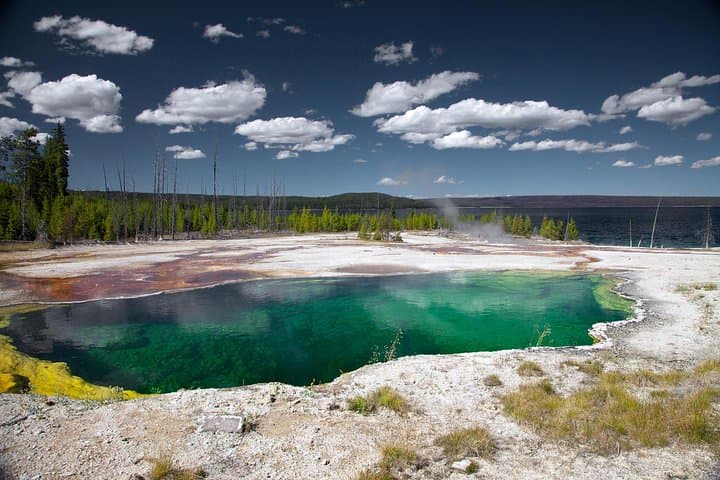
Geology is the plotline here. Yellowstone perches on a caldera formed by massive eruptions and continues to bubble: more than half the world’s geysers live here, and the park’s hydrothermal features are a vivid record of the Earth’s heat meeting water and time. You’ll see sinter terraces like layered cake, anemone-like bacterial mats coloring pools in saturated pastels, and steam vents that smell faintly of sulfur. Culture and conservation weave through the day too—the park is ancestral land to many Native tribes, and its modern management balances public access with wildlife protection and delicate ecosystems under heavy visitor pressure.
Part of the trip’s appeal is logistics done well. You travel in a climate-controlled vehicle that lets you watch the landscape shift without exhausting the day driving. Small groups mean quicker stops, less time queuing, and a guide who can listen to what you want—photography tips at Grand Prismatic, time to scan Hayden Valley for wolves, or extra context on the park’s geothermal science. The day runs about 10–12 hours, long enough to feel like you’ve earned each view but paced so you don’t leave exhausted.
Why book this as a group experience rather than DIY? For one, the guide’s local know-how turns a list of attractions into a coherent story—where to watch Old Faithful for the best photographs, how to time a Grand Prismatic overlook visit when steam clears, or where to pull off for that intimate bison encounter without disrupting the animals. For another, group gear—high-quality spotting scopes and binoculars—elevates wildlife viewing in a way that rental optics or borrowed phone cameras rarely do.
Practical detail: expect a full day (roughly 10–12 hours), moderate walking on boardwalks and easy trails, and the chance to see bison, elk, and, with luck, bears or wolves from respectful distances. Entrance fees or park passes are required; the tour’s price typically starts in the upper three-hundred-dollar range and includes guide services, logistics, and sometimes small extras—confirm what’s included when you book. The operator offers instant confirmation and free cancellation, which helps when travel plans shift.
Timing matters. Early and late light are gold for photography and wildlife; Hayden Valley is busiest at dawn and dusk for the same reason. In summer you’ll contend with crowds, so a guide’s timing to avoid the worst of the traffic matters. In shoulder seasons, the park’s moods change rapidly—spring is variable and alive with newborns, fall cools quickly and concentrates wildlife, and winter brings a hush that closes most standard vehicle routes.
Pack pragmatic layers: sun protection for high-elevation glare, a wind shell for thermal basins’ unexpected gusts, sturdy shoes for boardwalks and short trails, and a refillable water bottle. Bring a telephoto or long lens for wildlife shots and a wide-angle for the Grand Prismatic’s sweep; a tripod is helpful but optional for a moving-group day. Finally, carry patience. Nature doesn’t operate on schedules, and glimpses can be brief—sometimes the most memorable moments are the quiet ones, when the guide points and you watch an entire ecosystem go about its business.
This kind of guided day is for the curious traveler who wants to move beyond postcard images to understanding: how a rising plume creates a sparkling pool, how grazing patterns tell stories about predators, and how human stewardship shapes the modern park. It’s for someone who wants to be in the company of other travelers without being lost in a crowd, and who appreciates a guide who can equal parts read the map and tell the stories. If that’s you, this full-day tour of the Yellowstone Lower Loop—Old Faithful, Grand Prismatic, and Hayden Valley wildlife viewing—is an efficient, rich, and highly readable way into the park’s big scenes.
Book with an eye on season and photo priorities. And once you return to town—whether West Yellowstone’s small restaurants and museums or the quieter lodges—you’ll carry something that lasts longer than a snapshot: a clearer sense of this place’s deep heat, its living creatures, and the simple rules that keep it all functioning.
Trail wisdom
Small choices, better day.
Bring a refillable water bottle
Park elevations and dry air make hydration essential—refill at visitor centers or on the vehicle when allowed.
Dress in layers
Thermal basins can be warm but the valley and high roads will be cool; pack a wind shell and midlayer.
Use a telephoto lens for wildlife
A 200–400mm equivalent keeps you safe and respectful while getting close-up shots of bison, elk, or bears.
Respect boardwalks and closures
Walk only on designated paths—thermal features are fragile and dangerous off-trail.
Local knowledge
Read the place, not just the route.
Watch for native species including American bison, Elk.
Keep an eye out for wildlife during the transition between areas and habitats. Respect distance guidelines.
Stay on boardwalks, pack out trash, and maintain safe distances from wildlife to protect fragile thermal areas and animal welfare.
Follow the guide's instructions on size limits, ethical handling, and leave-no-trace practices.
Artist Paint Pots (a quieter thermal basin than some major stops). Pullouts along the Firehole River for trout and morning light
Locally recommended viewpoints and quiet spots known best to local operators.
Yellowstone is America’s first national park (established 1872), and it sits atop the Yellowstone Caldera, a massive volcanic system.
Maritime roots and regional tradition shape the waterways and working coasts.
Seasonal guide
Four versions of the same landscape.
Spring
Best forCalving and newborn elk · Fewer crowds · Migratory birds
ChallengesVariable weather · Closed roads at higher elevations · Cold mornings
Spring brings newborn wildlife and green meadows, but expect shifting weather and some road limitations; dress warm and be flexible.
Summer
Best forFull access to Lower Loop · Warm temperatures · Longer daylight for photography
ChallengesCrowds at major sights · Hot midday sun · Limited parking at overlooks
Summer is peak season with full services and long days—book early and plan to visit major viewpoints during off-peak hours.
Fall
Best forWildlife activity (elk rut) · Crisp light for photos · Fewer visitors than summer
ChallengesCooler temperatures · Shortening daylight · Possible early snow
Fall tightens the light and wildlife activity; layers are essential and expect cooler mornings and evenings.
Winter
Best forSnowbound landscapes (view from roads/overlooks) · Fewer people · Unique geothermal contrast
ChallengesMost roads closed to regular vehicles · Need for specialized winter transport · Very cold conditions
Winter transforms Yellowstone into a quiet, steam-filled landscape but requires specialized tours and gear—regular full-loop vehicle tours don’t run.
Operator details
What the booking data adds.
Included
- ✓Hotel pickup and drop-off
- ✓Local guide
- ✓Bottled water
- ✓Snacks
- ✓Lunch
- ✓Use of field guides, binoculars and spotting scope
Not included
- —Gratuity is not included
- —Park Pass Park pass price varies depending on your age and group type. Please feel free to call with any questions about the National Park passes.
Good to know
- ✓Wheelchair accessible
- ✓Infants and small children can ride in a pram or stroller
- ✓Suitable for all physical fitness levels
- ✓Vegetarian option is available, please advise at time of booking if required
- ✓Minimum age is 8 years old for group tours all ages welcome on private tours
Pack with intention
What to bring.
Good to know
Common questions.
The tour runs approximately 10–12 hours (600–720 minutes) and covers the Lower Loop’s highlights with multiple stops.
Plan the edges
The details that make the day easier.
Yellowstone contains more than half of the world's geysers and sits atop the Yellowstone Caldera, a volcanic hotspot that drives the park’s geothermal activity.
After the day, head to West Yellowstone for hearty elk or bison dishes and local trout—visit the Grizzly & Wolf Discovery Center to see rescued animals up close and learn more about regional conservation efforts.
- Closest airport
- Bozeman Yellowstone International (BZN). Driving to West Yellowstone: ~90 miles (1.5–2 hours). From West Yellowstone to Old Faithful: ~32 miles (45–60 minutes). Cell service: spotty to none in many park areas. Required: Yellowstone entrance pass or fee.
This tour emphasizes low-impact viewing—stay on designated paths, use provided optics instead of approaching wildlife, and pack out any trash to protect thermal features and animal habitats.
Explore by topic
Follow the threads.
Keep exploring
Make the story part of the trip.
Set out from Bass Harbor for a private, customizable day on Blue Hill Bay — lighthouses, puffins, seals, and the chance to feel Acadia from the water. Small groups, local captains, unforgettable views.
In four hours you can move from shaded canyon ferns to wind-scoured coastal ridgelines, guided by someone who knows where the light—and the hidden views—live. This private half-day hike on the Monterey Peninsula or Big Sur is compact, curated, and perfect for travelers who want depth without a multiday commitment.
 Related story
Beneath a sky of shifting light, Skaftafell’s ice reads like a map of time. This three-hour guided glacier hike mixes technical instruction with geology and culture: compact, safe, and unforgettable.