
What the day feels like
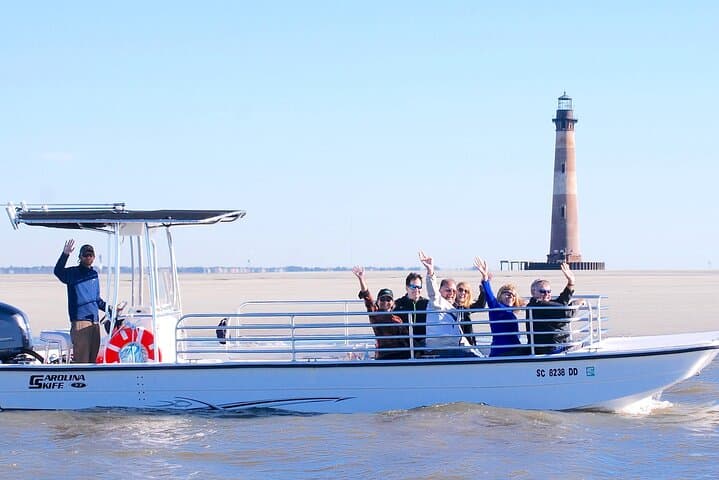
The boat eases past salt-marsh fingers, and the air changes—sweeter, saltier, the faint iron of shellfish beds. Mangrove shadows slide along the hull like slow swimmers, and a naturalist's voice threads history into the hum of the engine: how tidal creeks have shaped Charleston, how currents move sandbars like cards. By the time the lighthouse appears—stoic, orangey against the horizon—dolphins have already tagged the bow, arcing and daring us to keep up.
This is not a postcard stop but a close study of place. The 2.5-hour <a href="https://app.advcollective.com/local-experts/charleston-eco-boat-cruise-to-morris-island-lighthouse-dolphins-shells-coastal-ecology">Charleston eco boat cruise</a> with a one-hour landing on Morris Island stitches together natural history, easy adventure, and the quirks of Lowcountry life. The island's lighthouse—built in the late 19th century—stands as a weathered sentinel on a shifting shoreline, and the hour ashore becomes a focused romp: shell collecting, shark-tooth hunting, and horizon scanning for pelicans and sea turtles. The captain balances education with the kind of patience that comes from years reading tides and bird migrations.
Geology here is active: Charleston's harbor is the product of centuries of sediment moving on a tidal loom. Morris Island itself is ephemeral—sand, shell, and seaweed piled by storms and currents—so intimate knowledge of tides matters. The surrounding marshes, where spartina grass nods like a green ocean, trap silt and nurture nurseries for shrimp and juvenile fish. That ecology explains the dolphins; it explains why shorebirds gather in predictable numbers; it explains why local fishermen and conservationists argue passionately about beach renourishment and the balance between public access and habitat protection.
Culturally, the cruise is a Lowcountry primer. The captain tells of rice plantations upriver, of Gullah-Geechee communities whose seafood traditions still flavor Charleston's menus, and of Civil War-era ship channels that reworked the harbor. On the return, the skyline of downtown—cupolas and pastel brick—appears across a stretch of water where cargo tugs and recreational boats share lanes. It's an encounter with a working coastal city, not a museum piece.
Practical pleasures are simple and immediate. The boat ride is sheltered enough for those wary of open ocean and lively enough to reward binoculars and a camera. The landing on Morris Island is informal: shoes off, toes in cooler sand, and an hour to walk a shoreline that can be rich in seashell varieties and fossilized shark teeth. The captain's crew points out bird roosts and explains why some areas of beach are off-limits during nesting season.
If you go, consider timing and weather. Early morning cruises find calm water and active birds; golden-hour departures offer cinematic light that highlights the lighthouse silhouette. Summer brings warm water and predictable dolphin sightings, but also harsher sun. Spring and fall are the sweet spot for comfortable temperatures and breezy wildlife activity. Pack a hat, reef-friendly sunscreen, and a small backpack for your finds—leave live animals; take photos and a memory.
Safety and sustainability are woven into the experience. The boat operates as an eco-tour: the naturalist points out sensitive habitats and explains how to minimize footprint while touching a place as dynamic as Morris Island. Because the island migrates and beaches change, shore access sometimes depends on tide and weather—flexibility matters.
For travelers seeking a compact, high-value coastal experience—especially those who want more than a skyline selfie—this cruise earns its praise. It condenses natural history, hands-on beach time, and reliable wildlife encounters into a single, well-paced outing. You leave with a small cache of shells, maybe a shark tooth, and a better sense of how Charleston's waterways define both the city and its culture.
Logistics at a glance: the excursion lasts roughly 150 minutes (about 2.5 hours) and typically departs from a downtown dock near Charleston's historic district; confirm the exact pier when booking. The trip is family-friendly but moves at the tide's schedule; wear layers, bring water, and be prepared for sun reflection off the water. If your priority is photography, choose an early or late run for warm light and calmer horizons.
A final note: the Lowcountry rewards attention. On the boat you learn to read birds and listen for the cadence of the marsh; on the island, every shell is a lesson in currents and storms. This cruise is not an adrenaline sprint but a study in coastal rhythm—quiet, observant, and occasionally playful when the dolphins decide to perform.
Book the outing, bring curiosity, and let the tides show you why Charleston's coastline still has stories to tell.
<a href="https://app.advcollective.com/local-experts/charleston-eco-boat-cruise-to-morris-island-lighthouse-dolphins-shells-coastal-ecology">Learn more and reserve a spot on this Charleston eco boat cruise to Morris Island Lighthouse</a>.
Trail wisdom
Small choices, better day.
Time it around the tide
Confirm departure time and local tide charts—lower tides reveal more beach for shelling and shore walking.
Bring reef-safe sunscreen
The reflection off the water intensifies sun exposure; choose reef-friendly formulas to protect marine life.
Pack a small dry bag
Keep keys, phone, and camera safe from spray and sand during the landing and ride back.
Wear quick-dry shoes
Slip-on water shoes or sandals are best for the short beach walk and getting back on board easily.
Local knowledge
Read the place, not just the route.
Watch for native species including Atlantic bottlenose dolphin, Brown pelican.
Keep an eye out for wildlife during the transition between areas and habitats. Respect distance guidelines.
The area includes sensitive nesting beaches and marine habitats—operators emphasize low-impact visits, and guests are asked to avoid disturbing wildlife and to limit shell collecting.
Follow the guide's instructions on size limits, ethical handling, and leave-no-trace practices.
Birding nooks along the Shem Creek estuary for active heron and egret watching. Low-tide oyster beds near the harbor mouth that reveal oyster clusters and tidal life
Locally recommended viewpoints and quiet spots known best to local operators.
Morris Island Lighthouse was lit in the late 19th century and stands as a relic of Charleston's maritime history, guarding a harbor that has been strategically important since colonial times.
Maritime roots and regional tradition shape the waterways and working coasts.
Seasonal guide
Four versions of the same landscape.
Spring
Best forMigratory shorebirds · Comfortable temperatures
ChallengesUnpredictable showers · Occasional windier days
Spring brings active bird migration and mild weather—great for comfortable cruising and beach exploring, but pack a light rain layer.
Summer
Best forWarm water dolphin sightings · Family-friendly outings
ChallengesHigh sun and heat · Hurricane-season storms
Summer offers dependable marine life activity but strong sun—go early or late and hydrate often; check forecasts during storm season.
Fall
Best forCalmer seas · Photogenic light
ChallengesCooler mornings · Shortening daylight
Fall balances mild conditions with excellent light and steady wildlife activity; ideal for photographers and comfortable cruises.
Winter
Best forOff-peak crowds · Crisp clear days
ChallengesChillier temperatures on deck · Possible rougher seas
Winter trips are quieter and can be scenic on clear days—dress in warm layers and expect brisk winds on the water.
Operator details
What the booking data adds.
Included
- ✓1 hour stop at the beach!
- ✓Live Narration On Board
- ✓Learn information about the local ecosystems and history from your Naturalist Captain
- ✓2.5-Hour Tidal Creeks Eco Boat Cruise in Charleston
- ✓Fuel surcharge
- ✓See wildlife including Atlantic bottlenose dolphins, wading birds, pelicans, sea turtles, and more
Not included
- —Snacks
- —Bottled water
- —Gratuities
Good to know
- ✓Wheelchair accessible
- ✓Infants and small children can ride in a pram or stroller
- ✓Service animals allowed
- ✓Infants are required to sit on an adult’s lap
- ✓Transportation options are wheelchair accessible
- ✓Suitable for all physical fitness levels
- ✓Remember to bring water, sunscreen, sunglasses, a hat, a camera, and a bag for shell collecting if desired. These essentials will help ensure you stay comfortable and prepared throughout the adventure.
- ✓Dress for the weather with clothes and shoes that are suitable for beach walking. Comfortable, weather-appropriate attire and sturdy footwear will help you fully enjoy the experience on Morris Island.
- ✓Please note there is a stop at Morris Island where travelers can visit for about 45 minutes to an hour. During this time, you can walk around and explore the island. However, this may pose an issue for wheelchair accessibility. Travelers have the option to remain onboard during this stop if they choose.
- ✓Restrooms are available before departure. Please note that there are no restrooms available for the duration of the tour.
- ✓Please arrive 15 minutes early for departure to check in at the Charleston Outdoor Adventures office. This ensures a smooth and timely start to your adventure.
Pack with intention
What to bring.
Good to know
Common questions.
The tour is approximately 2.5 hours total, with about an hour landing time on Morris Island for beach exploration.
Plan the edges
The details that make the day easier.
Morris Island Lighthouse was first lit in 1876 and stands offshore after decades of shoreline change; it was decommissioned as a manned light in 1962 and is now a well-known Charleston landmark.
After the cruise, head to Folly Beach for a casual bite—try Lowcountry shrimp and grits or a fresh oyster plate—or return to downtown Charleston to sample locally sourced seafood at Fleet Landing or The Ordinary, paired with a local craft beer.
- Closest airport
- Charleston International Airport (CHS); Typical departure: downtown Charleston dock—confirm with operator; Driving distance: 10–25 minutes from most downtown hotels; Cell service: reliable in harbor, intermittent near the island; Permits: none for visitors, but follow crew guidance on protected areas.
This eco cruise emphasizes low-impact visits—please take only photographs and a few dead shells or shark teeth, avoid disturbing nesting birds, and dispose of trash ashore; the harbor and barrier islands are sensitive coastal systems.
Explore by topic
Follow the threads.
Keep exploring
Make the story part of the trip.
Set out from Bass Harbor for a private, customizable day on Blue Hill Bay — lighthouses, puffins, seals, and the chance to feel Acadia from the water. Small groups, local captains, unforgettable views.
In four hours you can move from shaded canyon ferns to wind-scoured coastal ridgelines, guided by someone who knows where the light—and the hidden views—live. This private half-day hike on the Monterey Peninsula or Big Sur is compact, curated, and perfect for travelers who want depth without a multiday commitment.
 Related story
Beneath a sky of shifting light, Skaftafell’s ice reads like a map of time. This three-hour guided glacier hike mixes technical instruction with geology and culture: compact, safe, and unforgettable.