
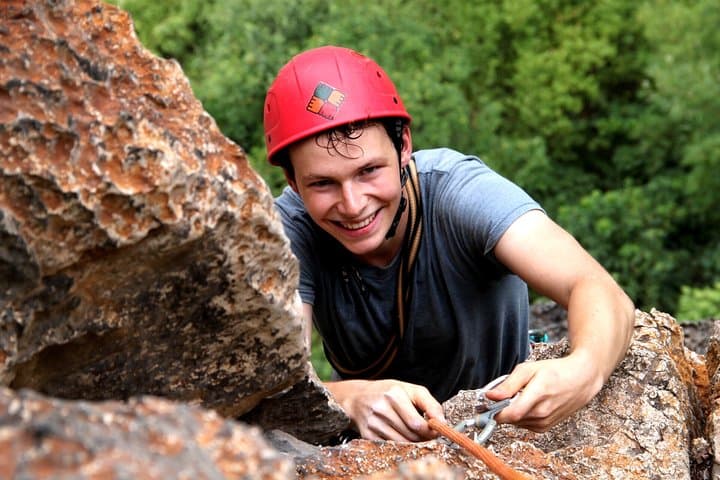
What the day feels like
You step off a bamboo raft and the world narrows to a single face of stone: pockets and edges like fossilized steps, streaked with lichen and the soft patina of a thousand hands. The air smells faintly of river algae and hot stone; behind you the Li River slips silver and leisurely through a valley of spires. In Yangshuo, rock is a character with a long memory—rough, playful, occasionally obstinate—and it will ask something of you. For four hours, on a private session that begins with a safety brief and ends with a grin and cold tea, you learn to answer.
Yangshuo’s climbing isn’t an alpine conquest; it’s a close-quarters conversation with karst. The limestone towers here rise like stacked vertebrae, their steep faces cut by the slow chemistry of water. Many routes are single-pitch sport climbs—short, sometimes overhanging, frequently technical—typically 10–30 meters of stone that rewards friction and body positioning as much as reach. There are more than 1,000 routes scattered across fields, river bluffs, and forested crags, which is why climbers from around the world call this place a modern climbing Mecca. Whether you’re clipping your first quickdraw or projecting a hard redpoint, Yangshuo has something to test you.
The karst landscape that frames these climbs is part of the larger South China Karst region, a UNESCO World Heritage area that stretches through Guangxi and neighboring provinces. These towers were sculpted over millions of years—limestone dissolving, caves forming, roofs collapsing—until what remained were the steep, fluted pinnacles you see today. Locals have mined and farmed around these stones for generations; villages and terraces cling to lower slopes, and West Street in Yangshuo keeps a steady, welcoming bustle of cafés, noodle shops, and gear rentals that cater to the climbing crowd.
Climbing here has its own culture. Local guide companies, often staffed by climbers who have moved from Guilin or even from overseas, run private sessions catering to different skill levels. Routes vary in character: pocketed faces that demand precise footwork, tufas that invite dynamic moves, and short, gymnastic pitches that can be surprisingly pumpy. Many climbs are bolted and maintained, but part of the community’s ethic is to respect the rock—no unnecessary bolting, keep chalk use reasonable, and stick to established trails.
Practicalities are refreshingly straightforward. The typical guided experience lasts about four hours—long enough for a gentle warm-up, a few top-rope laps, and an attempt at a lead or two for confident climbers. Expect a private, instant-confirmation booking and a price point around $99 per person as a baseline, which includes guides, safety equipment, and transport from Yangshuo town depending on your package. Approaches are short; many crags are a 5–30 minute walk from a parking area or raft drop-off. Elevation gain is minimal—these are towers rising from low river valleys, not long mountain pitches.
Safety and comfort should guide your packing decisions. Climbs are often on sun-exposed walls, so start early to avoid midday heat in summer; in autumn and spring the temperatures are ideal for long sessions. Bring a harness, shoes, and helmet if you own them, or rent locally—many international climbers choose to carry their shoes while renting the rest. Hydration is non-negotiable: even a four-hour session under a limestone wall can sap energy quickly. Your guide will set anchors and brief you thoroughly; still, basic rope-handling knowledge and a steady head for exposure will make the experience more enjoyable.
Beyond the pitches, Yangshuo is a place to unwind. Finish a session with a bowl of Guilin rice noodles or the local specialty, beer fish—river fish wok-fried with chilies and spring onion—or sit by the Li River to watch mist climb the towers at dusk. The town’s hospitality infrastructure is friendly to outdoor travelers: guesthouses, bike rentals, cafés with local craft beer, and massage shops for worked forearms.
When to go depends on your tolerance for humidity. Autumn (September–November) is prime: clear skies, cooler temperatures, and especially good friction on the limestone. Spring offers warm, stable conditions; summer brings heat and the occasional monsoon storm, and winter is mild but can be foggy and damp, which affects friction and comfort.
If you arrive with an open mind and some basic fitness, Yangshuo’s crags will return the favor with routes that teach efficient movement and reward patience. The rock will test balance and problem-solving more than raw power; prepare to use your feet and your head. Above all, take the local rhythm—start early, climb when the stone is dry and grippy, and leave time to taste the town. The climbs may be short, but the memory of moving up limestone with the Li River cameoing below is long and quietly stubborn, like the rock itself.
Trail wisdom
Small choices, better day.
Start Early
Morning sessions avoid heat and afternoon storms; friction and comfort are best before noon.
Pack a Small Chalk Bag
Local guides provide ropes and helmets, but bringing your chalk maintains grip for multiple attempts.
Wear Sticky Shoes
Bring or rent high-friction climbing shoes for the pocketed limestone—approach shoes are useful for the short hikes.
Respect Trails and Bolts
Use established paths to avoid erosion and accept only guide-approved topouts and anchors.
Local knowledge
Read the place, not just the route.
Watch for native species including Eastern water snake (non-aggressive, near river margins), Egrets and kingfishers along riverbanks.
Keep an eye out for wildlife during the transition between areas and habitats. Respect distance guidelines.
Stick to established trails, avoid bolting new routes, and pack out all trash; local guide companies help manage visitor impact.
Follow the guide's instructions on size limits, ethical handling, and leave-no-trace practices.
Drift along the Yulong River on a bamboo raft for quieter river views away from main Li River traffic. Climb at less-busy crags around Moon Hill for sunset light and easier single-pitch warm-ups
Locally recommended viewpoints and quiet spots known best to local operators.
Yangshuo’s karst towers formed over millions of years; the region is part of the South China Karst UNESCO World Heritage Site.
Maritime roots and regional tradition shape the waterways and working coasts.
Seasonal guide
Four versions of the same landscape.
Spring
Best forStable temperatures · Long daylight · Good friction on cool days
ChallengesOccasional rain · Pollen and greenery on approaches
Spring brings warm days and good climbing conditions—expect lush trails and comfortable temps but carry rain protection on unsettled days.
Summer
Best forLongest daylight · Lower crowds on some routes
ChallengesHigh humidity · Afternoon thunderstorms · Slippery rock when wet
Summer can be hot and wet: climb early, watch forecasts, and avoid climbs that hold water after storms.
Fall
Best forCrisp weather · Excellent friction · Peak climbing season
ChallengesMore visitors on weekends · Cool nights
Autumn is optimal: cooler air gives better grip on the limestone and the skies clear—book in advance for weekends.
Winter
Best forMild temperatures · Less crowded crags
ChallengesFog and damp rock · Shorter daylight hours
Winters are mild but can be moist; if the rock is damp, postpone climbs and enjoy town-based activities instead.
Operator details
What the booking data adds.
Included
- ✓Private transportation
- ✓All necessary equipment included
- ✓Englisn-speaking guides
Not included
- —Food, drinking water, snacks and other personal needs.
Good to know
- ✓Not recommended for travelers with spinal injuries
- ✓Not recommended for travelers with poor cardiovascular health
- ✓Not recommended for pregnant travelers
- ✓Travelers should have at least a moderate level of physical fitness
Pack with intention
What to bring.
Good to know
Common questions.
No—guided sessions accommodate beginners with top-rope instruction, though prior belay experience is helpful for those who want to lead.
Plan the edges
The details that make the day easier.
Yangshuo’s karst landscape is part of the South China Karst, a UNESCO World Heritage Site recognized for its dramatic limestone towers and caves.
After a session, head to West Street for Guilin rice noodles or beer fish at a riverfront restaurant; try local craft beer or relax at a riverside café to watch fishermen and bamboo rafts pass.
- Closest airport
- Guilin Liangjiang International (KWL) ~65 km
- 90–120 min drive to Yangshuo; Typical drive from Yangshuo town to crags
- 10–30 minutes; Cell service: reliable in town, patchy at remote crags; Permits: none required for recreational climbing—use licensed guides for access and safety.
Support local guide operators, avoid creating new trails or bolting, and pack out all trash—this area’s karst ecosystem is fragile and slow to recover from erosion.
Explore by topic
Follow the threads.
Keep exploring
Make the story part of the trip.
Set out from Bass Harbor for a private, customizable day on Blue Hill Bay — lighthouses, puffins, seals, and the chance to feel Acadia from the water. Small groups, local captains, unforgettable views.
In four hours you can move from shaded canyon ferns to wind-scoured coastal ridgelines, guided by someone who knows where the light—and the hidden views—live. This private half-day hike on the Monterey Peninsula or Big Sur is compact, curated, and perfect for travelers who want depth without a multiday commitment.
 Related story
Beneath a sky of shifting light, Skaftafell’s ice reads like a map of time. This three-hour guided glacier hike mixes technical instruction with geology and culture: compact, safe, and unforgettable.