
What the day feels like
You step out of the cool shade of the privated car into a breeze that smells faintly of wet earth and steeped tea. From the taxi’s window the central Sri Lankan hills scroll past in patchwork—smallholder plots, tea terraces catching the sun, and a cluster of tin-roofed houses hugging the road. The driver folds the map away; for a day like this, directions are less a list of turns than a mood the landscape sets: slow, green, and quietly insistive.
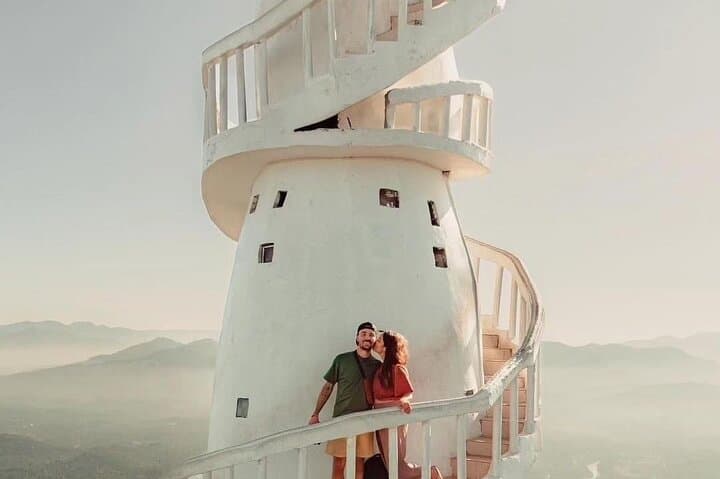
Ambuluwawa’s metal spiral tower rises from the ridge like a lighthouse for the hill country—odd against a backdrop of palms and tea, but perfectly at home. The path to the tower threads through a little arboretum of native and planted species: a stand of jackfruit, thin columns of eucalyptus, and pockets of shaded ferns. The climb itself is brisk—short flights and a few switchbacks—and the reward is cinematic: a 360-degree rim of the Kandy highlands, the city’s red-tiled roofs tucked into a bowl, tea gardens fanning off to the horizon, and at distance the faint blue of the Knuckles Range.
This private car tour pairs a patient, local rhythm of travel with hands-on access. Leaving from Kandy, the day can be layered however you like: a morning of city sights—Temple of the Tooth, the market, the colonial lake—followed by the half-hour drive out to Ambuluwawa, then a slow descent through villages that feel unchanged by time. You move at once in the two registers that make central Sri Lanka compelling: intimate cultural moments (a roadside stall selling piping-hot fresh string hoppers, a temple’s ritual bell) and big, geography-driven panoramas where the land itself does the talking.
History and geology are visible here if you look. Kandy, the last royal capital of Sri Lanka, defended its autonomy against the British until the early 19th century; its compact old town, temple precincts, and courtly architecture reflect a resilient Kandyan identity. The highlands are part of the island’s ancient crystalline core—folded, weathered, and carved into ridges that catch monsoon moisture and feed the rivers that make tea country lush. Ambuluwawa is a modern cultural and spiritual project with a mixed-use complex of roofs, paths, and the observation tower—part community space, part place of quiet immersion in the hills.
Culture is never far from view. On any given day you’ll pass schoolchildren in uniforms, a markets where traders wrap tuna or vegetables in banana leaf, and tea stalls where local men trade gossip over sweet, milky cups. Temple etiquette is simple but important: remove shoes, speak softly near shrines, and ask before photographing worshippers. This tour is private by design—your driver is also a local guide of sorts, able to pause at a viewpoint, fetch fresh jackfruit, or recommend a lunch where the rice is fragrant and coconut-heavy.
Practicality sits under the adventure: the roads are paved but narrow; the tower climb is short and accessible to most visitors with a basic level of mobility. Expect low-impact walking—steps and short trails rather than multi-hour treks—and a handful of photo stops that make the day feel like a string of well-chosen scenes rather than a checklist.
When to go: mornings give the clearest skies and the softest light for photos; afternoons can be dramatic when clouds gather, making the hills look like they’re rolling in and out of frame. The dry season (December–April) keeps the roads easy and the views clear, but the shoulder months often reward you with lush green growth and fewer other visitors.
For serious photographers and casual travelers alike, this tour is a study in scale. Up close, there are textures—peeling temple paint, woven palm, manmade terraces—while wide-angle frames capture the sweep of tea country. It’s a short adventure in the sense of exertion and a long one in terms of layered impressions: culture, landscape, food, and a few private conversations with your driver-guide.
If you’re planning the day, keep it simple and sensible: good shoes for the tower steps, sun protection, and a light rain layer if it’s shoulder season. Bring local currency for small temple donations, snacks, and a lunch at a modest village restaurant where the curries are freshly made and richly spiced. Respect the religious spaces you’ll encounter—silence and shoes off make for smoother visits.
At its best this private tour feels like a conversation with place. The tower is the punctuation mark—an invitation to take a breath, look back at Kandy’s courtly history and forward across an island carved by water and tea. You return to the city with your pockets full of new impressions: a compost-sweet smell of roadside fruit, the texture of balmy heat on your skin, and a clear sense that in Sri Lanka the landscape and its people keep nudging each other toward attention.
Why go? Because the day stitches several small, luminous experiences into one, private package: temple quiet, market clamor, a short hill climb with a big view, and time in the car to watch the countryside change its face. It’s an ideal primer for anyone who wants the Kandyan highlands unboxed, with enough practical accessibility that casual travelers and seasoned hikers will both come away satisfied.
Trail wisdom
Small choices, better day.
Start early for clear light
Morning departures typically offer the clearest skies and cooler temperatures for photos and walking.
Dress for temples
Wear shoulders- and knees-covered clothing and be prepared to remove shoes at shrine entrances.
Hydrate and snack
Carry water and light snacks—shops exist but a private itinerary may include stretches without services.
Respect local customs
Ask before photographing people and follow any requests at religious sites; small donations are customary.
Local knowledge
Read the place, not just the route.
Watch for native species including Purple-faced langur (local monkey), Asian koel and various hill country birds.
Keep an eye out for wildlife during the transition between areas and habitats. Respect distance guidelines.
Support local tea estates that practice sustainable farming when possible and avoid leaving litter on ridge-top viewpoints; sacred sites are often community-run—follow rules and consider small donations.
Follow the guide's instructions on size limits, ethical handling, and leave-no-trace practices.
Small roadside tea stalls where workers serve fresh, milky cups. A quiet viewpoint just off the main road with uncrowded afternoon light
Locally recommended viewpoints and quiet spots known best to local operators.
Kandy was the last independent kingdom of Sri Lanka and is home to the Temple of the Sacred Tooth Relic, an important Buddhist pilgrimage site.
Maritime roots and regional tradition shape the waterways and working coasts.
Seasonal guide
Four versions of the same landscape.
Spring
Best forFewer tourists · Lush green landscapes
ChallengesUnpredictable short rains · Some muddy spots on side trails
Spring (March–May) brings warm days and fresh growth—expect occasional showers but excellent color for photography.
Summer
Best forLong daylight · Village markets
ChallengesIntermittent monsoon squalls in some years · Higher humidity
Summer months are vibrant with village life; brief heavy showers can roll through, so pack a light rain layer.
Fall
Best forClear vistas · Cultural festivals
ChallengesCooler mornings · Occasional cloud cover
Autumn is a comfortable window for clear views and lively cultural events in Kandy and surrounding towns.
Winter
Best forDry weather · Best visibility
ChallengesCooler nights · Higher demand from visitors
Winter (December–February) is the driest season with excellent visibility—expect higher visitor numbers on key days.
Operator details
What the booking data adds.
Included
- ✓Local insurance for the vehicle
- ✓Free Wi-Fi access during the whole tour
- ✓Hotel pickup and drop-off
- ✓Bottled water
- ✓Environmental Management fee (Reef Tax)
- ✓Passenger Insurance cover
- ✓English speaking tour guide
- ✓Fuel surcharge
- ✓Local taxes
- ✓Dual A/C vehicles (Van & Car)
- ✓Sri Lanka Tourism Board registered license.
Not included
- —Alcoholic drinks (available to purchase)
- —Lunch
- —Dinner
- —Gratuities
Good to know
- ✓Suitable for all physical fitness levels
- ✓Minimum age is 10 years
Pack with intention
What to bring.
Good to know
Common questions.
The drive is roughly 25–45 minutes depending on traffic and exact pick-up point in Kandy; expect extra time for stops.
Plan the edges
The details that make the day easier.
Kandy’s Temple of the Tooth houses a relic believed to be a tooth of the Buddha and has been a site of pilgrimage for centuries.
After the tower, head back to Kandy’s Lakefront or the Railway Street food stalls—try hopper (appa), kottu roti, and a strong cup of Ceylon tea at a small teahouse; for evening, catch Kandyan dance performances near the Temple of the Tooth.
- Closest airport
- Bandaranaike International Airport (CMB). Driving distance: ~25–45 minutes from central Kandy to Ambuluwawa. Cell service: Generally good near towns, patchy on ridge-top paths. Permits: None required for day visits; respect temple rules.
This area relies on community stewardship—pack out trash, avoid single-use plastics when possible, and respect temple precincts and wildlife habitat.
Explore by topic
Follow the threads.
Keep exploring
Make the story part of the trip.
Set out from Bass Harbor for a private, customizable day on Blue Hill Bay — lighthouses, puffins, seals, and the chance to feel Acadia from the water. Small groups, local captains, unforgettable views.
In four hours you can move from shaded canyon ferns to wind-scoured coastal ridgelines, guided by someone who knows where the light—and the hidden views—live. This private half-day hike on the Monterey Peninsula or Big Sur is compact, curated, and perfect for travelers who want depth without a multiday commitment.
 Related story
Beneath a sky of shifting light, Skaftafell’s ice reads like a map of time. This three-hour guided glacier hike mixes technical instruction with geology and culture: compact, safe, and unforgettable.