
What the day feels like
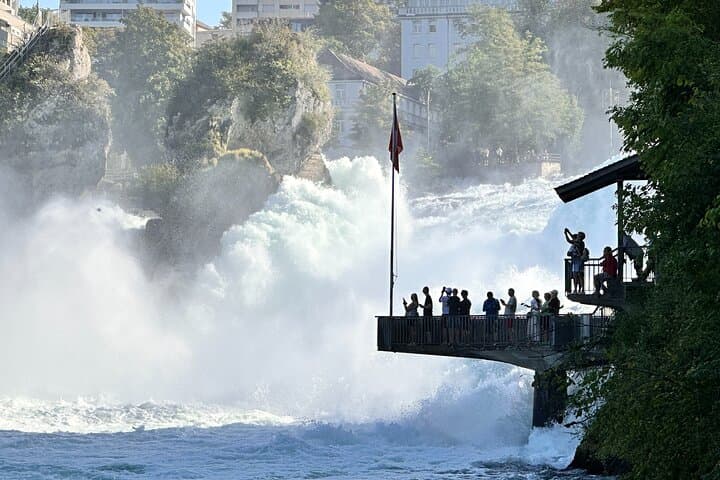
You feel the vibration before you see it—the road hums through the rented minivan as trees thin and the river's voice swells. Your guide eases the vehicle to a stop on a small lot and points: a frothy white lip of water slices the landscape, and mist blossoms like a living thing in the air. Up close at Rhine Falls, Europe's largest waterfall by volume, the world narrows to a thunderous, wet present. This private tour hands you a front-row seat: a short boat run drops you into the spray, a scramble up the central rock promises a dizzying panorama, and a well-paced afternoon in Schaffhausen stitches the day into local color.
The day begins with the elemental: water that will not be contained. The Rhine, cleaved by the last Ice Age and funneled across limestone and shale, hurtles over a 150-meter-wide lip and plunges roughly 23 meters. The result is not a single cinematic drop but a broad, restless sheet, split by rocks into turbulent tongues. Boat skippers thread a path toward a rock island at the falls' heart; stepping onto that basalt you feel the river's impatience in your chest. It's not a tame postcard moment—it's loud, wet, and immediate, the kind of place that resets your scale.
After the boats and the basalt climb, the itinerary relaxes into cultured pace. Smilestones, a miniature world of Switzerland rendered in delicate detail, follows: it's a whimsical counterpoint to the raw power of the falls, and a reminder of the careful engineering and aesthetic precision that shape Swiss identity. Lunch—booked by your guide according to taste—gives you a station to sit with the day. Choose a riverside tavern for trout and local white wine or a cozy café for a vegetarian selection; either way, Swiss precision shows up in the food and the unhurried service.
The afternoon moves inland to Schaffhausen, a compact medieval town whose silhouette is crowned by the circular Munot fortress. Built in the 16th century as a watchful gun platform, the Munot's ramparts offer a vantage to measure the river's course and photograph old cannons angled toward the valley. Walking Schaffhausen's painted facades and narrow lanes is a lesson in civic pride: townspeople tend their window boxes, and wrought-iron signs still announce centuries-old trades.
Geology and history are stitched together here. Rhine Falls formed as retreating ice sheets left the Rhine to find a steeper course, cutting through hard bedrock and softer layers—hence the falls' uneven, roared texture. Schaffhausen grew alongside the river as a trading and defensive node; the Munot was raised in response to 16th-century political instability and remains the town's stoic emblem.
Why go private? For one, the scale: small groups or a couple receive a tailored rhythm—longer at the falls, a slower lunch, more time to wander Munot or duck into a chocolatier. The logistics are as thoughtful as the route: pick-up and drop-off from Zurich or nearby hotels means you trade transit friction for an efficient, chauffeur-driven day. The boat portion runs seasonally (April–October) and is weather-dependent, but when conditions are right it’s the centerpiece of a memorable day.
Practical edges: the boat to the rock is short but sprays you thoroughly—waterproof layers, a secure camera, and non-slip shoes make the difference between discomfort and delight. The townwalking portion involves cobbles and a short climb to Munot; comfortable shoes are non-negotiable. Bring a reusable water bottle and layer for sun and mist: you'll experience two microclimates in one day.
Timing is tactical here. Morning light slants across the falls and often reduces crowds; midday is busiest. If you want a quieter experience on the rock, ask your guide for an earlier boat slot. Photographers should prepare for dynamic light—fast shutter speeds to freeze the cataract, and a wide lens to capture scale. If you're sensitive to noise, earplugs make the boat ride more comfortable without stealing the experience.
This tour is more than a checklist. It's sensory architecture: the roar of water, the cool wet on your face, a fortress that holds centuries of local memory. It's an efficient day for travelers based in Zurich who want a deep encounter without logistics stress. It's also a reminder that natural spectacles and human histories often live within walking distance of each other in Europe; a single afternoon can hold both.
Book with an eye for the season, pack with an eye for spray, and expect the day to end with a small ache of satisfaction—the kind that comes from standing too close to something enormous and then sitting down to a fine lunch. The Rhine will keep roaring, but you will carry the sound home.
Trail wisdom
Small choices, better day.
Expect Spray
Boat rides to the central rock deliver serious mist—wear waterproof outer layers and protect cameras in dry bags.
Timing Matters
Morning slots are quieter for photography and boat access; ask your guide for earliest availability.
Non-Slip Footwear
Cobblestones and wet rock make sturdy-soled shoes essential for both the falls and Munot fortress.
Cash & Cards
Many restaurants accept cards, but small vendors and market stalls may prefer cash (Swiss francs).
Local knowledge
Read the place, not just the route.
Watch for native species including Kingfisher (occasionally along the Rhine), Waterfowl such as mallard and coot on quieter river stretches.
Keep an eye out for wildlife during the transition between areas and habitats. Respect distance guidelines.
The falls are managed to balance tourism with river ecology—stay on marked paths, avoid disturbing shoreline habitats, and pack out all trash to protect the riparian environment.
Follow the guide's instructions on size limits, ethical handling, and leave-no-trace practices.
Walk the riverside trail below the falls for an alternative, quieter vantage point. Visit a local chocolatier in Schaffhausen for handcrafted bars and souvenirs
Locally recommended viewpoints and quiet spots known best to local operators.
The Rhine Falls formed after the last Ice Age as retreating glaciers rerouted the Rhine; Schaffhausen’s Munot fortress dates to the 16th century and guarded trade on the river.
Maritime roots and regional tradition shape the waterways and working coasts.
Seasonal guide
Four versions of the same landscape.
Spring
Best forPowerful meltflow · Fewer crowds · Wildflowers near trails
ChallengesCool, changeable weather · Boat schedule just starting
Spring brings high water from snowmelt and brisk temperatures—expect dramatic flow and variable weather; layer up.
Summer
Best forFull boat season (Apr–Oct) · Warm weather for outdoor lunch · Long daylight hours
ChallengesBusiest crowds · Higher prices
Summer offers reliable boat operations and warmer weather, but visit early to avoid peak crowds.
Fall
Best forCrisp light for photography · Fewer tourists · Autumn foliage
ChallengesCooling temperatures · Shorter daylight
Fall is quieter and photogenic, with crisp light and fall color; pack warm layers for evenings.
Winter
Best forSnow-dusted views · Peaceful town walks
ChallengesBoat operations suspended (seasonal Apr–Oct) · Icy paths
Winter offers solitude and frosty scenery, but the boat element is usually unavailable—plan for a land-only visit.
Operator details
What the booking data adds.
Included
- ✓All transportation during the trip
- ✓Entrance fees to the Smilestones Miniature World at the Rhine Falls (closed until Mai 2026)
- ✓Hotel pickup and drop-off
- ✓Entrance fees to the falls and boat trip to the rock (Seasonal Apr-Oct)
- ✓Air-conditioned vehicle
- ✓1 bottle of water per person
- ✓Tour Guide
Not included
- —Lunch and dinner
- —Any Private Expenses
Good to know
- ✓Public transportation options are available nearby
- ✓Suitable for all physical fitness levels
Pack with intention
What to bring.
Good to know
Common questions.
No—boat service runs seasonally (typically April–October) and depends on weather and water conditions; your guide confirms availability when booking.
Plan the edges
The details that make the day easier.
Rhine Falls is approximately 150 meters wide and 23 meters high and was formed around 14,000 years ago after the last Ice Age—it's the largest waterfall in Europe by volume.
After the falls, wander Schaffhausen’s Hauptgasse for lunch—try a riverside tavern for freshly smoked trout or a café for Zürcher Geschnetzeltes. Finish with a stop at a local chocolatier and a glass of regional white wine on a sunny terrace.
- Closest airport
- Zurich Airport (ZRH)
- Trailhead
- Rhine Falls parking area near Neuhausen am Rheinfall
- Driving distance from Zurich
- ~50–60 km (about 50–60 minutes)
- Cell service
- generally good in town and parking areas; limited at rocky viewpoints
- Permits
- None for visitors, boat operations seasonal and ticketed
The Rhine Falls area is ecologically sensitive—stick to marked trails, avoid feeding wildlife, and carry out all waste. Supporting local guides and small eateries helps the regional economy and encourages sustainable tourism practices.
Explore by topic
Follow the threads.
Keep exploring
Make the story part of the trip.
 Related story
Less than two hours from Nairobi, Kereita Forest pairs hands-on canopy adventure with quiet montane trails and a sobering colonial history—perfect for families, teams, and curious travelers seeking a full-day pulse of nature.
Set out from Bass Harbor for a private, customizable day on Blue Hill Bay — lighthouses, puffins, seals, and the chance to feel Acadia from the water. Small groups, local captains, unforgettable views.
In four hours you can move from shaded canyon ferns to wind-scoured coastal ridgelines, guided by someone who knows where the light—and the hidden views—live. This private half-day hike on the Monterey Peninsula or Big Sur is compact, curated, and perfect for travelers who want depth without a multiday commitment.