
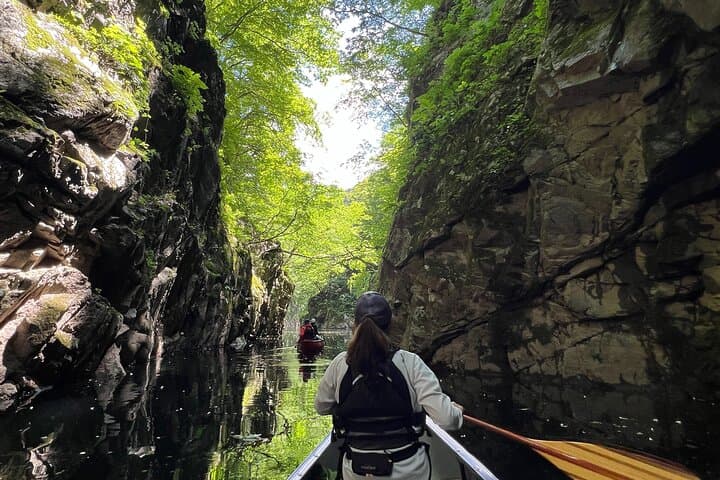
What the day feels like
You push off in near-silence, and the first sound that reaches you is a drip—water finding its way from a mossy lip to the river below. The canyon swallows ordinary noise like a hand closing over a bell; even the guide lowers their voice. The river ahead narrows into a V-shaped throat, cliffs rising on either side, their faces streaked with centuries of runoff and the soft green fuzz of moss. For the next three hours this hidden valley will shape your pace: deliberate strokes, small adjustments, long quiet stretches where the landscape feels like a living, attentive presence.
Mifuchi Gorge in Yamagata Prefecture is a half‑day escape that reads like a nature retreat and a folklore tour in one. The canyon is small enough to feel intimate and large enough to be otherworldly; local legend links the gorge to dragon‑god lore, and even on hot summer days the air inside stays cool and hushed. The result is an experience that behaves like a reset button—physical, sensory, and quietly cultural.
Geology here is not dramatic in the way of snow-capped peaks; it's patient. The gorge was carved by slow, persistent water cutting through volcanic and sedimentary layers, leaving steep, fluted walls and small waterfalls where side streams find the main channel. Those cliffs and pools create microhabitats—ferns, liverworts, and mosses cling to cracks, and the canyon’s shade makes it a seasonal refuge for birds and amphibians. Guides point out subtle clues of the gorge’s history: rounded stones showing older riverbeds, or a striation of harder rock that forms a ledge for a miniature cascade.
What the guide brings to the paddle is as important as the river itself. These are local experts, often raised on nearby hills, who narrate the landscape as they steer—pointing out markers of past floods, explaining how the gorge factored into seasonal life for mountain hamlets, and telling the stories that give the place its spiritual cast. The dragon‑god stories aren’t posed as peddled myth for tourists; they’re part of the place’s living memory, the kind of quiet reverence you notice when you watch older residents cross a river with a slight bow.
Practicalities are straightforward and intentionally low-drama: this is a private canoe tour that runs about three hours, geared to paddlers from true novices to people with some experience. You won’t need advanced skills—basic canoeing technique and attention to the guide’s safety brief are enough—but the environment requires respect. The gorge’s silence is both beauty and safety cue: there’s limited cell signal once you slide beyond the main lake, currents can be deceptively swift near constrictions, and sudden weather shifts make an early start advisable.
Why go? For many travelers, the appeal is threefold. First, it's the intimacy: a small group, quiet water, and a landscape that rewards slow curiosity. Second, it's sensory—the mist off a waterfall, the heady green of the woods, the tactile feedback of a wooden paddle through calm water. Third, it’s cultural: the guide’s stories and the canyon’s sacred associations make it more than a scenic paddle; it’s a navigation through local memory.
Timing and technique matter. Morning departures are best: the light is softer, the water calmer, and guides often schedule trips to avoid the small swell of afternoon wind. Wear quick‑dry layers and shoes that can get wet—getting in and out of the canoe can mean ankle‑deep edges. Hydration is simple: bring a bottle with a clip and sip regularly; the cool air can mask dehydration. For paddling, short, efficient strokes are smarter than brute force—save energy for the return, and let the guide handle tricky currents.
For photographers, the gorge rewards patience. Shoot wide when the canyon opens into a pool, then switch to a long lens for birds and details: the texture on a wet rock, a line of dripping water, or the reflective band where cliff meets river. Polarizing filters cut glare and deepen the greens; protect your gear with a watertight pouch—mist will find everything.
This tour is private and guided, and the framed cost reflects that curation. Expect a small group and a seamless transfer from the nearest meeting point. Guides bring safety gear and local knowledge; they also moderate the pace so the trip never feels rushed. Because the area is treated with reverence, the etiquette is simple: no loud music, pack out what you bring in, and treat the quiet as the region’s signature.
If you want solitude without isolation, Mifuchi delivers. If you want cultural texture beyond a postcard, the canyon’s stories and the guides’ memories make the paddle feel like a short pilgrimage. It’s an accessible wilderness experience that rewards attention—your speed is measured not in miles per hour but in how many times you stop to notice the slow details of a place that holds its history in rock and water.
Final practical note: this isn’t a long expedition. It’s a curated, half‑day immersion. Bring comfortable, quick‑dry clothing, a waterproof camera bag, and an appetite for quiet. Show up ready to listen, and the gorge will do the rest—offering a cool hush, a dash of myth, and the steady work of water gnawing a path through time.
Trail wisdom
Small choices, better day.
Start Early
Morning departures offer calmer water, better light for photos, and fewer visitors.
Wear Quick‑Dry Layers
Temperatures inside the gorge stay cool—dress in moisture‑wicking layers and bring a light shell.
Secure Electronics
Signal drops in the gorge and mist is constant—use a waterproof case and keep devices stowed.
Follow the Guide's Lead
Guides set pace and manage tricky currents—obey instructions for boarding, paddling, and landing.
Local knowledge
Read the place, not just the route.
Watch for native species including Kingfisher, Forest salamander.
Keep an eye out for wildlife during the transition between areas and habitats. Respect distance guidelines.
The gorge is a sensitive riparian habitat—guides emphasize pack‑in/pack‑out practices and staying within designated waterways to protect vegetation and nesting sites.
Follow the guide's instructions on size limits, ethical handling, and leave-no-trace practices.
A small rock shelter upstream where spring water pools—a quiet spot for a snack. A mossy ledge behind a tiny waterfall that’s visible on low‑flow days
Locally recommended viewpoints and quiet spots known best to local operators.
Local communities have long regarded the gorge as a spiritual site with legends of dragon‑gods; guides often pass down these oral histories during the paddle.
Maritime roots and regional tradition shape the waterways and working coasts.
Seasonal guide
Four versions of the same landscape.
Spring
Best forWildflowers and fresh foliage · Cool, comfortable paddling
ChallengesHigher water from snowmelt · Unpredictable spring rain
Late spring brings vibrant green growth and full waterfalls, but expect higher flows and possible runoffs—listen to your guide.
Summer
Best forLush canopy shade · Warm surface temps outside the gorge
ChallengesIncreased visitors at nearby sites · Afternoon winds
Summer is optimal for temperature and foliage; mornings are best to avoid wind and crowds.
Fall
Best forAutumn color on canyon rims · Crisp air for photography
ChallengesShorter daylight hours · Cooler water temperatures
Fall offers dramatic color contrasts, especially on higher ridgelines, but pack warmer layers as temperatures drop.
Winter
Best forSnowbound scenery from a distance · Off‑season solitude
ChallengesTour likely unavailable · Cold, icy conditions
Winter conditions typically close or limit canoe access; check availability and dress for cold if trips are offered.
Operator details
What the booking data adds.
Included
- ✓Consumption tax
- ✓Insurance Fee
- ✓Rental fee for 3 pieces of canoe equipment (canoe, paddle, life jacket)
- ✓Guide Fee
Good to know
- ✓Specialized infant seats are available
- ✓Not recommended for travelers with spinal injuries
- ✓Not recommended for travelers with poor cardiovascular health
- ✓Travelers should have at least a moderate level of physical fitness
Pack with intention
What to bring.
Good to know
Common questions.
No—this private tour is suitable for beginners; guides provide instruction and manage safety. Some basic balance and willingness to follow guidance are necessary.
Plan the edges
The details that make the day easier.
Local lore links Mifuchi Gorge to a dragon‑god legend, and the gorge has long been considered a sacred, cooling sanctuary by nearby mountain communities—this cultural identity is part of guided tours.
After the paddle, head toward Yamagata’s local eateries for imoni (a taro and beef stew typical of the region), a bowl of hand-cut soba, and a tasting of local sake—perfect for warming up and sharing stories about the gorge.
- Closest airport
- Yamagata Airport (GAJ). Driving distance: approximately 45–90 minutes from central Yamagata depending on meeting point. Cell service: intermittent to none inside the gorge. Permits: no public permits required for this private tour—advance booking is required.
This canyon supports fragile riparian ecosystems—pack out all trash, avoid disturbing shore vegetation, and stick to the guide’s route to minimize erosion and wildlife disturbance.
Explore by topic
Follow the threads.
Keep exploring
Make the story part of the trip.
Set out from Bass Harbor for a private, customizable day on Blue Hill Bay — lighthouses, puffins, seals, and the chance to feel Acadia from the water. Small groups, local captains, unforgettable views.
In four hours you can move from shaded canyon ferns to wind-scoured coastal ridgelines, guided by someone who knows where the light—and the hidden views—live. This private half-day hike on the Monterey Peninsula or Big Sur is compact, curated, and perfect for travelers who want depth without a multiday commitment.
 Related story
Beneath a sky of shifting light, Skaftafell’s ice reads like a map of time. This three-hour guided glacier hike mixes technical instruction with geology and culture: compact, safe, and unforgettable.