
What the day feels like
You step off the minibus where the asphalt thins and the hill becomes rock. A ragged mouth of concrete yawns into Plješevica mountain, and for a moment the air feels different—cooler, held hostage beneath tons of stone. Your guide's flashlight slices a cone across a vaulted hangar, where echoes answer every footstep twice. This is Zeljava: a Cold War citadel carved into a mountain on the Croatian–Bosnian border, a place where engineering, secrecy, and history meet a hardscrabble kind of beauty.
The tour is both an archaeological walk-through of a nation’s anxieties and a restrained adventure. For two hours you wind through cavernous hangars, cable-strewn maintenance bays, and once-hidden control rooms whose tile and paint have surrendered to damp and time. Concrete ribs arch overhead like the bones of some industrial leviathan; nature, patient as always, threads moss and grasses through fissures in the entrance ramps. The mountain is not silent so much as deliberate—holding its stories until you ask the right questions.
Zeljava was conceived amid the geopolitics of Tito’s Yugoslavia, an era when a well-hidden base could mean the difference between deterrence and disaster. Engineers cut an airport into Plješevica’s flank, producing one of Europe’s largest underground airbases: parallel runways, reinforced hangars that could shelter fighter aircraft, and an inner world built to function independently in wartime. By the early 1990s the complex’s strategic promise had become a casualty of a larger human tragedy. During the breakup of Yugoslavia the base was heavily sabotaged and partially demolished, leaving behind a ruin that oscillates between industrial grandeur and melancholy.
Geology plays a supporting role. The base relies on the mass and stability of Plješevica, whose limestone and karst features have shaped the contours of the tunnels and forced human design to follow the mountain’s logic. Light rarely reaches far; water collects in shallow pools where the mountain breathes. Outside, the Lika-Senj landscape drops away into forested valleys and limestone ridges that, in the right light, look almost sculpted by wind. The air above ground dares you with the smell of pine and river stone; underground, concrete dares you to keep your flashlight steady.
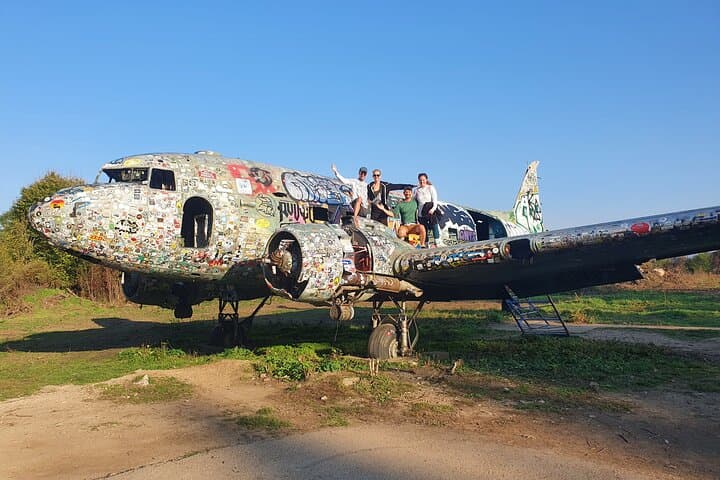
Culturally, Zeljava sits at a border of identities and memories. Locals tell stories of colleagues who once worked together under one flag and were later divided by war; the tour guide's voice, practical and unflashy, threads these human stories between technical notes. The site has no glamour now—only the weathered truth of engineering, the small graffiti of visitors, and the occasional nest where birds have found a quiet alcove to raise chicks. Visiting is an act of witness: to Cold War hubris, to the human cost of division, and to the resilience of place.
For travelers, this is an accessible day adventure with a layered payoff. It’s not a scramble or a climb, but neither is it a museum stroll. There are low, damp sections and rubble in places; the path is uneven, echoes mislead distance, and navigation without a guide can be risky. Book a guided tour (you’ll find options in the Plitvice area) because guides provide safety briefings, context, and often helmets and lights. Expect about two hours on-site—long enough to see the main hangars, maintenance bays, and a few control-room relics, but short enough to pair with a walk in the nearby hills or a visit to Plitvice Lakes National Park.
Practical details: tours commonly run year-round because most of the experience is underground and weatherproof, but winter adds cold and mud above ground. Footwear is important—sturdy, grippy shoes will keep you steady on wet concrete. Bring a headlamp or compact flashlight with fresh batteries even if the operator supplies lighting; camera enthusiasts will want a fast lens and a tripod for long exposures in low light. Respect the site: it’s fragile, partly unstable, and, in places, dangerous. Don’t touch wiring or climb where you’re told not to. Leave no trace and avoid removing artifacts—this is a ruin, not a souvenir shop.
Why go? Because Zeljava stitches together stories you can’t get from a textbook: the technical daring of Cold War engineers, the human spillover of geopolitics, and the stark physical drama of a place where the mountain swallowed the runway. It’s a compact, contemplative adventure—not about summit views but about interior spaces that still carry the momentum of history. Whether you come for history, for photography, or simply for the odd thrill of being inside a mountain that once hummed with military life, this is a trip that rewards curiosity and a measured sense of exploration.
Trail wisdom
Small choices, better day.
Bring solid footwear
The tunnels are damp and uneven—sturdy boots with good traction reduce slips and make walking on concrete and rubble comfortable.
Carry a reliable light
Even if guides provide lamps, a personal headlamp or small flashlight with spare batteries helps for photography and tight corners.
Listen to the guide
Guides know unstable areas and safety rules—stay with the group and obey warnings about restricted zones.
Protect your camera gear
Long exposures work best underground—bring a small tripod and lens cloths to handle damp conditions.
Local knowledge
Read the place, not just the route.
Watch for native species including Brown Bear, Golden Eagle.
Keep an eye out for wildlife during the transition between areas and habitats. Respect distance guidelines.
The site is fragile—stick to marked paths, don't remove artifacts, and support licensed guides who help monitor and protect the complex.
Follow the guide's instructions on size limits, ethical handling, and leave-no-trace practices.
Short viewpoint on the Plješevica ridge for panoramic shots of the Bihać valley. Small roadside stands near Plitvička Jezera selling trout and local cheeses
Locally recommended viewpoints and quiet spots known best to local operators.
Built during the Cold War era, Zeljava was one of Europe's largest underground airbases and was heavily damaged during the conflicts of the early 1990s.
Maritime roots and regional tradition shape the waterways and working coasts.
Seasonal guide
Four versions of the same landscape.
Spring
Best forcooler visits · fewer midges · flowered valleys above ground
Challengesmud at trailheads · variable weather outside
Spring is pleasant—underground temperatures are stable, while the surrounding hills green up and make a good pairing with a surface hike.
Summer
Best forpairing with Plitvice Lakes · long daylight · easier travel logistics
Challengeshigher tourist numbers at Plitvice · warm above ground temperatures
Summer brings more visitors to the region; the tunnels remain cool, but plan transport and bookings ahead.
Fall
Best forfewer crowds · crisp air outside · rich landscape colors
Challengesshorter daylight hours · cooler temperatures
Fall is ideal for combining history and landscape photography—the mountain air sharpens, and crowds thin.
Winter
Best foratmospheric light · quiet site visits
Challengescold and possible snow on approach roads · limited services in nearby towns
Tours operate year-round, but winter requires warmer layers and careful transportation planning.
Operator details
What the booking data adds.
Included
- ✓flashlight
Not included
- —Private transportation
Good to know
- ✓Service animals allowed
- ✓Not recommended for pregnant travelers
- ✓Not recommended for travelers with poor cardiovascular health
- ✓Suitable for all physical fitness levels
- ✓Not recommended for travelers with fear of dark and narrow spaces
Pack with intention
What to bring.
Good to know
Common questions.
The guided visit is about two hours in duration, which covers the main underground hangars and selected control rooms.
Plan the edges
The details that make the day easier.
Zeljava was one of the largest underground airbases in Europe and was built inside Plješevica mountain during the Cold War; it was heavily damaged and partly destroyed during the conflict in 1992.
After the tour, head to Plitvička Jezera village for trout or lamb at a local konoba and try šljivovica (plum brandy) in a cafe; in nearby Bihać you’ll find Bosnian coffee houses and casual eateries serving ćevapi.
- Closest major airport
- Zagreb (ZAG) ~2.5–3 hours drive; Driving distance from Plitvička Jezera: ~40–60 minutes depending on route; Cell service: Good in towns, patchy near the site and none deep inside tunnels; Permits: None required for guided tours—book through licensed operators.
This historic site is fragile—pack out all trash, avoid touching or removing artifacts, and support licensed guides who help preserve and monitor the area.
Explore by topic
Follow the threads.
Keep exploring
Make the story part of the trip.
Set out from Bass Harbor for a private, customizable day on Blue Hill Bay — lighthouses, puffins, seals, and the chance to feel Acadia from the water. Small groups, local captains, unforgettable views.
In four hours you can move from shaded canyon ferns to wind-scoured coastal ridgelines, guided by someone who knows where the light—and the hidden views—live. This private half-day hike on the Monterey Peninsula or Big Sur is compact, curated, and perfect for travelers who want depth without a multiday commitment.
 Related story
Beneath a sky of shifting light, Skaftafell’s ice reads like a map of time. This three-hour guided glacier hike mixes technical instruction with geology and culture: compact, safe, and unforgettable.