
What the day feels like
By the time the minivan drops you at the trailhead near Senaru, the air already smells of wet earth and green things—ferns unrolling like parchment, leaves glistening from the mountain’s constant breath. A rut of stone and packed soil threads uphill and, after the first bend, the forest narrows into a corridor of dripping vines where light comes in thin and reverent. The day is a study in contrasts: the immediate hush of rainforest and the distant, low percussion of water. It’s an ordinary morning to the jungle and an extraordinary one for anyone who has come to find waterfalls that seem to have been hewn out of tropical memory.
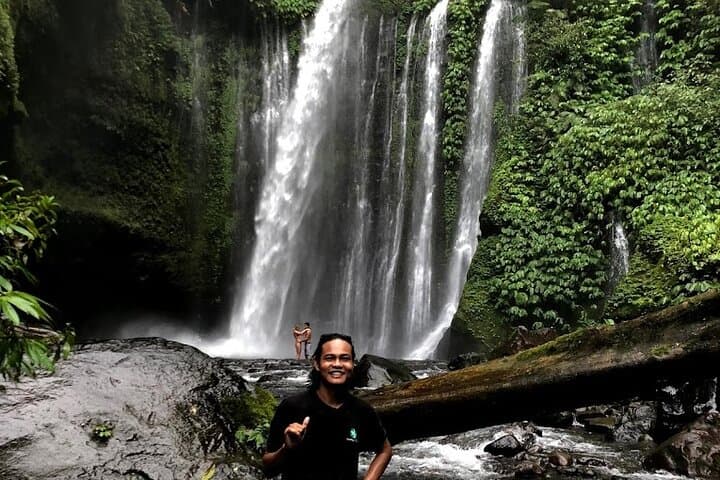
The twin rewards of this trek are Sendang Gile and Tiu Kelep, two waterfalls fed by the slopes of Mount Rinjani, and both shaped by the island’s volcanic heart. Sendang Gile announces itself first: a curtain of white, a hush that gathers people into a single exhale. A short walk beyond, through a grove of towering bamboos that slap the trail like a slow applause, is Tiu Kelep. The water here is theatrical—splitting on mossy boulders, sending plumes of spray that dare you to get closer. A shallow pool forms at its base, cool and clear enough to shake off the road dust.
This is more than postcard scenery. The waterfalls sit in the shadow of Rinjani, Indonesia’s second-highest volcano, and the geology is legible: porous volcanic rock channels mountain runoff into year-round flows, while centuries of erosion have carved deep plunge pools and amphitheaters of stone. Culturally the route threads past Bayan Traditional Village, a living chapter of the Sasak people whose mat-weaving, unique mosque architecture, and community customs predate much of the modern island life. Guides on the tour are often from neighboring villages; they read the forest for you—pointing out medicinal plants, explaining local taboos, and helping you navigate the slippery rocks where the jungle meets the water.
The active part of the day is straightforward but satisfying: the round-trip trek is a few kilometers through uneven terrain, with a modest climb and sections of steep, wet rock. Suitable footwear and a steady pace keep the focus on the scene—doves and kingfishers, the occasional macaque in a clearing, sunlight that streams through the canopy in solid beams. At Tiu Kelep you can strip down and wade into the pool, letting the cooling current do the work of recovery. The waterfalls are social; locals and travelers alike cluster on rocks to eat lunch, trade sunscreen and stories, and talk about Rinjani—its trails, its moods, and the trekkers who make pilgrimages up the mountain.
For planning, the tour is a tidy package: a morning pickup from accommodations (often in Senggigi or Mataram), a guided hike through the monkey forest and jungle tracks, entrance fees included, and time to swim and explore before a return in the late afternoon. If you like a cultural layer on top of your nature fix, the stop at Bayan Traditional Village is a short, illuminating detour—mud-brick homes, indigo-dyed cloth, and a mosque that reads like an architectural footnote connecting the island’s past to its present.
Practically speaking, aim for the dry months when the trail is less slippery and the waterfalls still have heft—Lombok’s dry season runs roughly May through September. Bring layers: the forest stays cool under shade but the sun is fierce when you break into open areas or wait at the trailhead. Hydration is essential; the hike is not long but the humidity makes exertion feel heavier. Locally sourced snacks are available at small warungs near Senaru, and tipping local guides helps sustain the communities that steward these places.
The waterfalls are accessible enough for casual hikers but rewarding for anyone who values a relationship with place over a simple checklist photo. Nature here is not mute; the river dares you with its spray, the trail nudges you to pay attention, and the village invites a conversation. That combination—geology, culture, and the simple joy of a cold swim—is what makes the Sendang Gile and Tiu Kelep day trip a clear, doable reason to come to Lombok.
If you go, move deliberately: arrive early to avoid crowds, respect local customs in Bayan, and leave nothing but footprints. Bring a dry bag for phones and a towel for the pool. And when the light catches the water and the mist rises like a curtain, give yourself a moment. It’s a place that rewards both small efforts and quiet attention.
Trail wisdom
Small choices, better day.
Start early
Pick the first group or an 8 AM pickup to avoid crowds and the afternoon rain build-up; mornings are cooler for hiking.
Good shoes matter
Wear grippy, closed-toe hiking shoes—rocks near the falls are wet and slippery.
Bring a dry bag
Protect electronics and snacks from waterfall spray and unexpected downpours.
Support local guides
Use registered guides and buy refreshments from village warungs to ensure community benefits.
Local knowledge
Read the place, not just the route.
Watch for native species including Long-tailed macaque, Kingfisher species.
Keep an eye out for wildlife during the transition between areas and habitats. Respect distance guidelines.
Water sources are fed by Rinjani’s springs; support local guides and avoid single-use plastics to minimize impact on waterways and village life.
Follow the guide's instructions on size limits, ethical handling, and leave-no-trace practices.
A short side trail to a quiet pool upstream of Sendang Gile for a less-crowded swim. Bayan Traditional Village weaving stalls for hand-dyed textiles
Locally recommended viewpoints and quiet spots known best to local operators.
Bayan is one of Lombok’s oldest Sasak villages, known for preserving traditional architecture and rituals; the area’s relationship with Mount Rinjani goes back centuries.
Maritime roots and regional tradition shape the waterways and working coasts.
Seasonal guide
Four versions of the same landscape.
Spring
Best forLush greenery · Fewer tourists
ChallengesTransitional rains · Trail mud
Spring (Mar–May) is a shoulder-moist season: vegetation is productive but occasional showers can make the trail slippery.
Summer
Best forDry trail conditions · Clear views
ChallengesHeat and sun exposure · Higher tourist numbers
Summer (Jun–Aug) is Lombok’s dry season—ideal for stable footing and reliably full waterfall flows, though expect more visitors.
Fall
Best forWarm water swims · Colorful morning light
ChallengesOnset of rain later in season · Variable trail conditions
Fall (Sep–Nov) can still be pleasant early on, but the chance of heavier rains increases toward November.
Winter
Best forPowerful waterfalls · Dramatic skies
ChallengesHeavy rain and flashier currents · Trail closures possible
Winter (Dec–Feb) is the wet season—water volumes peak but trails may be slippery or temporarily impassable.
Operator details
What the booking data adds.
Included
- ✓Your journey begins with a smile! Ride in a clean, air-conditioned vehicle with a friendly driver, with pick-up and drop-off from your accommodation in Senggigi, Kuta, Mataram, and nearby.
- ✓Bottled water
- ✓Entrance fee
- ✓Local Guide
Not included
- —Lunch
- —Personal Expensess
- —Tips for your guide/driver (optional)
Good to know
- ✓Service animals allowed
- ✓Specialized infant seats are available
- ✓Not recommended for travelers with spinal injuries
- ✓Not recommended for pregnant travelers
- ✓Not recommended for travelers with poor cardiovascular health
- ✓Suitable for all physical fitness levels
Pack with intention
What to bring.
Good to know
Common questions.
The walking route from the trailhead to Sendang Gile and then on to Tiu Kelep is roughly 2–4 kilometers round trip depending on access points used; expect uneven terrain and several short steep sections.
Plan the edges
The details that make the day easier.
Bayan Traditional Village is famous for its age-old Sasak customs and was historically a center for Islamic scholarship on Lombok, with architecture and rituals that reflect centuries of cultural exchange.
After the hike head into Senaru for a cold kopi (Lombok coffee) and local snacks; if you’re hungry for dinner, try ayam taliwang in Senggigi or Mataram and visit a village warung to sample tempe and freshly grilled fish.
- Closest airport
- Lombok International Airport (LOP). Typical drive to Senaru: 1.5–2.5 hours from Mataram
- Senggigi. Trailhead
- short drive from Senaru village. Cell service: patchy on trail. Permits: entrance fees usually handled by tour operator; independent visitors pay at park office.
These waterfalls are part of the Rinjani watershed—pack out all trash, avoid feeding monkeys, and hire local guides to ensure tourism supports village economies and conservation.
Explore by topic
Follow the threads.
Keep exploring
Make the story part of the trip.
In four hours you can move from shaded canyon ferns to wind-scoured coastal ridgelines, guided by someone who knows where the light—and the hidden views—live. This private half-day hike on the Monterey Peninsula or Big Sur is compact, curated, and perfect for travelers who want depth without a multiday commitment.
 Related story
Beneath a sky of shifting light, Skaftafell’s ice reads like a map of time. This three-hour guided glacier hike mixes technical instruction with geology and culture: compact, safe, and unforgettable.
 Related story
Lose the city for a few hours without leaving it: this 5-mile, 900-foot-gain Forest Park loop threads old-growth pockets, city viewpoints, and cultural landmarks for a compact taste of Portland’s wild side. Expect moss, roots, and stories.