
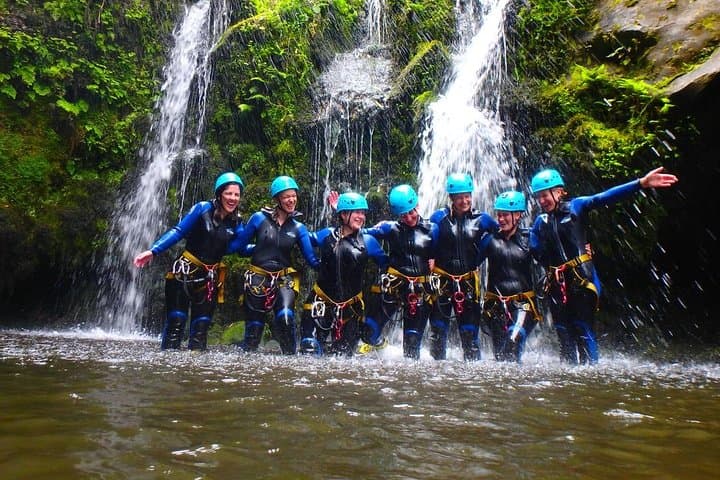
What the day feels like
A hiss of water, the slap of a neoprene sleeve against moss, and the canyon’s pulse moving you forward: that’s how the morning opens when a minivan rolls off the coastal road and onto a single-lane approach toward Ribeira dos Caldeirões. The Azores wear their geology on the surface—black volcanic rock braided with green—and the canyon narrows into a sequence of moss-slick steps, plunge pools and narrow chutes that dare you to follow. Guides from Picos de Aventura clip themselves in, check your harness, and the group files down the last switchback to meet the river.
Canyoning here isn’t theatrical. It’s direct and elemental. Over roughly three hours you’ll descend through a temperate curtain of ferns and laurisilva remnant forest, negotiating short rappels, natural slides and jumps into clear pools without ever feeling exposed beyond what you chose that morning. For many travelers that balance—wild enough to feel remote, managed enough to be family-friendly—is the tour’s appeal: it’s a way to touch the Azores’ volcanic underpinnings without technical mountaineering or a full day’s commitment.
The Azores are young islands in geologic terms, sculpted by fissural volcanism and undersea eruptions that piled basalt flows into steep ravines. Ribeira dos Caldeirões is more than pretty cascades: it’s a waterway cut through successive lava and tuff layers, creating the grottoes, plunge basins and polished rock needed for playful canyoning. Culturally, the site sits in Nordeste municipality, a rural slice of São Miguel where watermills and stone channels speak to a traditional relationship with running water—once purely utilitarian, now part of a nature park visited for its scenic value.
Local guides bring that context into the canyon. They’ll point out the old watermills and channels near the trailhead, explain the basalt formations and the role of freshwater springs in local agriculture, and emphasize Leave No Trace practices. Conservation is tangible: trails are narrow, soil and native plants recover slowly in volcanic substrates, and heavy-footed detours can widen unofficial paths. The operators you’ll encounter—certified and small in scale—prioritize minimal impact, group size control and guest safety.
Practicalities matter as much as the thrill. This tour runs about three hours start-to-finish and typically costs in the neighborhood of $78 per person, includes wetsuit, helmet, harness and canyoning shoes, and is guided with photos often included in the package. The technical envelope is moderate: you’ll do short rappels and some downclimbing rather than long multi-pitch abseils. The approach is brief, the pace designed for confident beginners and families with active children, but you should be comfortable with basic swimming and following guide instructions.
Timing is part of the equation. Spring brings the fullest flows and the canyon sings loud—spectacular but chillier; summer delivers warmer air and more comfortable water temperatures; fall mellows the crowds but can turn sporadic rain into quick rises in the stream. Whatever the season, your best window for calmer conditions is a morning start. Guides often offer transfer from Ponta Delgada, the island’s main hub, but stay flexible: island weather can change fast.
What you’ll remember after the photos are the small, particular sensations: the way the current catches your leg and nudges you into a pool, the wet-scent of endemic ferns, the satisfying grind of a rope through hands trained to trust friction, and the immediate human camaraderie—laughter and hoarse cheering—after someone drops into a plunge pool for the first time. The canyon makes for an unpretentious rite of passage: short, communal, tactile.
For planning: if you’re packing light, bring quick-dry clothes to change into, a compact waterproof camera or a dry bag for your phone (though most guests rely on guide photos), and footwear you don’t mind getting wet. Leave heavy jewelry and bulky valuables behind. Most operators provide full canyoning kit, but confirm in advance if you need a specific wetsuit size or if you want a learner-friendly briefing in English.
Ribeira dos Caldeirões canyoning is an accessible slice of Azores adventure—wild enough to feel like discovery, pragmatic enough to fit into a half-day beside whale watching, thermal springs, or a loop through the island’s tea plantations. It’s ideal for travelers who want to move through landscape rather than merely look at it: to duck under a curtain of water, feel volcanic stone underfoot, and exit the canyon not just with photos but with a clearer sense of how water and fire shaped these islands.
Trail wisdom
Small choices, better day.
Arrive hydrated and fed
A light, carbohydrate-rich snack before the trip keeps energy steady; dehydration makes cold water feel colder and hikes harder.
Layer for variable temps
A thin base layer under the provided wetsuit helps with insulation and quick post-tour drying.
Protect small items
Leave loose electronics at the meeting point or use a small dry bag; guides will take photos so you don’t need to risk your phone.
Listen to the briefing
Pay attention during the safety demo—proper foot placement and rope techniques keep the descent fun and safe.
Local knowledge
Read the place, not just the route.
Watch for native species including Azores bullfinch (in higher laurisilva stands), Common kestrel and other raptors hunting over ravines.
Keep an eye out for wildlife during the transition between areas and habitats. Respect distance guidelines.
The area is managed to limit erosion and protect native vegetation—stick to trails, avoid trampling fragile plants and follow guide instructions to minimize impact.
Follow the guide's instructions on size limits, ethical handling, and leave-no-trace practices.
A short walk above the canyon to historic watermills and stone channels. A nearby viewpoint on the coastal road for sweeping views of cliffs and ocean
Locally recommended viewpoints and quiet spots known best to local operators.
The Nordeste region used watermills and channels for grain and local agriculture; many stone mills near the park date to the 19th century.
Maritime roots and regional tradition shape the waterways and working coasts.
Seasonal guide
Four versions of the same landscape.
Spring
Best forHigher water flows · Lush vegetation · Dynamic waterfalls
ChallengesColder water temperatures · Unpredictable rain
Spring brings the most dramatic cascades and verdant canyon walls, but wetsuits and a warm change of clothes are essential.
Summer
Best forWarmer air and water · Stable weather · Family-friendly conditions
ChallengesHigher visitor numbers · Stronger sun on approach trails
Summer is the most comfortable season for canyoning here—warmer water and clearer skies make for easy conditions and better photos.
Fall
Best forFewer crowds · Mild temperatures · Good light for photography
ChallengesOccasional heavy rains · Stream levels can rise quickly
Fall balances pleasant temperatures and lower visitor density, though check forecasts for storm fronts that raise river levels.
Winter
Best forDramatic scenery · Low visitor numbers
ChallengesColder water and air · Shorter daylight hours
Winter offers raw, quiet canyoning experiences but expect cold temps, shorter tours and potential cancellations in heavy weather.
Operator details
What the booking data adds.
Included
- ✓All necessary gear (harness, helmets, wetsuits and boots).
- ✓Optional - Transportation to and from the activity.
Not included
- —Bottled water
Good to know
- ✓Not recommended for travelers with spinal injuries
- ✓Not recommended for pregnant travelers
- ✓Suitable for all physical fitness levels
- ✓Children must be accompanied by an adult
- ✓May be operated by a multi-lingual guide
- ✓Please provide your shoe size and preferred sizing format (US/EU/UK)
Pack with intention
What to bring.
Good to know
Common questions.
No — this half-day tour is designed for beginners and families; guides teach necessary techniques on-site.
Plan the edges
The details that make the day easier.
Ribeira dos Caldeirões Natural Park contains historic watermills and stone channels dating to the 19th century, illustrating Nordeste’s long relationship with its freshwater resources.
After the canyon, drive toward Nordeste village for a hearty cozido or fresh fish plate and a locally brewed craft beer in Ponta Delgada. Stop at a small pastelaria for bolo lêvedo (Azorean sweet bread) and strong coffee—the island’s easy, honest flavors pair well with damp clothes and tired smiles.
- Closest airport
- João Paulo II Airport (PDL), Ponta Delgada
- Driving distance from Ponta Delgada
- ~75 km, about 1–1.5 hours
- Cell service
- patchy in the canyon, reliable near main roads
- Permits
- none required for guided canyoning; booking recommended
Operators keep group sizes small to protect fragile trail edges and native vegetation; pack out any trash, avoid introducing sunscreen into freshwater pools and follow guides’ instructions to avoid disturbing habitat.
Explore by topic
Follow the threads.
Keep exploring
Make the story part of the trip.
Set out from Bass Harbor for a private, customizable day on Blue Hill Bay — lighthouses, puffins, seals, and the chance to feel Acadia from the water. Small groups, local captains, unforgettable views.
In four hours you can move from shaded canyon ferns to wind-scoured coastal ridgelines, guided by someone who knows where the light—and the hidden views—live. This private half-day hike on the Monterey Peninsula or Big Sur is compact, curated, and perfect for travelers who want depth without a multiday commitment.
 Related story
Beneath a sky of shifting light, Skaftafell’s ice reads like a map of time. This three-hour guided glacier hike mixes technical instruction with geology and culture: compact, safe, and unforgettable.