
What the day feels like
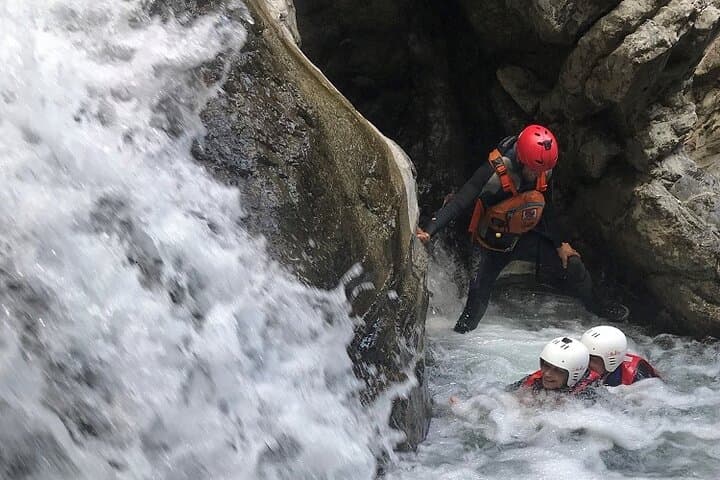
You push off from a slab of sun-warmed rock and the gorge answers—cool, immediate, and bright as glass. A pulse of current nudges your calves and the guide nods: the first natural slide. For the next three hours the canyon reads like a short, compact novel of water and stone—slippery chutes, deep emerald pools, narrow corridors where the Lima stream whispers, and vertical faces that dare you to climb higher and, eventually, to leap. Children squeal; older guests concentrate; everyone surfaces smiling, hair plastered to the face with limestone chalk and river foam.
Canyoning in the Cocciglia Gorges is less about conquering a route and more about being shaped by it. The activity runs as a guided, three-hour loop through a segment of the Lima stream where millennia of erosion have carved slides, toboggans, plunge pools and cliffs. Guides kit you in a wetsuit, life jacket, helmet and, if necessary, harnesses for short aided sections. Much of the thrill is optional—natural slides that run like good amusement-park rides, cliffs with set jumps (some as high as 8 meters), and pockets of quiet where you can float and watch the canyon walls fold upward toward sky.
Geology and hydrology give the place its personality. The Cocciglia section is a cut through the Apennine foothills where harder rock resists erosion and the river concentrates its force into sculpted corridors. The result is a variety of water features—shallow rapids, deep basins of eerily blue-green water, and slick ramps that the stream uses to test gravity. The Lima has been making this landscape for tens of thousands of years; you simply become part of the continuing wear-and-tear.
There’s also a cultural layer to the valley. The tiny villages that cluster along the Lima river are part of Tuscany’s less-touristed interior—stone houses, chestnut forests, and a spa culture centered on Bagni di Lucca. In the 18th and 19th centuries, aristocrats routed their Grand Tours through these thermal springs; today the same mineral-rich waters provide a low-key recovery ritual after a morning of immersing yourself in the gorge.
Practical reality keeps the romance honest. This is a summer activity best undertaken when water levels are warm enough for comfort but not so high they become dangerous. The Viator experience is run as an instant-confirmation activity priced from about $70. Participants should be comfortable in moving water, able to swim mildly, and prepared for heights up to 8 meters if they choose to jump. Guides lead all technical moves; you’ll be belayed or given simple handlines when terrain makes it prudent. Groups are typically family-friendly; kids who swim confidently can take part with parental consent and guide approval.
Why go? Because canyoning in Cocciglia compresses a day of river-play into an efficient, adrenaline-laced morning. It’s a brilliant antidote to Tuscan heat—shade, cold water, the tactile pleasure of rock-to-water transitions—and it pairs well with the region’s slower pleasures: a late lunch of porcini or chestnut-based desserts, time in a thermal pool, and a walk across a medieval bridge to square up an afternoon with culture.
If you’re planning it, timing matters. Book morning slots to avoid the midafternoon crowds and the sun’s strongest heat. Expect the guides to provide all technical gear, but bring your own water shoes or old trainers with a secure fit and a neoprene sock if you own one. A lightweight dry bag for your phone and a small snack in a pocket will keep energy up; you’ll be surprised how hungry you get after three hours of reversing gravity.
Safety and sustainability dovetail in the canyon. Guides emphasize conservative decision-making: no cliff jumps without explicit go-ahead, always check entry and exit points, and respect wildlife. The Lima’s pools are sensitive microhabitats. Use biodegradable sunscreen, avoid soaps or shampoos in the water, and don’t disturb the algae mats on the rocks—those slick strands are the canyon’s slow-moving living skin.
For a visitor to Tuscany who wants a different picture of the region—less vineyards and more precipice—this canyoning trip is ideal. It’s accessible, fun, and offers tactile engagement with Italy’s rugged interior. After the canyon, rinse off in a thermal tub, order a plate of local mushrooms or game, and admire the valley you just moved through from a towel-wrapped bench. The Cocciglia Gorges aren’t a secret; they’re a shared, instant-gratification kind of wonder: short, natural, and designed to make you grin.
Trail wisdom
Small choices, better day.
Wear Secure Water Shoes
Choose shoes with a stout sole and closed toe—many guides require secure footwear to prevent slipping on wet rock.
Start Early
Morning departures avoid midday heat and often mean lower water levels for safer entry points.
Know Your Jump Limits
You can opt out of cliff jumps; listen to the guide’s assessment and don’t feel pressured to participate.
Protect Electronics
Keep phones and keys in a dry bag the guide provides or bring a small waterproof case—water is constant and unforgiving.
Local knowledge
Read the place, not just the route.
Watch for native species including European otter (occasionally seen near pools), Alpine salamander and various riverine insect life.
Keep an eye out for wildlife during the transition between areas and habitats. Respect distance guidelines.
The canyon’s pools are sensitive ecosystems—avoid soaps or lotions in the water, use biodegradable sunscreen, and pack out all waste.
Follow the guide's instructions on size limits, ethical handling, and leave-no-trace practices.
Ponte della Maddalena (Devil’s Bridge) in nearby Borgo a Mozzano—a picturesque medieval bridge worth a detour. Thermal pools of Bagni di Lucca for a restorative soak after canyoning
Locally recommended viewpoints and quiet spots known best to local operators.
The Lima valley has long been a transit route through the northern Apennines; nearby Bagni di Lucca is famed for its thermal waters, visited by Grand Tour travelers in the 18th–19th centuries.
Maritime roots and regional tradition shape the waterways and working coasts.
Seasonal guide
Four versions of the same landscape.
Spring
Best forLower crowds · Cool waterfalls · Wildflowers
ChallengesUnpredictable flows · Colder water temperature
Spring offers green gorge walls and fewer visitors but water can be cold and flows variable—wetsuits and flexible plans are essential.
Summer
Best forWarm water swims · Natural slides · Family groups
ChallengesHigher temperatures on approach trails · Possible afternoon thunderstorms
Summer is peak season—water is inviting, jumps feel safer, and tours run daily; book mornings to avoid heat and weather shifts.
Fall
Best forCrisp air and colors · Lower tourist numbers · Good water clarity
ChallengesCooler evenings · Shorter daylight hours
Fall brings color and calm waters; expect cooler temperatures and pack warmer layers for after the canyon.
Winter
Best forOff-season solitude · Watching the landscape’s raw form · Planning next trip
ChallengesMost guides do not run canyoning tours · Cold water and short days
Winter is generally unsuitable for swimming-based canyoning; use the season to research routes or enjoy the nearby thermal spas.
Operator details
What the booking data adds.
Included
- ✓Neoprene wetsuit, neoprene boots, helmet, life jacket, wetsuit protection harness
Not included
- —bathing suit, sneakers, thermal T-shirt (optional), towel
Good to know
- ✓Public transportation options are available nearby
- ✓Not recommended for travelers with spinal injuries
- ✓Not recommended for pregnant travelers
- ✓Not recommended for travelers with poor cardiovascular health
- ✓Suitable for all physical fitness levels
Pack with intention
What to bring.
Good to know
Common questions.
No—this guided trip is designed for first-timers and families; guides instruct you on techniques, belays and safety.
Plan the edges
The details that make the day easier.
Bagni di Lucca’s thermal baths were frequented by 18th–19th century Grand Tour travelers, including English poets and aristocrats, making the valley a historic spa destination.
After the canyon, head to Bagni di Lucca for a late lunch of porcini or chestnut dishes and a dip in a thermal pool; sample local Tuscan wine and find a small trattoria for simple, regional cooking—the valley rewards low-key, locally-sourced plates.
- Closest airport
- Pisa (PSA) ~1–1.5 hour drive; Driving distance from Bagni di Lucca: 15–30 minutes depending on exact meeting point; Cell service: Patchy inside the gorge; Permits: None for guided tours but book in advance in high season.
This river corridor supports fragile aquatic habitats—pack out trash, avoid using soaps in the water, and ask guides about accepted practices for minimizing erosion at entry/exit points.
Explore by topic
Follow the threads.
Keep exploring
Make the story part of the trip.
Set out from Bass Harbor for a private, customizable day on Blue Hill Bay — lighthouses, puffins, seals, and the chance to feel Acadia from the water. Small groups, local captains, unforgettable views.
In four hours you can move from shaded canyon ferns to wind-scoured coastal ridgelines, guided by someone who knows where the light—and the hidden views—live. This private half-day hike on the Monterey Peninsula or Big Sur is compact, curated, and perfect for travelers who want depth without a multiday commitment.
 Related story
Beneath a sky of shifting light, Skaftafell’s ice reads like a map of time. This three-hour guided glacier hike mixes technical instruction with geology and culture: compact, safe, and unforgettable.