
What the day feels like
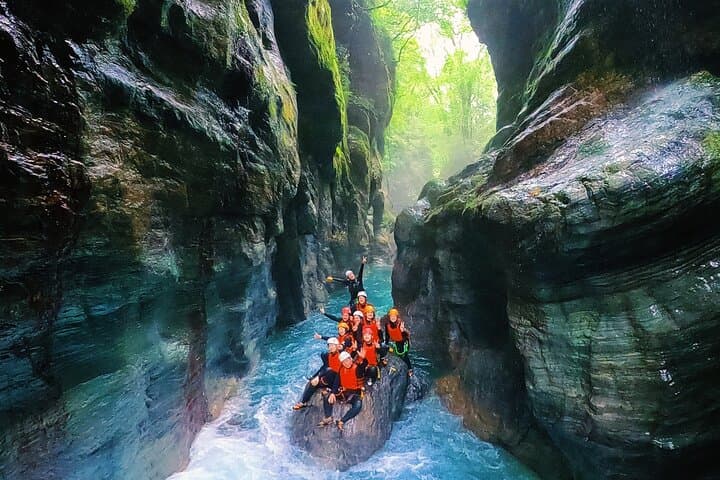
The morning light slices into the mouth of the gorge in a ribbon of cool clarity. Water so blue it looks painted slips and tumbles around granite shelves, catching shafts of sunlight and throwing them back like coin—this is Niyodogawa’s famous “Niyodo Blue.” You step onto a boulder, feel the river’s chill through a neoprene boot, and then, with the guide’s calm voice in your ear, you move: a short abseil into a deeper pool, a careful scramble across lichen-slick stone, a leap that sends out a perfect crown of droplets before the current takes you on. For two hours, the world narrows to rock, water, and the precise choreography of rope and footwork.
Canyoning here is kinetic and quiet at once. The gorge is steeped in the geology of southern Shikoku—hard volcanic and metamorphic rock sculpted over millennia into chutes, bowls, and polished ledges. The river has carved a narrow corridor where pools collect the clearest water you’ll find in Japan; locals call it Niyodo Blue, and it’s a regional point of pride. The canyon’s character changes with every bend: calm, swim-friendly basins give way to tumbling rapids and short vertical drops that demand rope work. Guides lead groups through a carefully judged series of abseils and cliff jumps that feel daring without being gratuitous.
This tour is run by the only operator licensed to work this gorge—and they emphasize safety without draining the fun. English-speaking guides walk you through each move, fitting harnesses and advising on seals for helmets as effortlessly as they point out a rare alpine plant clinging to a fissure. The relative remoteness of the route means you’re unlikely to encounter crowds; instead, the soundtrack is the river, the occasional call of a distant bird, and the hiss of wetsuits against stone.
There’s local context to the place beyond the immediate rush. Niyodogawa and the broader Kochi Prefecture were shaped by rivers and forestry; communities here historically relied on river transport and seasonal forestry work. Today, the gorge sits at the crossroads of conservation and recreation—people flock from across Japan to experience the blue water, and careful stewardship has been central to allowing that interest to persist. Culturally, the region favors simplicity and seasonality: small inns (minshuku) and family-run soba shops reflect a slow-food ethic that pairs neatly with a morning spent sweating and splashing in a canyon.
Practicalities are straightforward: the advertised tour runs about two hours, priced from roughly $85 USD, and assumes participants can swim and move over uneven terrain. You’ll don a wetsuit, booties, harness, and helmet—all supplied—then proceed with short abseils, technical downclimbs, and guided jumps that you can opt out of if they don’t suit you. The guide-to-party ratio leans toward safety and personalized instruction, so beginners and experienced can both find an appropriate pace.
If you’re planning the trip, aim for a morning start. The gorge heats up in the afternoon—pleasant for swimming, but mornings offer crisper light and often calmer water where instructors can teach techniques with fewer distractions. Hydration matters: even in a wetsuit you’ll sweat, especially on approach trails and warm-weather months. Footwear with good toe protection and a sticky sole will make rock traverses less nervous. Bring a small dry bag for a phone and a compact mirrorless camera if you’re into photo work—the blues here are a photographer’s dream, but water protection is essential.
Safety first, always. Guides are trained and use industry-standard ropes and hardware, but the canyoning environment is inherently dynamic: tides of runoff, sudden rainfall, and slippery surfaces are part of the terrain. Respect the briefings, ask questions, and be candid about fitness or mobility concerns. If you’re traveling in Japan’s rainy season or in typhoon windows, be prepared for rescheduling.
Beyond the ropes and the adrenaline, the tour leaves you with a precise kind of calm. Time spent in narrow gorges has a way of compressing the day—every move is immediate, every sensory input heightened. Afterwards, the best way to complete the day is to find a nearby onsen or a riverside eatery and let warm water and local food bring your pulse back down. The canyon preserves a kind of elemental honesty: you are small next to the water and the stone, and that perspective is rare in our constantly connected lives.
For travelers who want both a technical taste of movement and an easy entry into wild landscapes, Niyodogawa is an ideal playground. It’s not about putting yourself through an endurance trial; it’s about concentrated, guided exposure to the raw geometry of river and rock: a series of short challenges that, taken together, feel expansive. If you leave with an awareness of geology, a new trick for descending a rope, and a memory of blindingly blue water, you’ve had the experience you came for.
Book with a reputable operator, come prepared, and treat the gorge with the quiet attention it deserves. Do that, and this two-hour slice of Shikoku will be one of those trips that sits in your memory—an elemental, uncomplicated burst of adventure.
Trail wisdom
Small choices, better day.
Morning Starts Are Best
Book the earliest slot to enjoy lower flows, crisper light, and cooler approach trails.
Bring a Small Dry Bag
Protect your phone, wallet, and a spare layer—operators provide gear but personal electronics need extra protection.
Wear Sturdy, Closed-Toe Shoes
Neoprene booties are supplied, but a good grippy sole will help on slippery rocks and during approach hikes.
Listen to the Guide
Every cliff jump and abseil is assessed by the team—if you feel unsure, you can always choose an assisted descent or opt out.
Local knowledge
Read the place, not just the route.
Watch for native species including Japanese macaque (in higher forests nearby), Kingfisher and other riparian birds.
Keep an eye out for wildlife during the transition between areas and habitats. Respect distance guidelines.
Local operators emphasize low-impact use of the gorge—stick to guide routes, avoid introducing soaps or sunscreen into the water, and pack out all waste to protect the ‘Niyodo Blue.’
Follow the guide's instructions on size limits, ethical handling, and leave-no-trace practices.
A quiet riverside onsen near Niyodogawa for a post-tour soak. A small mountain soba shop that serves seasonal river fish (ayu) grilled over charcoal
Locally recommended viewpoints and quiet spots known best to local operators.
The Niyodo River has long supported local timber and river-transport communities; its clear water has been a cultural and economic asset for surrounding villages.
Maritime roots and regional tradition shape the waterways and working coasts.
Seasonal guide
Four versions of the same landscape.
Spring
Best forCool water training · Fewer crowds
ChallengesHigher runoff from snowmelt in some years · Cooler air temperatures
Spring offers crisp water and clear light; expect cool mornings and the possibility of stronger flows early in the season.
Summer
Best forWarmest water · Full-service operations
ChallengesHigher heat and humidity · Occasional heavy rain or typhoon risk
Summer is peak season for canyoning—warm water and reliable tour schedules, but watch weather forecasts during the rainy and typhoon seasons.
Fall
Best forStable weather · Autumn foliage on approach trails
ChallengesCooler water later in the season · Shorter daylight hours
Fall combines clearer skies with cooling water; afternoons can be pleasantly warm while mornings stay fresh.
Winter
Best forQuiet, off-season experience · Clearer, crisper light
ChallengesCold water that may require thicker wetsuits · Some operators reduce schedules
Winter trips are possible but colder; operators may limit runs, and full wetsuits are essential for comfort.
Operator details
What the booking data adds.
Included
- ✓Guide ( English, Japanese)
- ✓Canyoning equipment
Not included
- —Private transportation
Good to know
- ✓Public transportation options are available nearby
- ✓Not recommended for travelers with spinal injuries
- ✓Not recommended for pregnant travelers
- ✓Not recommended for travelers with poor cardiovascular health
- ✓Travelers should have at least a moderate level of physical fitness
Pack with intention
What to bring.
Good to know
Common questions.
The guided experience runs about two hours on-site; allow additional time for check-in, gear fitting, and travel to/from the meeting point.
Plan the edges
The details that make the day easier.
The Niyodo River is famous across Japan for its 'Niyodo Blue'—its striking clarity and color are caused by low sediment load and light refraction in mineral-rich water.
After the canyon, head to a local riverside ryokan or soba shop and order grilled ayu (sweetfish) or a bowl of seasonal soba—finish with a local craft beer or a hot onsen to reset. Small, family-run eateries and inns are common; they offer a relaxed taste of rural Kochi hospitality.
- Closest airport
- Kochi Ryoma Airport (KCZ); Typical drive from Kochi City: 1.5–2.5 hours depending on route; Cell service: patchy inside the gorge; Permits: none for visitors but guided tours are required—operator provides all technical gear and safety briefings.
This river is a locally treasured waterway—pack out all trash, avoid applying non-biodegradable sunscreen before swimming, and follow guide instructions to protect fragile riparian habitats.
Explore by topic
Follow the threads.
Keep exploring
Make the story part of the trip.
Set out from Bass Harbor for a private, customizable day on Blue Hill Bay — lighthouses, puffins, seals, and the chance to feel Acadia from the water. Small groups, local captains, unforgettable views.
In four hours you can move from shaded canyon ferns to wind-scoured coastal ridgelines, guided by someone who knows where the light—and the hidden views—live. This private half-day hike on the Monterey Peninsula or Big Sur is compact, curated, and perfect for travelers who want depth without a multiday commitment.
 Related story
Beneath a sky of shifting light, Skaftafell’s ice reads like a map of time. This three-hour guided glacier hike mixes technical instruction with geology and culture: compact, safe, and unforgettable.