
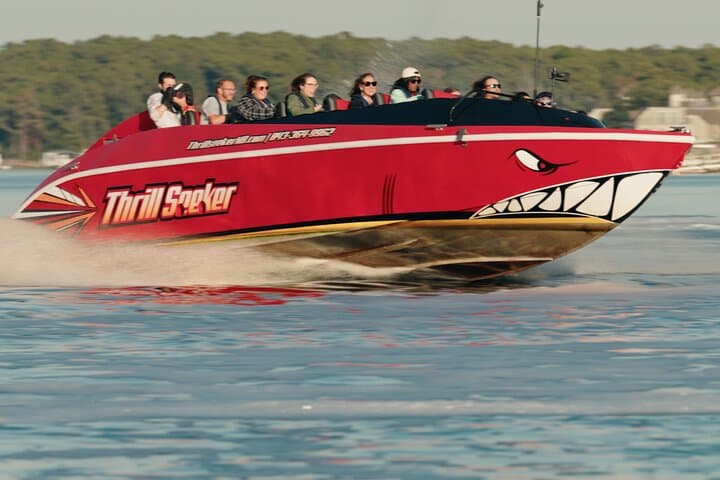
What the day feels like
The bow punches a clean line through a low sun as marsh grass leans away like an audience parting. Salt-slick spray catches in the sunlight and the engine answers with a tone that promises both precision and mischief. For an hour, the Intracoastal Waterway around North Myrtle Beach stops being a safe, plodding corridor and becomes a playground where a jet boat threads tight turns, lays down intentional roostertails, and dares the shoreline to keep up.
This is the Thrillseeker experience: a compact, engineered rush that lives somewhere between a coastal sightseeing tour and a theme-park stunt. It’s not about surviving danger so much as choosing clean, mechanical chaos—tight spins, quick accelerations, and a surprising intimacy with the landscape. You feel the water as an active partner, pushing you sideways through a channel or sending a wake that slaps the hull and laughs.
There’s more here than theatrics. The Intracoastal Waterway itself is a quietly monumental piece of American coastal infrastructure—part of a roughly 3,000-mile inland route that threads the Atlantic and Gulf coasts. Its channels snake past barrier islands, through tidal marshes formed over millennia, and alongside neighborhoods that grew up on fishing and tourism. From the boat, the coastline reads like a condensed history: old piers, shrimp boats resting like honest tools, and the modernity of condos and riverfront boardwalks.
Geology shows up in the slow, patient way sand accumulates along the Grand Strand; you’ll see it in the shallow bars that force a boat to pick its line. Ecology is louder: osprey hook above, dolphins cut across your bow, and in the quieter channels fiddler crabs and herons keep the rhythm of the marsh. The Thrillseeker company leans into this duality—fast enough for adrenalin, observant enough to point out wildlife and shallow-channel etiquette when the pace slows.
North Myrtle Beach has a local personality that’s calm and direct. Its economy is tethered to the sea: commercial fishing still threads the harbor, restaurants rely on daily bottomlines from the tide, and craft breweries are now part of the post-ride debrief. The ride itself is a short, efficient way to stitch together the human and natural sides of the coast—one moment you’re chasing speed, the next you’re craning your neck for a pod of dolphins arcing through silver water.
Practical side: this is a 60-minute guided ride that’s marketed as “the only jet boat ride in North Myrtle Beach.” Bookings are instant and flexible with free cancellation, and the advertised price starts at about $55.50 per person. Groups are compact enough that everyone gets a good view; life jackets are provided and the crew runs a tight safety script before you leave the dock.
If you’re considering it, plan for both comfort and a good camera: a windproof outer layer and a secure phone case will keep the essentials dry, while polarized sunglasses sharpen the light and help you spot dolphins amid glitter. Morning runs tend to be calmer, with glassy water and softer light; afternoon trips bring more wind and a livelier wake. The operator balances spectacle with stewardship—expect clear instructions about not feeding wildlife, giving birds room, and minimizing wake in sensitive marsh channels.
Why do this rather than a standard harbor cruise? Because it compresses two things travelers want into one hour: a visceral, fun ride that makes for an unforgettable memory, and repeated, up-close looks at the coastal environment. It’s family-friendly in the sense that younger riders often relish the speed, but the pace and noise can be too intense for infants or those sensitive to motion. For many visitors staying in North Myrtle Beach or nearby Myrtle Beach, the Thrillseeker route is the kind of splashy, local-first experience that’s easy to book between beach time and dinner.
Booking notes: the operator’s site and booking page include real-time availability and instant confirmation, which is useful for last-minute plans. Look for morning slots for calmer water and cooler temps; late-afternoon departures can pair well with sunset plans at a riverfront restaurant. Keep a small towel on hand, and stash anything you can’t risk losing in a zippered pocket or waterproof case.
The ride’s energy is the kind you can bring home in photos: people leaning into turns, salt frosting hair, and a docent-style crew handing out local colors—quick notes about wildlife, tide rhythms, and how the Intracoastal shaped local life. It’s a compact, high-impact way to connect with the Grand Strand: fast enough to thrill, smart enough to respect the coast.
Want to make it a full day? Arrive early and walk the wooden boardwalks at Barefoot Landing, sample shrimp and grits at a waterfront café, then book an afternoon or evening ride to see how the marsh takes on a different face as light drops. Or, go first thing for a brisk hour on the water followed by a lazy beach afternoon. Either way, remember: the water is an active collaborator—give it space, respect local rules, and it will give you a sharp, memorable slice of coastal South Carolina.
For logistics and booking, see the operator’s page for the Thrillseeker jet boat ride and current departure details: <a href="https://app.advcollective.com/local-experts/thrillseeker-jet-boat-ride-north-myrtle-beach-high-speed-intracoastal-adventure">Thrillseeker Jet Boat Ride — North Myrtle Beach</a>. If you want the adrenaline and the local context in a single hour, this run is a clean, efficient way to get it.
Trail wisdom
Small choices, better day.
Layer for wind and spray
Even on warm days, wind off the water chills fast—bring a windbreaker or lightweight waterproof layer.
Secure your tech
Use a waterproof phone case and a retainer for sunglasses; spray and sudden turns can dislodge loose items.
Choose morning for calm water
Early departures usually mean smoother water, better light for photos, and cooler temperatures.
Listen to the crew
Safety briefings include important instructions about seating and life jacket use—follow them for the best ride.
Local knowledge
Read the place, not just the route.
Watch for native species including Bottlenose dolphins, Ospreys and herons.
Keep an eye out for wildlife during the transition between areas and habitats. Respect distance guidelines.
Operators emphasize minimizing wake in shallow marshes, not feeding wildlife, and keeping the shoreline free of trash to protect delicate tidal habitats.
Follow the guide's instructions on size limits, ethical handling, and leave-no-trace practices.
Quiet side channels near Cherry Grove for close marsh views. Barefoot Landing riverwalk for post-ride dining and birdwatching
Locally recommended viewpoints and quiet spots known best to local operators.
The Intracoastal Waterway reshaped coastal commerce in the 20th century, linking ports and creating sheltered routes for fishing and transport along the Grand Strand.
Maritime roots and regional tradition shape the waterways and working coasts.
Seasonal guide
Four versions of the same landscape.
Spring
Best forMigratory birdwatching · Mild temperatures
ChallengesVariable weather · Thicker early-season boat traffic
Spring brings active birdlife and comfortable air temperatures—pack a wind layer for variable conditions.
Summer
Best forWarm water views · Evening sunset departures
ChallengesHeat and humidity · Bigger tourist crowds
Summer offers warm, bright days but heavier crowds and stronger sun—plan sunscreen and a morning slot to avoid peak heat.
Fall
Best forCalmer seas · Fewer crowds and mild temps
ChallengesCooling evening temperatures · Occasional storms late season
Fall is ideal for pleasant weather and smaller lines—bring a light jacket for evening rides.
Winter
Best forClear, crisp skies · Low crowd levels
ChallengesCold spray and wind · Reduced wildlife activity
Winter runs are quieter and often crisp; dress warmly and expect brisk spray on open-water sections.
Operator details
What the booking data adds.
Included
- ✓Life Jackets for each passenger
Not included
- —Additional purchase on sight for a photo and video package
Good to know
- ✓Public transportation options are available nearby
- ✓Not recommended for travelers with spinal injuries
- ✓Not recommended for pregnant travelers
- ✓Not recommended for travelers with poor cardiovascular health
- ✓Travelers should have at least a moderate level of physical fitness
Pack with intention
What to bring.
Good to know
Common questions.
The advertised duration is 60 minutes from boarding to return.
Plan the edges
The details that make the day easier.
The Intracoastal Waterway is part of a roughly 3,000-mile route that runs along the Atlantic and Gulf coasts, linking major maritime corridors from Virginia to Florida.
After a run, head to Barefoot Landing for riverfront seafood—shrimp and grits, fried oysters, and local craft brews are regional staples. Many spots have outdoor patios for rinsing off salt and watching the tide shift.
- Closest airport
- Myrtle Beach International Airport (MYR); Driving distance: ~20–25 minutes from MYR to North Myrtle Beach; Cell service: generally good along the Intracoastal, patchy in tight marsh channels; Permits: none required—advance booking recommended; Boarding point: dock in North Myrtle Beach (exact location on booking confirmation).
This stretch of the Intracoastal runs alongside sensitive tidal marsh—avoid feeding wildlife, minimize wake near shoreline vegetation, and pack out any trash to protect nesting and nursery areas.
Explore by topic
Follow the threads.
Keep exploring
Make the story part of the trip.
Set out from Bass Harbor for a private, customizable day on Blue Hill Bay — lighthouses, puffins, seals, and the chance to feel Acadia from the water. Small groups, local captains, unforgettable views.
In four hours you can move from shaded canyon ferns to wind-scoured coastal ridgelines, guided by someone who knows where the light—and the hidden views—live. This private half-day hike on the Monterey Peninsula or Big Sur is compact, curated, and perfect for travelers who want depth without a multiday commitment.
 Related story
Beneath a sky of shifting light, Skaftafell’s ice reads like a map of time. This three-hour guided glacier hike mixes technical instruction with geology and culture: compact, safe, and unforgettable.