
What the day feels like
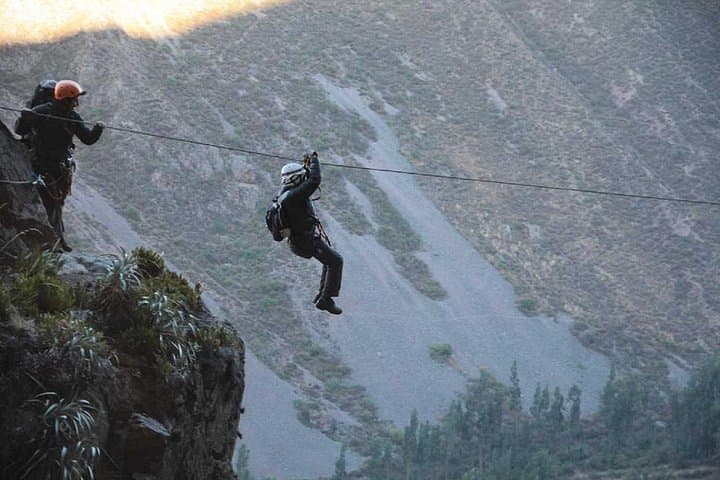
You arrive to Cusco beneath a bowl of thin, hard light and a city that still breathes the geometry of an empire. Stone walls—Inca-cut, impossibly joined—lean into narrow streets where llamas mingle with motorbikes and vendors call out for chicha morada. The first steps here feel like moving through history at altitude: your breath comes quicker, your senses sharpen. Over the next seven days that quickened breath becomes a meter of story—the click of a via ferrata carabiner in the Sacred Valley, the whoosh of a canopy line across a fern-filled ravine, the hush of dawn at the rim of Machu Picchu, and the surprising palette of Rainbow Mountain laid out like an overturned artist’s palette beneath a thin sky.
This package is not a single summit or a single postcard. It’s a sequence of contrasts—urban archaeology and carved mountainsides, adrenaline installations and patient ruin—stitched together in the high Andes. The Sacred Valley itself is a geological mashup: terraced farmland perched on a faulted shelf, stream-cut gorges that funnel cold water from the high Cordillera into towns that have farmed at these altitudes for centuries. Machu Picchu’s granite and porphyry faces were set into place by the Inca in the 15th century; by the time Hiram Bingham reintroduced the citadel to foreign eyes in 1911, it was a place that had escaped modern reuse and preserved a sense of ritual geometry. Up above, Vinicunca—Rainbow Mountain—owes its stripes to mineral deposits: iron oxides, chlorites, and other weathered sediments exposed to wind and erosion over millennia.
Culturally the trip is a gentle immersion. Markets are not just pit stops; they are living networks of food and language where Quechua phrases still lace most interactions. Food is simple and reparative—potato stews, corn beers, salted cheeses—and each meal tastes like altitude and labor. Guides on this route are both interpreters and guardians of place: they manage acclimatization, the logistics of permits (especially for Machu Picchu), and the safety protocols for technical sections like the via ferrata and canopy.
Practically: expect a 7-day circuit that begins with walking tours in Cusco (3,300–3,400 m) to build acclimatization, moves into the Sacred Valley for the via ferrata and canopy activities (2–3 hour drives from Cusco), includes the classic Machu Picchu visit (train or trek options, site elevation ~2,430 m), and finishes with the Rainbow Mountain day-hike where the trail climbs from roughly 4,300 m up to about 5,200 m. Daily hiking ranges from short technical ascents (via ferrata pitches) to longer high-altitude walks—plan on a mix of 2–8 hours of active time on any given day. Elevation is the constant variable: the highest exertion is the Rainbow Mountain push, where you’ll gain several hundred meters over a few kilometers in thin air. That’s the reason the itinerary staggers the tougher days after city acclimatization instead of throwing you at everything at once.
This package is tailored for travelers who want variety and structure: you get guided technical activity (via ferrata and zipline), cultural immersion (Cusco walking tours, Sacred Valley), world-class archaeology (Machu Picchu), and a high-altitude alpine day (Rainbow Mountain). It’s an adrenalized loop rather than an expedition—safety equipment is provided for technical sections, and the guides are experienced with managing altitude and pacing groups.
How to plan: don’t skip acclimatization. Take the city day easy—drink lots of water, avoid heavy meals and alcohol the first 48 hours, and consider light walks to the San Pedro market or nearby ruins. Bring layered clothing: you’ll be in sun at midday and bitterly cold after sunset. Footwear matters—sturdy, broken-in hiking boots for wet, rocky approach trails and the Rainbow Mountain scree.
If you’re selling the idea to yourself: the week is satisfying because each day pays a different dividend. One morning you’ll clip into a via ferrata and feel the rock hold you; an hour later you’ll be laughing about the canopy line that skimmed a cloud in the valley; another day you’ll be quiet, letting the geometry of Machu Picchu settle in at sunrise. The Rainbow Mountain finale is a visible payoff—if the weather lets the colors show, the walk sets a strong, painterly end to a well-paced week.
Budget and logistics: the trip is a prepackaged 7-day experience with an advertised from-price of USD 1,260 that typically covers accommodations, most activities, guide services, and some entrance fees—but verify what’s included (train tickets to Machu Picchu and national park entry often have supplemental fees). Book Machu Picchu entries in advance—daily visitor quotas remain strict. Bring travel insurance that covers high-altitude trekking, and consider medication for mild altitude symptoms if you’re prone.
In the end, this is a trip about balance: adrenaline tempered by cultural depth, high-altitude exertion buffered by careful pacing, and itinerary structure that keeps logistics invisible so the landscape can do most of the talking. If you want one week in Peru that feels like a sampler platter of the Andes—physically engaging, visually memorable, and historically rich—this loop through Cusco’s peaks and ruins delivers, and delivers with attention to safety and place.
Trail wisdom
Small choices, better day.
Acclimatize before you push
Spend the first 24–48 hours in Cusco doing light activity to reduce altitude sickness risk—hydrate and sleep well.
Layer for big temperature swings
Bring a warm insulated layer, wind shell, and sun protection—temperatures can drop sharply after sunset.
Bring small cash for markets and tips
Local markets and some small vendors prefer soles or cash; tips are customary for guides.
Use trekking poles for steep high-altitude sections
Poles help with balance and reduce strain on knees during ascent or descent, especially on Rainbow Mountain scree.
Local knowledge
Read the place, not just the route.
Watch for native species including Andean condor, Vicuña.
Keep an eye out for wildlife during the transition between areas and habitats. Respect distance guidelines.
Machu Picchu and surrounding reserves have strict visitor limits and regulations—pack out trash, avoid single-use plastics, and follow guide instructions to minimize erosion and cultural impact.
Follow the guide's instructions on size limits, ethical handling, and leave-no-trace practices.
Pisac morning market for textiles and local produce. The lesser-visited terraces around Ollantaytambo for quieter ruins and views
Locally recommended viewpoints and quiet spots known best to local operators.
Cusco was the administrative and spiritual capital of the Inca Empire (known as Qosqo) and many terraces and roads in the Sacred Valley date to pre-Columbian agricultural engineering.
Maritime roots and regional tradition shape the waterways and working coasts.
Seasonal guide
Four versions of the same landscape.
Spring
Best forFewer crowds at Machu Picchu · Clear morning light for photos
ChallengesIntermittent rain · Variable trail conditions
Spring (Sep–Nov in the Southern Hemisphere transitions into shoulder season) brings clearer skies and thinning crowds but expect occasional showers at higher elevations.
Summer
Best forPeak dry season conditions · Stable trails and views
ChallengesHigher tourist numbers · Sun exposure at altitude
Dry season (May–September) offers the most reliable weather for Rainbow Mountain and Machu Picchu; book entries and trains early.
Fall
Best forColorful valley fields · Cooler temperatures for exertion
ChallengesShorter daylight hours · Cold nights
Fall provides crisp mornings and good visibility; evenings get colder and some higher routes can be frosty.
Winter
Best forQuieter towns · Budget travel options
ChallengesHigher chance of snow in high passes · Colder temperatures
Winter months can be colder with occasional snowfall in the high Andes—expect winds and pack warmer gear.
Operator details
What the booking data adds.
Included
- ✓Private round trip transfer with only driver
- ✓Lunch
- ✓Via Ferrata equipment
- ✓Breakfast
- ✓Zip Line equipment
- ✓Round trip train tickets to Machu Picchu
Not included
- —Gratuities
- —Entrance to Huayna Picchu
Good to know
- ✓Public transportation options are available nearby
- ✓Infants are required to sit on an adult’s lap
- ✓Travelers should have at least a moderate level of physical fitness
- ✓You do not need previous experience to Via Ferrata and Canopy.
- ✓Via Ferrata & Canopy + Box Lunch: Minimum Age Allowed 9 Years
- ✓Rates are not valid for holidays such as Easter, Weekends, National Holidays, Christmas and New Year.
- ✓Rates are not valid for Peruvians and residents, as well as foreigners with a stay greater than 60 days in Peru.
- ✓You must be in good health, and have altitude tolerance
- ✓Vinicunca: You will reach 5100 m during the tour. We recommend a previous acclimatization days before the walk, as it has to be in good physical condition.
Pack with intention
What to bring.
Good to know
Common questions.
The advertised price typically covers accommodations, guided activities, some entrance fees and transfers, but verify whether train tickets to Machu Picchu and national park entry fees are included.
Plan the edges
The details that make the day easier.
Machu Picchu was declared a UNESCO World Heritage Site in 1983 and lies within the Vilcabamba mountain range of the Andes.
After a long day, head to Mercado San Pedro for fresh juices, roasted corn and local snacks; try a hearty potato stew with cancha (toasted corn) for recovery, and sample local craft beers or chicha morada at a small plaza bar to mingle with travelers and locals.
- Closest airport
- Alejandro Velasco Astete Intl (CUZ); Typical driving: Cusco to Sacred Valley 1–2 hours; Cell service: intermittent above 4,000 m; Permits: Machu Picchu entry and train seats should be booked in advance; Guides and equipment provided for via ferrata
Machu Picchu and the surrounding reserves limit daily visitors—respect signage, stay on trails, don’t use drones, and pack out all waste to protect fragile high-Andean ecosystems.
Explore by topic
Follow the threads.
Keep exploring
Make the story part of the trip.
Set out from Bass Harbor for a private, customizable day on Blue Hill Bay — lighthouses, puffins, seals, and the chance to feel Acadia from the water. Small groups, local captains, unforgettable views.
In four hours you can move from shaded canyon ferns to wind-scoured coastal ridgelines, guided by someone who knows where the light—and the hidden views—live. This private half-day hike on the Monterey Peninsula or Big Sur is compact, curated, and perfect for travelers who want depth without a multiday commitment.
 Related story
Beneath a sky of shifting light, Skaftafell’s ice reads like a map of time. This three-hour guided glacier hike mixes technical instruction with geology and culture: compact, safe, and unforgettable.