
What the day feels like
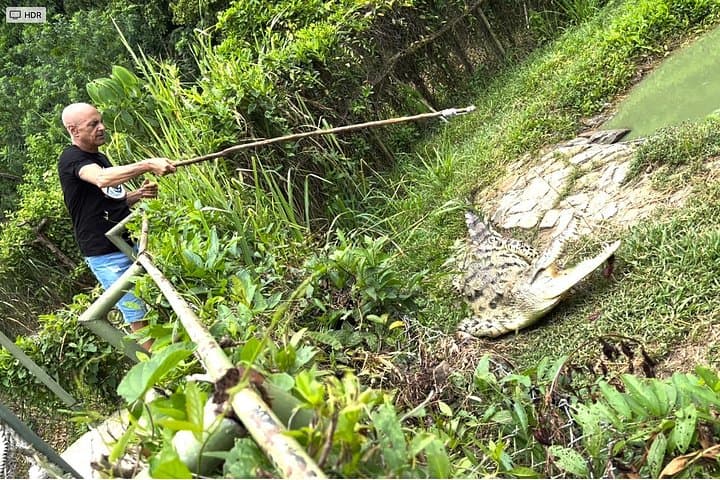
The slab of concrete underfoot hums with mid-morning heat, and a chorus of small, impatient croaks and rustles answers every step. You move through a series of shaded enclosures, each one an island of focused life—ancient-boned crocodiles sunning like armored logs, turtles that measure time by the deliberate tilt of their heads, geckos and iguanas that blink and vanish with a practiced economy. Your guide, part zookeeper and part translator between human curiosity and reptile routine, passes you a bucket and a gloved hand. Feeding time is not a zoo spectacle so much as a carefully managed conversation: you toss a morsel, an alligator tilts its head, the water parts, and a low, ancestral economy of motion answers the question of who survives here.
This is Cartagena's Private Reptile Zoo Adventure, a compact, private experience built for people who want to move past postcard panoramas and meet one of the Caribbean coast’s more overlooked lineups of wildlife. It’s not a jungle trek or a dive off a coral reef; it’s a short, concentrated slice of natural history that lets you touch the edge of a food chain that has worked for tens of millions of years. The tour runs roughly two to three hours—enough time to feed crocodiles and turtles, learn the natural histories of each species from a trained zookeeper, and ask questions about rehabilitation, rescue, and the local ecosystems that support them.
Cartagena itself is a city of layered stories: a UNESCO-listed walled center, colonial ramparts, and a port that has been a conduit for goods, people, and ideas between the Caribbean and the Andes for centuries. That context matters in a visit to a reptile facility here. The animals you meet—American crocodiles, spectacled caimans, and a variety of chelonians—are part of a regional ecology shaped by coastal marshes, mangroves, and lagoons that fringe Cartagena’s bay and the larger Bolívar department. Historically, these ecosystems provided sustenance and shelter to Indigenous communities long before the arrival of European colonizers. Today, they are under pressure from urban growth, tourism, and shifting development priorities, which is one reason private facilities and rehabilitative centers can play a role in education and conservation.
Geologically, Cartagena sits where the Caribbean plate meets the South American shelf, and the coastline’s shallow, brackish marshes create ideal nurseries for crocodylians. The animals here are not museum specimens; many were rescued from the illegal pet trade, injury, or poor habitat. The private tour is as much an ethics lesson as a close encounter: you’ll learn about local laws, why certain species are protected, and what responsible interaction looks like. Your guide makes a careful distinction between spectacle and stewardship—feeding is controlled and educational, not a sideshow.
The practical upside of a private tour is straightforward. Smaller groups mean more time with the zookeeper, the ability to ask detailed questions, and the privacy to handle nervousness or excitement without a crowd watching. Two to three hours is a tidy time commitment for a morning or an afternoon slot; it pairs well with a day in the walled city or an evening in the bohemian neighborhood of Getsemaní.
How to plan it: book a morning slot to avoid midday heat and maximize animal activity. Bring a camera with a mid-range zoom—the enclosures do not invite extreme telephoto work, but close-ups of scaly texture and intelligent eyes reward modest glass. Wear closed-toe shoes and neutral clothing; the setting can be damp and you’ll be close to water and animals. Expect basic safety briefings and strict instructions about where to stand and when to handle food; the animals react quickly and the zookeeper calibrates every movement.
Why travelers should consider this experience: it offers a tactile, educational, and ethically framed encounter that complements Cartagena’s more famous cultural attractions. Instead of adding another beach day to an itinerary, you get a concentrated lesson in Caribbean coastal ecology delivered by professionals who can speak to both animal care and local conservation challenges. For families with older children, naturalists, and curious travelers, it’s a memorable, accessible entry point into the region’s wildlife. For photographers and writers, the textures—skin, water, the odd, patient blink—are a quiet richness that contrasts with Cartagena’s bright colonial palette.
A few practical notes: the tour runs roughly 120–180 minutes and is sold as a private booking; prices start from about $59 per person. The facility emphasizes controlled interactions—feeding under supervision, no free contact with large crocodilians, and educational context for every encounter. If conservation-minded travel is important to you, ask about the facility’s rescue work, release programs, or partnerships with local conservation groups before booking. Finally, temper your romanticism with respect: these are living animals with instincts. Your role is to observe, learn, and follow the guide’s directions.
Back on the concrete path, after a quiet hour of guided feeding and conversation, you stand by a shallow pool watching a juvenile crocodile adjust to the sunlight. It’s easy, in a place like this, to slip into metaphor—these animals are living relics, the geological and evolutionary memory of the Caribbean. But there’s nothing mythical about their presence. The work of keeping them, educating visitors, and protecting the wetlands outside the city is very practical, very contemporary—and quietly urgent. A private reptile zoo tour in Cartagena gives you the chance to see that work up close, to ask the questions that matter, and to leave with a clearer sense of what species-rich coasts need to survive.
Trail wisdom
Small choices, better day.
Book a morning slot
Animals are more active and the heat is milder—morning tours also avoid peak tourist crowds in the city.
Wear closed-toe shoes
Paths can be wet and muddy near enclosures; closed shoes protect toes and give better footing.
Bring a small zoom lens
A 24–70mm or 70–200mm allows close-ups of eyes and texture without crowding the animals.
Follow the guide’s instructions
Feeding and handling are supervised for safety—listen closely and don’t touch animals unless invited.
Local knowledge
Read the place, not just the route.
Watch for native species including American crocodile (Crocodylus acutus), Various freshwater turtles and caimans.
Keep an eye out for wildlife during the transition between areas and habitats. Respect distance guidelines.
Many reptiles in private facilities arrive via rescue from the illegal pet trade or habitat loss; the center focuses on rehabilitation and public education to reduce harmful human-wildlife interactions.
Follow the guide's instructions on size limits, ethical handling, and leave-no-trace practices.
Small mangrove boardwalks on Cartagena’s outskirts for birdwatching. Getsemaní’s street art alleys for a post-tour cultural stroll
Locally recommended viewpoints and quiet spots known best to local operators.
Cartagena’s port history and nearby coastal wetlands have long shaped human settlement and wildlife patterns—its walled city is a UNESCO World Heritage Site.
Maritime roots and regional tradition shape the waterways and working coasts.
Seasonal guide
Four versions of the same landscape.
Spring
Best forMild humidity · Active reptiles in mornings
ChallengesOccasional rain showers · Increased humidity mid-day
March–May brings manageable humidity; mornings are a good bet for active reptiles and comfortable touring.
Summer
Best forLush mangrove scenery · Long daylight hours
ChallengesHigher rainfall and humidity · Afternoon thunderstorms possible
June–August is wetter—book morning tours and prepare for sudden showers and sticky heat.
Fall
Best forFewer tourists in shoulder months · Good educational programming
ChallengesUnpredictable rain · Mudier enclosures
September–November can be variable; the zoo is still open but expect damp conditions and bring insect repellent.
Winter
Best forDriest, sunniest conditions · Ease of travel around Cartagena
ChallengesHigher tourist numbers in December–January · Warmer midday temperatures
December–February offers the driest weather and comfortable mornings—ideal for combining this tour with city sightseeing.
Pack with intention
What to bring.
Good to know
Common questions.
The private tour lasts approximately 120–180 minutes (2–3 hours), which includes feeding demonstrations and time to ask the keeper questions.
Plan the edges
The details that make the day easier.
Cartagena’s historic walled city and fortifications were designated a UNESCO World Heritage Site in 1984, reflecting its importance as a major port during the colonial era.
After the tour, head to Getsemaní for fresh ceviche, arepas de huevo, and a cold craft beer at a small plaza bar—the neighborhood’s murals and street food provide a lively counterpoint to the quiet of the zoo.
- Closest airport
- Rafael Núñez International Airport (CTG) • Driving distance to central Cartagena: ~15–25 minutes • Cell service: Generally good in city; limited inside some facilities • Permits: None required for visitors • Tour length: 2–3 hours
Support facilities that prioritize rescue and rehabilitation over entertainment—avoid vendors who allow unsupervised handling of wildlife, pack out trash, and ask about the zoo’s conservation partnerships.
Explore by topic
Follow the threads.
Keep exploring
Make the story part of the trip.
Set out from Bass Harbor for a private, customizable day on Blue Hill Bay — lighthouses, puffins, seals, and the chance to feel Acadia from the water. Small groups, local captains, unforgettable views.
In four hours you can move from shaded canyon ferns to wind-scoured coastal ridgelines, guided by someone who knows where the light—and the hidden views—live. This private half-day hike on the Monterey Peninsula or Big Sur is compact, curated, and perfect for travelers who want depth without a multiday commitment.
 Related story
Beneath a sky of shifting light, Skaftafell’s ice reads like a map of time. This three-hour guided glacier hike mixes technical instruction with geology and culture: compact, safe, and unforgettable.