
What the day feels like
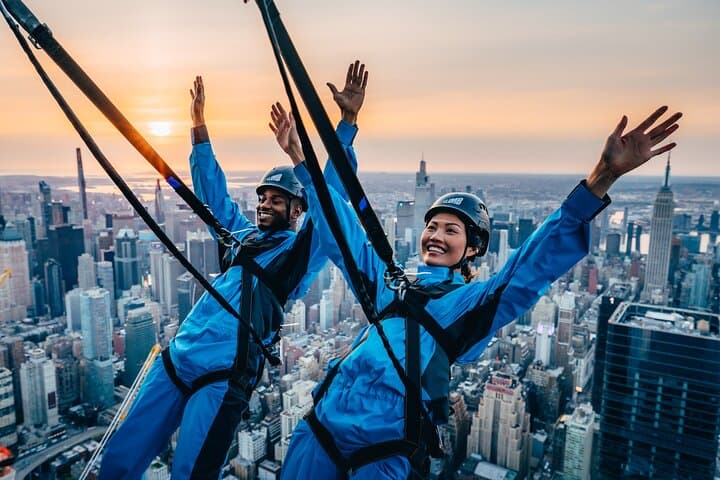
The elevator spits you out into a glass foyer that smells faintly of city coffee and new construction. Through the panes, a sliver of skyline slices the sky: the Hudson River to the west, the tip of Manhattan far below, and a ribbon of rooftop gardens and avenues folding away into the distance. You step into a harness and feel metal and webbing conform to you—an urban second skin. The guide tightens a carabiner with practiced motion; a radio crackles in the background. Then you walk toward the building’s edge, where a narrow metal stair waits and the city drops away. The wind speaks in a rougher voice here, daring you to test how much of the world you can actually see at once.
City Climb is not a hike through a national park; it’s an engineered ascent up the exterior of 30 Hudson Yards, the glass-clad tower that houses Edge—the highest outdoor sky deck in the Western Hemisphere. The experience recalibrates everything you thought you knew about vertical travel: there’s no soft forest underfoot and no trail markers, only steel, harness points, and a public skyline that becomes personal. Over the course of two to three hours, you move from sealed indoor spaces onto an exposed stair and walkway that climbs the rim of the building. At its apex you’ll stand on the same plane as commercial airspace, looking down at rooftops and ferry wakes that look like toy boats.
This is also a story of place. Hudson Yards is the most recent chapter in Manhattan’s long habit of reinventing its waterfront. Built over an active rail yard and completed in the 2010s, the complex blends private development, public art, and new vantage points over the Hudson River. Edge and City Climb are products of that ambition—an attempt to make height into an accessible spectacle rather than an exclusive perch. Where early New Yorkers watched the harbor from wooden piers, today’s visitors strap into harnesses and walk an engineered catwalk 1,100-plus feet above the street.
The geology of Manhattan—its bedrock of Manhattan Schist—has always made it possible to go vertical. That bedrock underpins the island’s skyscrapers and, by extension, the adrenaline economy that now includes commercial exterior climbs. Culturally, the climb taps into an appetite for experiential tourism: travelers want a story to tell, and modern cities sell verticality like a new product. But City Climb resists cheap theatrics by pairing its spectacle with genuine safety and skill. Guides teach ropework, explain anchor systems, and shepherd climbers through graded exposure so the experience feels like a carefully managed ascent rather than a stunt.
Why should you do it? For many visitors, the appeal is straightforward: it’s a fight with gravity where New York supplies the scenery. For daring photographers, it’s the chance to shoot the city from an angle few have. For people who love the engineering behind human endeavors, it’s a glimpse of how modern buildings slice the sky and invite human presence on their edges. And for a certain strain of traveler—those who want a concentrated, high-intensity experience—City Climb compresses the thrill of mountaineering into a Manhattan afternoon.
Practicalities are part of the promise. The climb typically runs 2–3 hours from check-in to finish and reaches heights comparable to the Edge observation deck. Expect a thorough safety briefing and a series of harnessed transitions: indoor assembly, a guided stair up an exterior route, and time on a secured ledge to take in the city. Guides are CPR/AED trained and the operators run a strict weight/age policy; most operators limit participants to adults or teens accompanied by guardians, and the staff will note any health concerns at booking. Weather matters—high winds or storms mean postponement—so dress in layers and plan a flexible afternoon.
Logistics are refreshingly simple: arrive early, bring government ID, and leave loose items behind or in the secure storage provided. Cameras are allowed on a wrist leash or chest strap; phones survive best when tethered. If you want sunrise or sunset, book well in advance—those windows sell out, and the light transforms the Hudson into a band of molten metal.
Tips that matter on the ground: wear sturdy closed-toe shoes with good traction, hydrate ahead of time, and don’t be shy about telling a guide if you’re nervous—professional climbers staff the tours and will match your pace. If you’re traveling in a group, stagger bookings to give everyone a better photo opportunity on the ledge rather than crowding one time slot.
This climb is an urban rite, and it leaves you with the peculiar satisfaction of having interacted with a city in a vertical way. Back on solid ground, the tastes and textures of Manhattan are moments away: tapas at Mercado Little Spain, a long coffee in Chelsea Market, or a late afternoon walk on the High Line to decompress and watch the light move across the concrete and glass you just conquered.
City Climb isn’t for everyone—if you’re deeply afraid of heights, the experience will be intense—but for the adventurous and the curious it’s a clean, focused confrontation with altitude, engineered and guided so you can measure your courage against one of the city’s newest edges.
If you go: pick a clear day, book the sunset slot if you want atmosphere, and set aside the afternoon: the climb, the observation deck, and a meal nearby make for a tidy urban adventure that reorients how you see Manhattan from the ground up.
Trail wisdom
Small choices, better day.
Wear Secure Footwear
Closed-toe shoes with good grip keep you steady on metal stairs and wind-prone walkways.
Tether Your Camera
Use a wrist or chest strap for phones and cameras—loose items are a hazard in high winds.
Hydrate Beforehand
Carry water and drink before you climb; adrenaline and sun can dehydrate you quickly.
Book Sunset Early
Sunset slots fill fast—reserve well in advance for golden-hour cityscapes.
Local knowledge
Read the place, not just the route.
Watch for native species including Peregrine falcon (occasionally seen on taller structures), Hudson River waterfowl such as gulls and egrets along the river edge.
Keep an eye out for wildlife during the transition between areas and habitats. Respect distance guidelines.
Operators limit group size and enforce strict safety protocols to minimize wear on building access points; pack out all trash and respect public spaces around Hudson Yards.
Follow the guide's instructions on size limits, ethical handling, and leave-no-trace practices.
Mercado Little Spain food hall for post-climb tapas. A quiet stroll on the High Line to decompress and watch the light fall across the West Side
Locally recommended viewpoints and quiet spots known best to local operators.
Hudson Yards was built over an active rail yard and opened in the late 2010s; the development reimagined Manhattan’s west side for public space and private towers.
Maritime roots and regional tradition shape the waterways and working coasts.
Seasonal guide
Four versions of the same landscape.
Spring
Best forMilder temperatures · Clear skyline visibility
ChallengesOccasional rainy days · Windy conditions in late spring
Spring brings comfortable climbing weather and long daytime hours; pack a wind layer and check forecasts for rain.
Summer
Best forLong evenings · Energetic city life
ChallengesHeat and humidity · Increased crowds
Summer can be hot on exposed walkways—go early or choose evening slots and stay hydrated.
Fall
Best forCrisp air and clear views · Vibrant sunsets
ChallengesCooler wind chills · Popular booking season
Fall is ideal for visibility and photography—expect brisk winds atop the building and book ahead.
Winter
Best forDramatic clear cold days · Less crowded weekdays
ChallengesCold, icy conditions · Weather-related closures
Winter offers striking clarity but higher risk of closure due to ice and wind; dress in insulated layers if you go.
Pack with intention
What to bring.
Good to know
Common questions.
Yes—operators use industry-standard harnesses, anchor systems, and trained guides; a safety briefing and equipment check are mandatory before you go.
Plan the edges
The details that make the day easier.
Edge at Hudson Yards is one of the highest outdoor sky decks in the Western Hemisphere, with views from roughly 1,100 feet above street level.
After your climb, walk to Mercado Little Spain for Spanish tapas, or head to Chelsea Market for diverse food stalls. For a drink, try one of the nearby bars on 10th Avenue or a quiet coffee at a High Line-facing café—both are perfect for debriefing and photos.
- Closest airport
- LaGuardia (LGA) or Newark (EWR); Trailhead
- Start
- Edge, 30 Hudson Yards (34th St & 10th Ave); Driving distance from Midtown Manhattan: under 15 minutes in light traffic; Cell service: good in most areas though can be spotty on the exterior; Permits: none beyond ticket
Hudson Yards is a dense urban project—minimize waste, use public transit to reach the site, and respect all restricted areas to reduce wear on building systems and public spaces.
Explore by topic
Follow the threads.
Keep exploring
Make the story part of the trip.
Set out from Bass Harbor for a private, customizable day on Blue Hill Bay — lighthouses, puffins, seals, and the chance to feel Acadia from the water. Small groups, local captains, unforgettable views.
In four hours you can move from shaded canyon ferns to wind-scoured coastal ridgelines, guided by someone who knows where the light—and the hidden views—live. This private half-day hike on the Monterey Peninsula or Big Sur is compact, curated, and perfect for travelers who want depth without a multiday commitment.
 Related story
Beneath a sky of shifting light, Skaftafell’s ice reads like a map of time. This three-hour guided glacier hike mixes technical instruction with geology and culture: compact, safe, and unforgettable.