
What the day feels like
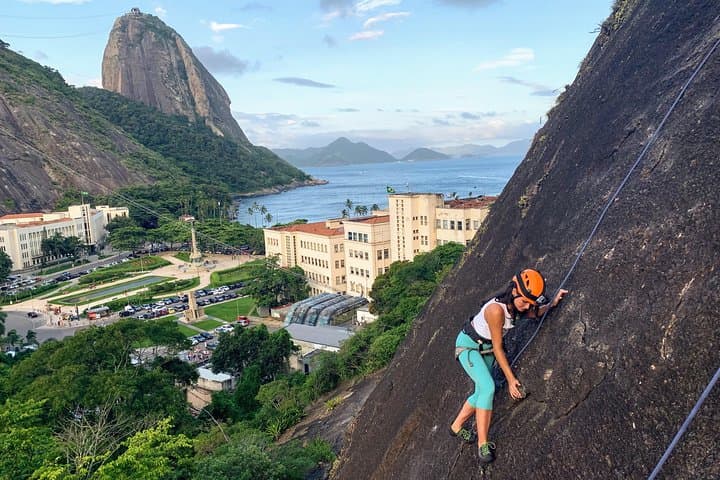
The morning humidity lifts off Guanabara Bay in a silvery breath and the city exhales. You clip into a harness at the base of a granite face with the Atlantic as your backdrop: pelicans wheel; ferry wakes lace the water; the city’s tile roofs ripple like a patchwork tide. Here, climbing is less about escaping civilization and more about stepping into the very thing that defines Rio — the dramatic meeting of stone and sea. In three focused hours with expert instructors, you move up familiar lines, feel the rock beneath your fingertips, and watch the city redraw its edges with every meter gained.
Rio’s climbing scene is unique because it stitches urban life to vertical landscapes. Sugarloaf, Pedra da Gávea, and the smaller crags around Urca and Praia Vermelha are granite and gneiss carved by ancient geology and later polished by wind and salt. These outcrops, sculpted over millions of years, give climbers a mix of slab, face, and crack routes that reward technique as much as strength. The rocks have names and personalities — faces that pocket and smear, ledges that yield to careful footwork, and ridgelines that ask you to trust your feet.
The city itself has a history that layers well under a climbing day. Indigenous peoples first navigated these headlands long before colonial sailors charted the bay. The hilltops became lookouts, the cliffs markers on coastal routes. Today, the routes are maintained and taught with a professional ethos, a result of years of local guide training and a culture of safety. Many guides are born in Rio’s neighborhoods; they know the city's rhythms and the best times to climb to avoid heat or crowds.
This tour caters to all levels — beginners get technique coaching, top-rope practice, and the confidence of guided ascent; intermediate climbers find steeper pitches, multi-pitch exposure, and real city-to-sea exposure. The combination of a small group size and private instruction means the itinerary flexes to the day: more time on footwork for rookies, or lead-climbing and anchor practice for the keen. If you want to go deeper later, the local guiding community is the gateway to long routes like Pedra da Gávea’s ridgelines.
Practicality keeps Rio climbs accessible. The program runs about three hours and most meeting points are within 30 minutes of central neighborhoods like Copacabana, Ipanema, or Botafogo. Expect urban conveniences at the start — coffee shops, taxis, and easy public transit — and a quick transition to a focused outdoor experience. Gear is often provided or available to rent, but bringing a snug pair of climbing shoes and a chalk bag that fits your hand will make the session feel more personal.
Safety is not negotiable. Certified instructors bring modern ropes, helmets, and anchor systems; they anticipate loose rock, shifting wind, and the particular sun angles that turn a pleasant afternoon into an endurance challenge. Because cell service can drop on certain faces and weather can shift quickly along the coast, sensible timing matters: start early for cooler temperatures and clearer views.
This climb is as much a cultural exchange as an athletic one. Guides share local routes, the stories behind route names, and the best places for a post-climb bite. Afterward, many head to Botafogo’s bayside cafés or Santa Teresa’s narrow streets for a late lunch — where feijoada, fresh seafood, or a cold caipirinha makes for a restorative finish to a vertical morning.
If you have only hours in Rio and want a meaningful, active slice of the city, this guided climb delivers. It’s a quick, immersive way to see the urban geology, hone climbing skills, and connect with local climbers who read the rock like a language. For anyone curious about ascending Rio’s skyline, start here with local expertise and the safety to push your limits without overreaching.
For bookings and more information about guided options and routes, connect with seasoned local guides who specialize in urban climbs: <a href="https://app.advcollective.com/local-experts/rock-climbing-rio-de-janeiro-conquer-iconic-peaks-with-expert-guides">rock climbing in Rio de Janeiro</a>. If you want a deeper program or private multi-pitch days, the same link connects you to profiles of guides and full-day itineraries that extend beyond a three-hour taster. Returning climbers often use the local guide network as a springboard to longer climbs like Pedra da Gávea; book early in high season to secure the best guides and routes.
In short: expect a short, intense, and polished climbing experience that leaves you with new skills, a city-sized view, and a fresh appreciation for how nature and urban life coexist on Rio’s coastline. To get the most from the day, go early, hydrate well, and be ready to listen — to your guide, your body, and the rock under your palms. Adventure here is precise, immediate, and human.
Trail wisdom
Small choices, better day.
Start Early
Begin before 8 a.m. to avoid heat and stronger afternoon winds; morning light also makes holds easier to read.
Bring Chalk & Shoes
If you have your own climbing shoes and chalk bag, bring them for better fit and grip; rental shoes can be less precise.
Listen to Your Guide
Guides will read the rock and set anchors; follow their instructions for safety and improved technique.
Hydrate and Fuel
Carry water and a small snack — coastal sun and exertion dehydrate quickly even on short climbs.
Local knowledge
Read the place, not just the route.
Watch for native species including Brown pelican, Capuchin monkeys occasionally in higher forested areas.
Keep an eye out for wildlife during the transition between areas and habitats. Respect distance guidelines.
Stay on established trails, use fixed anchors set by professionals, and pack out all trash to protect fragile coastal vegetation and bird nesting sites.
Follow the guide's instructions on size limits, ethical handling, and leave-no-trace practices.
Sunrise belays on Urca for empty views of the bay. Short routes at Praia Vermelha that are ideal for repeating skills
Locally recommended viewpoints and quiet spots known best to local operators.
Many of Rio's cliffs were used as lookout points since pre-colonial times and later factored into coastal navigation and defense.
Maritime roots and regional tradition shape the waterways and working coasts.
Seasonal guide
Four versions of the same landscape.
Spring
Best forPleasant temperatures · Clear views · Lower humidity
ChallengesOccasional rain · Variable wind
Spring offers mild temperatures and clear vistas, making it an ideal time for technical coaching and longer route practice.
Summer
Best forLong daylight · Vibrant city life
ChallengesHigh heat and humidity · Sudden storms
Summer brings long days but intense sun and humidity; early starts are essential and storms can appear fast.
Fall
Best forStable weather · Lower crowds
ChallengesCooling nights · Shorter days
Autumn is stable and less crowded, with good conditions for both beginners and advanced routes.
Winter
Best forCooler climbing conditions · Clear skies
ChallengesOccasional coastal wind · Short daylight
Winter mornings are cool and crisp — great for sustained efforts — though winds can be sharper along exposed faces.
Operator details
What the booking data adds.
Included
- ✓Certified bilingual rock climbing instructor
- ✓Individual rock climbing equipment: climbing shoes, harness, helmet, belay/rappel device.
- ✓Collective rock climbing equipment: rope, quickdraws and anchor building equipment
- ✓Cable car descent ticket to Morro da Urca (if climbing Sugarloaf Mountain)
Not included
- —Snacks
- —Bottled water
- —Tips (optional)
- —Bug spray
Good to know
- ✓Public transportation options are available nearby
- ✓Not recommended for travelers with spinal injuries
- ✓Not recommended for pregnant travelers
- ✓Suitable for all physical fitness levels
Pack with intention
What to bring.
Good to know
Common questions.
No prior experience is required; the tour is tailored so beginners learn top-rope technique while more experienced climbers can practice lead or multi-pitch skills with their guide.
Plan the edges
The details that make the day easier.
Pedra da Gávea, one of Rio’s famous monoliths, rises roughly 842 meters above sea level and is considered one of the largest coastal granite faces in the world.
After the climb, head to Botafogo for bayside restaurants, or up to Santa Teresa for artisanal bars and panoramic cafés. Try grilled seafood or a local feijoada and finish with a caipirinha while watching the sunset over the bay.
- Closest airports
- Santos Dumont (SDU) for city access, Galeão (GIG) for international flights; Typical drive: 15–30 minutes from Copacabana or Ipanema; Cell: Generally good in city, spotty on faces; Permits: No standard permit for recreational climbs but guided groups are recommended and sometimes required by operators.
Respect fixed anchors and established routes, pack out all waste, and hire local certified guides who adhere to Leave No Trace and local access rules.
Explore by topic
Follow the threads.
Keep exploring
Make the story part of the trip.
Set out from Bass Harbor for a private, customizable day on Blue Hill Bay — lighthouses, puffins, seals, and the chance to feel Acadia from the water. Small groups, local captains, unforgettable views.
In four hours you can move from shaded canyon ferns to wind-scoured coastal ridgelines, guided by someone who knows where the light—and the hidden views—live. This private half-day hike on the Monterey Peninsula or Big Sur is compact, curated, and perfect for travelers who want depth without a multiday commitment.
 Related story
Beneath a sky of shifting light, Skaftafell’s ice reads like a map of time. This three-hour guided glacier hike mixes technical instruction with geology and culture: compact, safe, and unforgettable.