
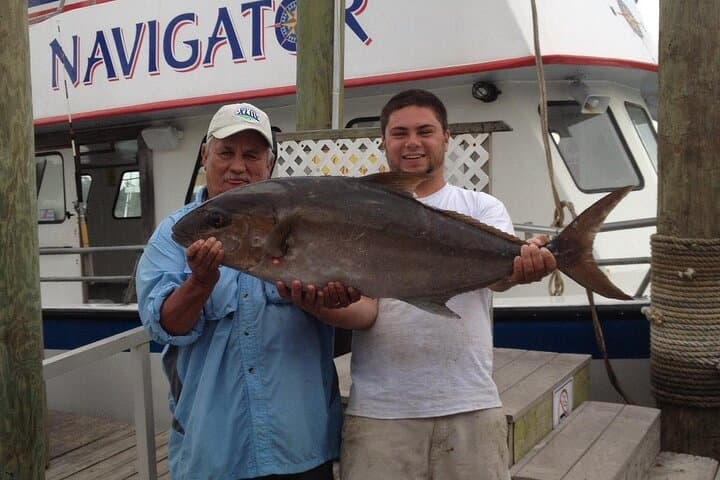
What the day feels like
You step onto the Navigator with salt on your lips and the harbor horizon prompting a small, inevitable grin. The boat rocks gentle, a steady rhythm that feels like an invitation. Gulls rotate above the slip as crew members check lines and rod holders; the engine’s low thrum promises speed and distance. In four hours you’ll trade the bustle of the marina for a steady, salt-sprayed focus—scanning lines, feeling the tug, and learning the precise, patient motion of bottom fishing off the Carolina coast.
This is Calabash as a working waterway—a place where shrimp boats, pleasure craft, and charter vessels share a language of tides and timing. The town itself is quietly famed for its seafood (Calabash-style frying has drawn visitors for decades), but the real story is what lies offshore. The continental shelf here drops into a productive seam of current and structure where grouper, snapper, amberjack, and flounder congregate. Geologically, the shelf’s mix of sand bars, hard bottom and submerged ledges creates microhabitats that translate into reliable angling.
On the Navigator, the experience is designed for a broad audience: families, first-timers, and seasoned anglers who know patience pays. The vessel’s layout is roomy—limited to 20 passengers—and the crew runs a tight, safety-first operation. You’ll learn how to bait a hook, set a rod, and pull a fish clear of the current, but you’ll also learn to read the water: when lines twitch from the slow push of a bottom fish and when the bite turns shallow and savage.
Beyond the mechanics of fishing, there’s a cultural rhythm to a Calabash outing. Local captains have been working these waters for generations; they balance an understanding of seasonal migrations with a respect for size limits and slot regulations—practical fisheries science meeting local knowledge. For visitors, that means both a high chance of action and a short lesson in coastal stewardship: what you keep, why size matters, and how to minimize stress on returned fish.
Practicalities matter. A four-hour trip is compact: enough time to reach productive marks without burning the stamina of kids or casual travelers. The boat provides rods, tackle, and bait, and the crew will help with cleaning the catch. Still, your best day comes down to timing—early departures often beat afternoon heat and build more stable seas—and simple preparation: layered clothing, sun protection, and a small dry bag for essentials.
If you come for the catch, plan to enjoy the afterpart of your day in Calabash or nearby Myrtle Beach. Many charters will clean and bag fish for you; that fillet can be the centerpiece of a low-key shore lunch or a take-home feast. In town, local seafood houses keep the culinary tradition alive: fresh, fried, and served with a Carolina smile.
Who should book this trip? Families who want a short, managed taste of offshore fishing; urban travelers craving a tactile connection to the ocean; anglers who appreciate efficient, well-run charters. The boat’s crew will meet you where you are in skill and curiosity, which is why this kind of half-day outing is often a gateway—after one trip, many visitors book longer runs.
A few practical tips: plan for motion—bring medication if you’re sensitive—and expect limited cell service once you clear the breakwater. Wallet-friendly pricing and instant confirmation make this trip simple to schedule; still, weekends in summer fill quickly. If you want a specific species or more personalized instruction, ask about private or extended charters.
The attraction is immediate—the tug on the line, the shared laugh when a kid lands a keeper, the neat efficiency of a team that makes fish into fillets in thirty minutes. But the broader draw is the clarity a morning at sea gives you: the Atlantic’s scale, a coastline that manages both industry and leisure, and a small-town harbor that still moves with purpose. For a compact, memorable taste of the Carolinas’ saltwater life, few half-day trips are as direct as boarding the Navigator out of Calabash.
Want to book? Find local expert details and scheduling through this link for the <a href="https://app.advcollective.com/local-experts/4-hour-deep-sea-fishing-adventure-on-the-navigator-at-calabash">4-hour deep-sea fishing adventure on the Navigator at Calabash</a>. Read the trip description, check the calendar, and come ready to feel the ocean’s pull.
Trail wisdom
Small choices, better day.
Beat the Sun
Bring high-SPF sunscreen and a wide-brim hat; the reflection off the water intensifies exposure even on overcast days.
Motion-Ready
If you’re prone to seasickness, take medication 90 minutes before departure and sit mid-ship where motion is least pronounced.
Dress in Layers
Mornings can be cool returning to hot, so wear lightweight layers you can shed or add quickly.
Bring a Small Cooler
A soft-sided cooler will keep bagged, cleaned fish fresh for the drive home; crew usually provides bags and ice.
Local knowledge
Read the place, not just the route.
Watch for native species including Bottlenose dolphin, Sea turtles (seasonal).
Keep an eye out for wildlife during the transition between areas and habitats. Respect distance guidelines.
Local charter operators often follow size and bag limits and practice careful handling of bycatch; respect catch-and-release requests and discard plastics ashore.
Follow the guide's instructions on size limits, ethical handling, and leave-no-trace practices.
Calabash Riverwalk and small-town seafood shacks for a post-trip meal. Scenic drive to nearby Holden Beach for a quieter shoreline
Locally recommended viewpoints and quiet spots known best to local operators.
Calabash grew into a seafood destination in the 20th century—its 'Calabash-style' fried seafood restaurants helped define a regional culinary identity.
Maritime roots and regional tradition shape the waterways and working coasts.
Seasonal guide
Four versions of the same landscape.
Spring
Best forMild seas · Active snapper and grouper · Family outings
ChallengesUnpredictable frontal weather · Crowded spring holiday weekends
Spring brings steady, comfortable temperatures and productive bottom fishing as species move into inshore structure—pack a light jacket for cool mornings.
Summer
Best forWarm water species · Longer daylight · Family vacations
ChallengesStrong sun and heat · Higher boat traffic on weekends
Summer offers calm seas and abundant baitfish but plan for sun management and earlier departures to avoid peak heat.
Fall
Best forTransitional migrations · Amberjack and kings later in season · Fewer crowds
ChallengesOccasional residual hurricane activity · Cooler mornings
Fall can produce strong bites as water temperatures shift—pack layers and check local weather for storm remnants.
Winter
Best forOff-season peace · Lower prices · Targeted species in warmer pockets
ChallengesColder air and water · Shorter daylight hours
Winter trips are quieter and can be productive on mild days, but bring insulated clothing and a windproof shell.
Operator details
What the booking data adds.
Included
- ✓All rods, reels, tackle, bait, and fishing licenses are included
Good to know
- ✓Wheelchair accessible
- ✓Infants and small children can ride in a pram or stroller
- ✓Public transportation options are available nearby
- ✓Travelers should have at least a moderate level of physical fitness
Pack with intention
What to bring.
Good to know
Common questions.
Most for-hire charters carry the necessary federal and state permits and provide gear; passengers typically do not need a separate recreational license, but confirm with the operator before boarding.
Plan the edges
The details that make the day easier.
Calabash, North Carolina, is widely credited with popularizing 'Calabash-style' fried seafood, a regional culinary tradition that draws visitors to the town’s seafood houses.
After the trip, head to a local Calabash seafood house for fried flounder or shrimp; if staying in Myrtle Beach, sample coastal craft beer at a waterfront taproom or stroll Broadway at the Beach for shops and sunset views.
- Closest airport
- Myrtle Beach International Airport (MYR) ~25–40 minutes drive; Docking
- Launch
- Calabash harbor
- marina; Driving distance from Myrtle Beach
- ~20–30 miles depending on lodging; Cell service: Good in harbor, limited offshore; Permits: Most for-hire charters carry required permits—confirm with operator.
Respect bag and size limits, use crew-provided bins for fish waste, avoid single-use plastics on board, and follow crew guidance for releasing undersize fish.
Explore by topic
Follow the threads.
Keep exploring
Make the story part of the trip.
Set out from Bass Harbor for a private, customizable day on Blue Hill Bay — lighthouses, puffins, seals, and the chance to feel Acadia from the water. Small groups, local captains, unforgettable views.
In four hours you can move from shaded canyon ferns to wind-scoured coastal ridgelines, guided by someone who knows where the light—and the hidden views—live. This private half-day hike on the Monterey Peninsula or Big Sur is compact, curated, and perfect for travelers who want depth without a multiday commitment.
 Related story
Beneath a sky of shifting light, Skaftafell’s ice reads like a map of time. This three-hour guided glacier hike mixes technical instruction with geology and culture: compact, safe, and unforgettable.