
What the day feels like
The morning begins with a low light that flattens the Alhambra’s distant silhouette into a memory, while nearby olive trees arrange themselves like old sentinels along country lanes. You gather at a modest stone compound where guides check equipment, lace up children’s shoes, and joke with parents who are both relieved and a little jealous — four hours of supervised, purposeful outdoor play is a rare holiday commodity. The water that frames much of the day arrives in different guises: a cool river that dares you to cross it, a shallow cove where waves gently push you forward, and the sweating, sun-warmed rocks that invite a cautious scramble.
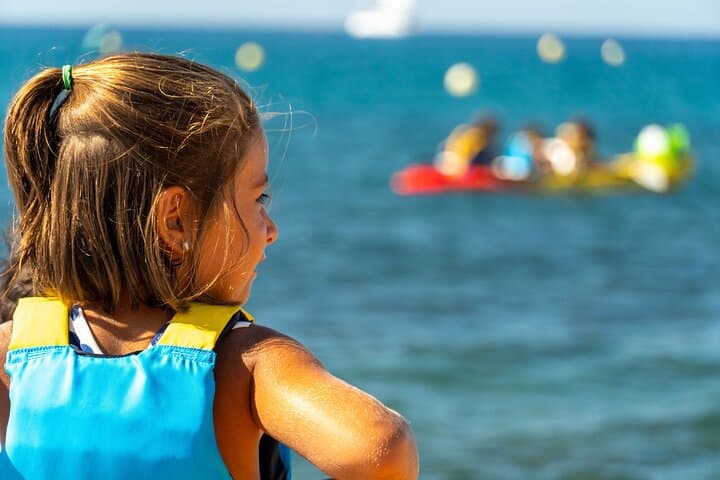
This is not extreme adventure; it’s precision-engineered curiosity for families and groups who want to spend a half day active outdoors with safety at the center. The camp blends gentle river play, basic climbing and scrambling, and supervised water sports under instructors certified by I.N.E.F. and T.A.F.A.D. Life jackets stay on during every aquatic moment, and the low child-to-instructor ratio allows for real learning—knot-tying, paddle technique, and the kind of confidence that arrives when a kid conquers a rope-assisted scramble.
Granada is the kind of place where every outdoor program sits at the crossroads of geography and history. The city itself is a Moorish palimpsest—layered terraces, narrow lanes, whitewashed houses, and the Alhambra, the Nasrid dynasty stronghold from the 13th and 14th centuries. Downriver and toward the coast, the landscape is equally instructive: Sierra Nevada’s folded rocks speak to an ancient collision of tectonic plates, while Mediterranean influences shape scrub, pines, and the occasional tidal memory in riverbeds.
What keeps this camp engaging for both kids and adults is that the syllabus feels organic. A short hike becomes a geology lesson when a guide points out limestone formations pocked with fossilized shells; a team paddle becomes a study in wind and current; a rope descent becomes a practical exercise in trust and weight distribution. The guides—skilled in first aid and trained to teach—move the group at a deliberate pace, letting natural elements earn their anthropomorphic roles. The river will test balance, the wind will nudge decisions, and sun will encourage breaks and water.
Practical details matter here. The activity runs about four hours, priced from roughly $37.85 per person, and confirms instantly with free cancellation. Expect a mid-morning or late-afternoon schedule depending on heat and tides, with safety briefings and equipment checks at the outset. The program is family-focused but offers enough variety to entertain adults who want to reconnect with basic outdoor skills.
If you’re planning a visit, think in terms of layers and timing. Summer brings perfect water temperatures but strong sun; spring and fall provide milder conditions with flashier rivers after rain. Footwear that grips wet stone and dries quickly will make the day far more enjoyable. Hydration matters—guides can remind you, but a lightweight hydration pack or refillable bottle is essential.
Beyond the half day, Granada rewards curiosity: afternoon tapas in the Albaicín, an evening at a tetería, or a twilight walk to Mirador de San Nicolás for an iconic Alhambra view. For families, the camp is a propulsive interlude that leaves room for culture without wearing out the youngest legs.
Why book this camp? It’s a concentrated dose of outdoor competence: gentle risk, clear learning outcomes, and the kind of supervised freedom that turns apprehension into accomplishment. The technical demands are low, but the personal rewards—sunnier faces, steadier feet on a wet rock, the first successful paddle stroke—are universal. For visitors to Granada seeking to add motion to monuments and river-splashed memories to a city famed for palaces and poetry, this is an efficient, intelligent way to spend four hours.
Trail wisdom
Small choices, better day.
Footwear for wet rocks
Use sturdy water shoes or hybrid trail sandals with good griplines to prevent slips on riverbed stone.
Hydration and snacks
Bring a refillable water bottle and a compact, salty snack for energy; kids burn through calories fast in mixed-activity camps.
Sun protection matters
Apply high-SPF sunscreen before the session and bring a brimmed hat for breaks—sun reflects off water and rock.
Communicate medical needs
Tell guides about allergies, asthma, or medication before the day starts so they can adapt activities and emergency plans.
Local knowledge
Read the place, not just the route.
Watch for native species including Iberian green frog, Eurasian hoopoe.
Keep an eye out for wildlife during the transition between areas and habitats. Respect distance guidelines.
Respect riparian zones by staying on established paths, packing out all trash, and avoiding disturbance of shoreline vegetation.
Follow the guide's instructions on size limits, ethical handling, and leave-no-trace practices.
Mirador de San Nicolás at sunrise for Alhambra views with fewer people. A short downstream pool favored by locals for quiet river dips away from tourist spots
Locally recommended viewpoints and quiet spots known best to local operators.
Granada grew under the Nasrid dynasty and hosts the Alhambra, a 13th–14th century Moorish palace complex recognized as a UNESCO World Heritage Site.
Maritime roots and regional tradition shape the waterways and working coasts.
Seasonal guide
Four versions of the same landscape.
Spring
Best formilder temperatures · flowering landscapes · safer river flows
Challengesoccasional rain · cooler morning water temps
Spring offers comfortable air temps and livelier waterways after winter rains; expect cooler water and the need for layers.
Summer
Best forwarm water play · longer daylight · consistent schedules
Challengeshigh sun exposure · peak tourist crowds
Summer is ideal for splash-focused activities and steady programming, but bring sun protection and plan for midday heat.
Fall
Best forfewer crowds · mild weather · colorful foliage
Challengesshorter days · possible higher river flows after storms
Autumn stretches the comfortable-season window; crisp mornings can require a light jacket, while afternoons stay pleasant.
Winter
Best forquiet experiences · lower crowds · cooler hikes
Challengescold water temps · reduced water activities
Winter is quieter and better for land-based elements; expect limited aquatic play and the need for thermal layers.
Operator details
What the booking data adds.
Included
- ✓Kayaks, SUP's, Life-Jackets, Snorkeling gear's, Climbing gear's, Paddle Tennis courts, Sport Pavillion, Arts&Crafts material, Insurance....
Not included
- —WHAT TO BRING IN THE BACKPACK: Towel, Swimming costume, flipflops, Sunscreen, Trainers, Snack and plenty of water
Good to know
- ✓Service animals allowed
- ✓Public transportation options are available nearby
- ✓Not recommended for travelers with spinal injuries
- ✓Not recommended for pregnant travelers
- ✓Not recommended for travelers with poor cardiovascular health
- ✓Suitable for all physical fitness levels
- ✓No small children in need of nappies allowed
Pack with intention
What to bring.
Good to know
Common questions.
The program is family-focused and suitable for younger children when accompanied by adults; specific minimum age may vary by provider—check booking details.
Plan the edges
The details that make the day easier.
Granada’s Alhambra dates to the Nasrid dynasty (13th–14th centuries) and was designated a UNESCO World Heritage Site in 1984.
After the camp, head back to town for tapas in the Albaicín—try local specialties like piononos for a sweet finish, or a cervesa at a small bar near Plaza Nueva. For a scenic sit-down, seek out a ‘carmen’ with a view of the Alhambra and a menu of Andalusian classics.
- Closest airport
- Federico García Lorca Granada-Jaén (GRX). Driving distance from Granada center: typically 20–45 minutes depending on meeting point. Cell service: generally good near towns, patchy in remote river sections. Permits: none required for this commercial activity; operator handles equipment and safety briefings.
This program runs in sensitive riparian and Mediterranean habitats—pack out all trash, avoid soaps in water, and follow guide instructions to minimize erosion and wildlife disturbance.
Explore by topic
Follow the threads.
Keep exploring
Make the story part of the trip.
Set out from Bass Harbor for a private, customizable day on Blue Hill Bay — lighthouses, puffins, seals, and the chance to feel Acadia from the water. Small groups, local captains, unforgettable views.
In four hours you can move from shaded canyon ferns to wind-scoured coastal ridgelines, guided by someone who knows where the light—and the hidden views—live. This private half-day hike on the Monterey Peninsula or Big Sur is compact, curated, and perfect for travelers who want depth without a multiday commitment.
 Related story
Beneath a sky of shifting light, Skaftafell’s ice reads like a map of time. This three-hour guided glacier hike mixes technical instruction with geology and culture: compact, safe, and unforgettable.