
What the day feels like
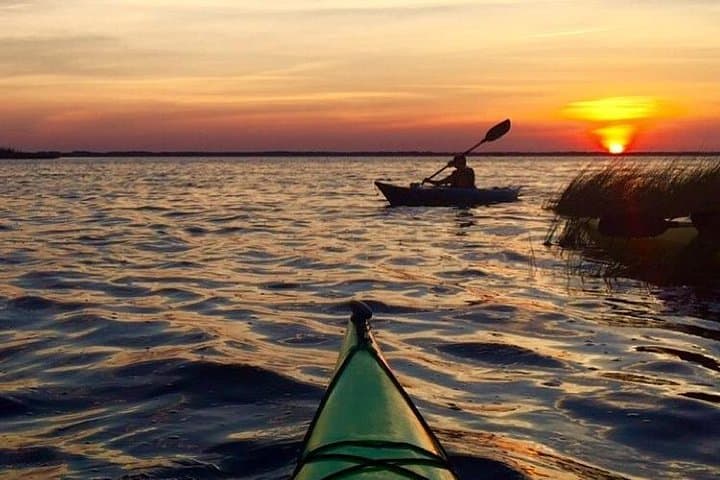
On a late-summer evening the Currituck Sound wears a different face: the horizon softens into a sheet of pewter, marsh reeds snap with a dry, papery sound, and the paddles mark the water like a metronome. You push off from the snug launch at the Tim Buck II shopping area and, for the next two hours, shorelines that are normally a distant postcard come close enough to touch. The sheltered bays, narrow canals, and tiny barrier islets that lace this part of the Outer Banks keep the water calm most days, turning this into one of the most accessible—and unexpectedly wild—sea kayaking outings on the East Coast.
The <a href="https://app.advcollective.com/local-experts/corolla-kayak-adventure-guided-kayak-tour-on-currituck-sound">Corolla Kayak Adventure</a> is short on fuss and long on sensory payoff. Guides hand out sit-in kayaks and life jackets, give a brief safety talk, and then point you toward a world of glassy channels, spoonbills stalking the shallows, and the occasional silhouette of a marsh rabbit. The sound is shallow and warm in summer months; it's a place where wind and tide dictate the day's route more than a map does, which makes every outing feel like a small, deliberate voyage.
Geology and history are written here in layers. The Currituck Sound sits behind a string of barrier islands—part of the dynamic system that creates the Outer Banks. These islands are young in geological terms, constantly reshaped by storms, currents, and sea-level changes. Human history threads through those shifts: Native Algonquian peoples navigated these waters for millennia before European colonists arrived, and later, the sound supported fisheries, oystering, and the small maritime communities that gave Corolla its character. Look inland a little and you’ll see the Currituck Beach Lighthouse, a sentinel built in 1875 that once guided wooden schooners through fog and shifting shoals.
Culturally, Corolla still feels like an edge-of-the-world town—summer houses, small seafood shacks, and local artists balancing tourism with preservation. The kayak tour sits at that intersection: a low-impact way to learn about salt marsh ecology while getting outside. Guides often point out bird migration patterns, shell middens, and the distinctive Banker horses that roam Corolla’s northern beaches—feral descendants of colonial stock and one of the area’s most famous sights.
Why paddle here? It’s deceptively simple: intimacy with landscape. In two hours you can leave the noise of Highway 12 behind and move at a human pace through a mosaic of habitats. The sound’s shallow flats are a classroom for noticing—mud shrimp tunnels, the scalloped margins of marsh grass, the way sunlight fractures on tannic water. The tour is family-friendly but delivers enough variety—wildlife, sheltered open water, narrow channels—to keep more experienced paddlers engaged.
Practicalities matter. The tour departs from Tim Buck II Shopping Center (Hwy 12 North, Corolla), runs about two hours, and uses stable sit-in kayaks—ideal if you’re new to paddling. Weather and wind shape every outing; morning and evening tours often offer calmer conditions and softer light. Because the sound is shallow, currents are gentler than on the ocean-facing side, but wind can still build chop rapidly. Guides monitor conditions and adjust routes to prioritize safety while maximizing scenic moments—be it the hush of a marsh-lined channel or the cinematic angle of a sunset over distant dunes.
Packing light and smart improves the experience: a dry bag for phone and keys, layered clothing for coastal temps, a brimmed hat, reef or water shoes for the put-in, and a compact bottle of water. Respect the ecology—stay out of nesting areas, keep distance from horses and shorebirds, and tuck plastic and trash into your bag. This is a guided, interpretive outing as much as it is a chance to paddle: ask questions about oyster beds, tidal prisms, and local conservation efforts. You’ll leave with more than photographs—you’ll carry a clearer sense of why this stretch of the Outer Banks is worth protecting.
When to go? Spring brings migrating shorebirds and mild water; summer offers long days and warm paddling; and fall delivers quieter waterways, cooler air, and fewer crowds—often the best combination for photographers and those chasing solitude. For sunset lovers, a late-summer evening paddle can feel cinematic: the sun slides slow and gold across the sound, the air cools, and the day’s energy eases.
The <a href="https://app.advcollective.com/local-experts/corolla-kayak-adventure-guided-kayak-tour-on-currituck-sound">Corolla Kayak Adventure</a> is an efficient way to access this world—two hours, local guides, and the right gear bundled into a single window of time. It’s a reminder that adventure doesn’t always require a long slog or serious gear—sometimes it asks only that you arrive curious, stay present, and paddle.
If you want to make the outing part of a longer visit, linger in Corolla afterward: watch for wild horses along the northern beaches, visit the Currituck Beach Lighthouse, and sample local seafood at a harbor-side café. This is coastal travel that rewards a slow approach: see it by kayak, and you’ll remember it by the quiet sounds the water makes against your hull.
Trail wisdom
Small choices, better day.
Time your paddle with wind
Morning or evening tours often have lighter winds—check local forecasts and favor calm windows for the most comfortable paddle.
Bring a dry bag
Even with stable sit-in kayaks, a waterproof pouch for phone, keys, and a light layer keeps essentials protected.
Wear reef or water shoes
The launch can be muddy or shallow; shoes protect feet from shells and sharp shoals.
Leave wildlife alone
Keep distance from shorebirds and the Corolla Banker horses—viewing, not approaching, reduces stress on animals.
Local knowledge
Read the place, not just the route.
Watch for native species including Great blue heron, Osprey.
Keep an eye out for wildlife during the transition between areas and habitats. Respect distance guidelines.
The Currituck Sound and surrounding marshes are sensitive habitats—stay on designated channels and avoid nesting areas to minimize impact.
Follow the guide's instructions on size limits, ethical handling, and leave-no-trace practices.
Paddle the narrow marsh canals near Carova for quiet birding. Stop at the Currituck Beach Lighthouse for views and local history
Locally recommended viewpoints and quiet spots known best to local operators.
Corolla grew from maritime and fishing roots; the nearby Currituck Beach Lighthouse (1875) guided 19th-century schooners through the sound’s shifting shoals.
Maritime roots and regional tradition shape the waterways and working coasts.
Seasonal guide
Four versions of the same landscape.
Spring
Best forMigratory birdwatching · Mild paddling conditions
ChallengesCooler water temperatures · Unpredictable showers
Spring brings migrating shorebirds and rejuvenated marshes; dress in layers and expect brisk mornings.
Summer
Best forWarm water swims after paddling · Long daylight hours
ChallengesHigher insect activity · Crowds and heat
Summer offers the warmest water and late sunsets—bring sun protection and insect repellent.
Fall
Best forFewer crowds · Crisp, clear light for photos
ChallengesCooling water temperatures · Shorter days
Fall is often the sweetest season for calm, clear paddles and excellent wildlife visibility.
Winter
Best forStorm-watching from shore · Quiet town scenes
ChallengesTours may be unavailable · Cold water and winds
Winter conditions are harsher; confirm tour availability and expect colder, windier outings.
Pack with intention
What to bring.
Good to know
Common questions.
The guided experience is approximately two hours from launch to return.
Plan the edges
The details that make the day easier.
Corolla is home to the famed Corolla Banker horses—feral descendants of colonial livestock that have lived on the northern Outer Banks for centuries.
After your paddle, grab fresh-caught seafood at a nearby harbor café and visit the Currituck Beach Lighthouse; local shops sell handmade crafts and prints that capture the Outer Banks’ maritime identity.
- Closest airport
- Norfolk International Airport (ORF) ~75 miles; Driving: Corolla is ~40–60 minutes north of Nags Head depending on traffic; Cell service: intermittent in parts—expect spotty coverage on canals; Permits: No special permits for guided tours but check local vehicle
This tour travels sensitive marsh and shoreline habitat—pack out what you bring, avoid disturbing nesting birds and marine life, and follow guide instructions to minimize erosion and habitat impact.
Explore by topic
Follow the threads.
Keep exploring
Make the story part of the trip.
Set out from Bass Harbor for a private, customizable day on Blue Hill Bay — lighthouses, puffins, seals, and the chance to feel Acadia from the water. Small groups, local captains, unforgettable views.
In four hours you can move from shaded canyon ferns to wind-scoured coastal ridgelines, guided by someone who knows where the light—and the hidden views—live. This private half-day hike on the Monterey Peninsula or Big Sur is compact, curated, and perfect for travelers who want depth without a multiday commitment.
 Related story
Beneath a sky of shifting light, Skaftafell’s ice reads like a map of time. This three-hour guided glacier hike mixes technical instruction with geology and culture: compact, safe, and unforgettable.