
What the day feels like
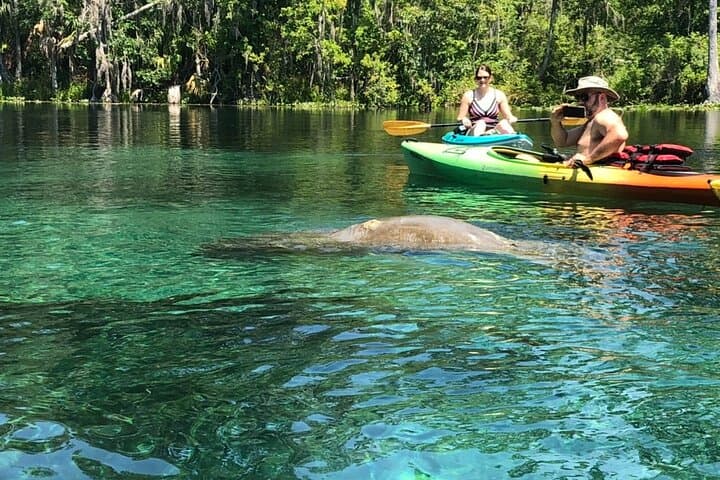
The river is not a road but a mirror—cool, clear, and stubbornly indifferent to the hurry on shore. At first light, you ease into a rental kayak and the world tightens to a narrow band: the bow splitting springwater the color of diluted emerald, a fringe of bald cypress dangling like theater curtains, and a chorus of birds that punctuate the silence. Then a pale bulk hovers beneath the surface, rising slow as a thought. The manatee surfaces, exhales, and for a moment the animal and the paddler exist on the same small stage, separate actors in a landscape that has been doing its work for millennia.
Manatee Springs sits at the junction where Florida’s limestone heart meets the Gulf coastal plain. The park’s namesake spring is a first-magnitude artesian spring, discharging tens of millions of gallons of cool, 72°F water per day. That steady flow creates the clear run you paddle: a slow, sinuous ribbon of freshwater that dares you to keep your pace gentle and your eyes alert. The geology is straightforward and generous—the karst limestone that underpins much of Florida filters groundwater through caverns, and where it finds an outlet, springs erupt. Those springs anchor an ecosystem. Cypress knees puncture the waterline like punctuation marks; turtles sun on fallen logs; otters slip unseen. In winter, the spring run is a refuge. Manatees—migratory and resident—follow the warm current to escape the colder coastal waters.
This guided tour leans into that quietly theatrical natural history. The guide, usually a naturalist, interprets the scene: scraping algae on a submerged log becomes evidence of seasonal cycles; a mottled fish is an introduction to the water’s food web. The route itself is less a straight-line endurance test and more a conversation with place—loopy channels, shallow flats, and the occasional stretch of open water that offers a broad view of the surrounding cypress forest. The trip duration is about 150 minutes from launch to return, which leaves time to linger where manatees congregate and to learn why springs like this one are central to Florida’s hydrology.
Culturally, the landscape has long been a resource and a crossroads. Indigenous peoples managed these waterways for food and transport; later, settlers used springs for fresh water and mills. Today, small towns like Chiefland and nearby Fanning Springs keep a low-profile economy with hospitality aimed at anglers, paddlers, and those who prioritize nature over neon. The park reflects everything Floridians quietly know: water is both a livelihood and a responsibility.
Why go? Because this is a paddling experience of contemplative intensity. You’ll arrive with a camera and a care for quiet; you’ll leave with a better sense of the springs’ importance and a handful of photographs that capture more than scenery—a closeness to an animal that is as vulnerable as it is placid.
Practicalities that matter: the tour is roughly 2½ hours on the water, led by an experienced guide; prior paddling experience is helpful but not required—guides provide instruction and will outfit you with a sit-on-top kayak or tandem if you prefer. Expect flat, slow-moving water and minimal current; footwear that can get wet is ideal. In winter months, manatees are most likely to be present—if your priority is spotting them, plan a trip between December and March. Summer paddles come with a different set of rewards: thick green canopies, dragonflies in orbit, and high-contrast light for photographers.
Conservation is part of the trip’s subtext. Manatees are protected and sensitive to disturbance; guides will emphasize keeping distance, avoiding loud motors, and following any posted rules for wildlife interaction. The spring’s health depends on aquifer quality, so the behaviors of visitors matter—pack out trash, use reef-safe sunscreen, and respect posted signage.
Bottom line: this is not a paddling sprint. It’s a paced, interpretive experience suited to nature lovers who like their adventure measured and meaningful. Whether you come for a close encounter with a manatee or for the slow revelation of a cypress tunnel, expect to trade speed for detail and arrive back with a quieter kind of satisfaction.
If you plan to go: book a slot during the cooler months for the best chance to see manatees; bring layers for pre- and post-launch chill; and charge your camera battery but be ready to put the phone away and just watch. The springs reward patience.
Where to stay and eat: base yourself in Chiefland for a short drive to the park, or extend the trip to Cedar Key for coastal seafood and salt-scented sunsets. Either way, this paddle is most rewarding when paired with a slow dinner and a conversation that keeps circling back to the water you’ve just left.
Trail wisdom
Small choices, better day.
Arrive Early
Morning light is best for wildlife viewing and calmer water—arrive 30 minutes before launch to get fitted and hear the safety briefing.
Dress for Water
Wear quick-dry layers and secure footwear; you’ll likely get splashed during entry and exit.
Keep a Respectful Distance
Manatees are protected—stay quiet, avoid approaching, and follow the guide’s instructions for sightings.
Protect Your Electronics
Use a dry bag or waterproof case for phones and cameras; polarized lenses will cut surface glare.
Local knowledge
Read the place, not just the route.
Watch for native species including Florida manatee, River otter.
Keep an eye out for wildlife during the transition between areas and habitats. Respect distance guidelines.
The spring’s health depends on clean aquifers—avoid single-use plastics, use reef-safe sunscreen, and follow all no-disturbance rules for manatees.
Follow the guide's instructions on size limits, ethical handling, and leave-no-trace practices.
Early-morning cypress tunnels near the spring run for dramatic light. Short hike to the park’s picnic area for a quiet riverside lunch
Locally recommended viewpoints and quiet spots known best to local operators.
The springs area has long been a freshwater source for indigenous communities and later settlers; the park preserves both natural and cultural heritage of the Gulf coastal plain.
Maritime roots and regional tradition shape the waterways and working coasts.
Seasonal guide
Four versions of the same landscape.
Spring
Best forMigratory birds · Lush wetlands · Milder weather
ChallengesBug activity increases · Occasional afternoon storms
Spring brings green growth and active birdlife; expect more insects and occasional showers—early mornings are best.
Summer
Best forCanopy shade · Calm water photography · Quiet low-season paddles
ChallengesHigh heat and humidity · Afternoon thunderstorms
Summer offers vibrant wetlands but brings heat and frequent storms; plan early launches and bring hydration.
Fall
Best forStable weather · Fewer crowds · Clear water
ChallengesVariable temperatures · Sporadic rain
Fall often gives calm conditions and fewer visitors—water remains warm but mornings can be cool.
Winter
Best forManatee viewing · Crisp light for photos · Pleasant paddling temps
ChallengesCooler mornings · Possibility of cold snaps
Winter is the peak season for manatee sightings as animals concentrate in warm spring flows—dress in layers.
Operator details
What the booking data adds.
Included
- ✓Kayak and all safety equipment
Not included
- —Manatee Springs State Park Admission
Good to know
- ✓Service animals allowed
- ✓Not recommended for travelers with spinal injuries
- ✓Travelers should have at least a moderate level of physical fitness
- ✓Not recommended for travelers who cannot swim.
Pack with intention
What to bring.
Good to know
Common questions.
While winter months greatly increase the likelihood—manatees seek warm spring water—sightings are never guaranteed; guides position you where manatees are most often observed.
Plan the edges
The details that make the day easier.
Manatee Spring is a first-magnitude spring that discharges roughly 65 million gallons of water per day and maintains a near-constant temperature around 72°F year-round.
After your paddle, head into Chiefland for home-style seafood and barbecue, or drive 45 minutes to Cedar Key for Gulf oysters and a sunset harbor walk—either option pairs well with the slow, clean lines of a spring day.
- Closest airport
- Gainesville Regional Airport (approx. 60 miles); Trailhead
- Launch
- Manatee Springs State Park (short drive from Chiefland); Driving distance from nearest town: ~10–15 minutes from Chiefland; Cell service: patchy on the water; Permits
- Fees
- Florida State Park entrance fee (typically around $6 per vehicle), tour booking required for guided paddles.
Manatees are federally protected—keep distance, never feed wildlife, and use reef-safe sunblock; springs rely on groundwater quality, so reduce pollutants and pack out all waste.
Explore by topic
Follow the threads.
Keep exploring
Make the story part of the trip.
Set out from Bass Harbor for a private, customizable day on Blue Hill Bay — lighthouses, puffins, seals, and the chance to feel Acadia from the water. Small groups, local captains, unforgettable views.
In four hours you can move from shaded canyon ferns to wind-scoured coastal ridgelines, guided by someone who knows where the light—and the hidden views—live. This private half-day hike on the Monterey Peninsula or Big Sur is compact, curated, and perfect for travelers who want depth without a multiday commitment.
 Related story
Beneath a sky of shifting light, Skaftafell’s ice reads like a map of time. This three-hour guided glacier hike mixes technical instruction with geology and culture: compact, safe, and unforgettable.