
What the day feels like
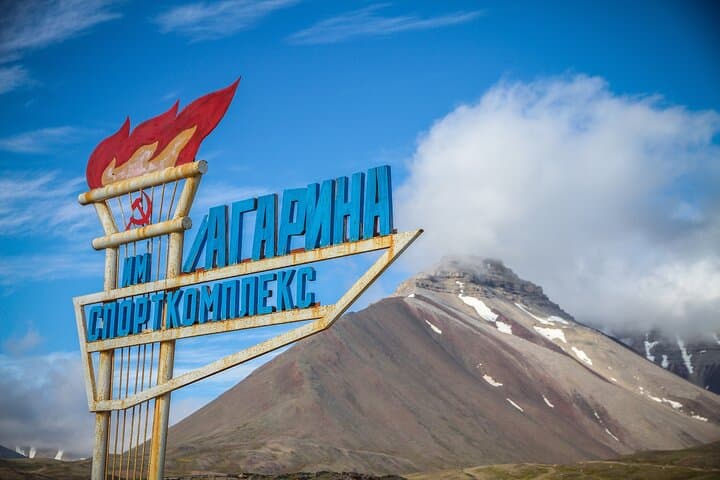
You arrive in a world that still feels like a set — Soviet-era signage leaning on peeling paint, a schoolroom frozen mid-lesson, lamp posts that remember a different flag. The wind here doesn’t whisper; it inspects you. Boats cut a low, clean line across Isfjorden and then the hull hushes as you slip into the shadowed bay where Pyramiden sits, a compact grid of concrete and timber perched against a backdrop of black moraine and pale glacier. The private guide on your trip is more than a talker: they’re a photographer with a practiced eye, someone who knows how the Arctic light folds over a broken playground swing and how best to balance aperture and ISO when the sky refuses to settle. They point, you frame, and the ruin answers.
Pyramiden is a study in contrasts. Founded in 1910 as a Swedish coal-mining outpost and sold to the Soviet Union in the 1920s, the settlement was a symbol of high-latitude industry and ideology. Abandoned in 1998, it remains remarkably intact: the cultural center, the miner’s canteen, the busts and murals that refuse to be entirely erased. The architecture is blunt and functional, the signage Cyrillic, and the air smells of sea and old coal. This is not the dramatized Arctic of postcards — it’s quieter, rawer, and better for photographs that search for narrative rather than cliché.
Geology holds a quiet plot here: Pyramiden sits at the edge of glacial-sculpted fjords and coal seams that were carved into economic significance by steam, horses, and then diesel. The surrounding mountains are folded layers of ancient rock, streaked by moraine and punctuated with cirques. Wildlife patrols the headlands — arctic foxes sidle into ruins at dawn, and seals congregate where the current widens. The broader Svalbard archipelago is governed by the Svalbard Treaty and administered by Norway, but the Soviet imprint on Pyramiden is unmistakable and oddly well-preserved.
A photography-focused day trip like this one is practical and intimate: an eight-hour excursion out of Longyearbyen that pairs a crewed boat crossing with extensive time ashore. Your certified photographer-guide will help with composition, lens selection, and exposure — small adjustments that yield large differences in mood when shooting decaying interiors, crumbling signage, and wind-bleached vistas. For travelers who want more than a surface visit, this format turns Pyramiden into a classroom where you learn about light as much as the place itself. For those who prefer autonomy, the guide still provides context and safety: polar bear protocol, cultural-history briefings, and an orchestration of time so the best light meets the best scenes.
The cultural notes matter. Pyramiden was once a model Soviet town — concerts, a library, and organized recreation. The ghost town you explore is not a movie set but a social artifact: it reveals how life was structured in extreme latitude and under a planned economy. Visiting responsibly means listening to the stories — from the history of the miners to the modern Norwegian conservation mandates — and leaving the site as you find it.
Practicalities are part of the story. Most trips run in the ice-free months: summer offers open-water access and the long, gentle light of the Arctic midsummer; shoulder seasons can produce dramatic skies and fewer boats. Boat crossings are typically calm but dress for wind and spray. On-shore walks are short but on uneven surfaces — boots with grip and ankle support are non-negotiable. Polar-bear awareness is constant: tours carry rifles and guides brief you on behavior, so follow instructions and never wander alone.
Why book this experience? For photographers, it’s the chance to work a singular subject under expert tutelage: abandoned interiors, Soviet-era iconography, shoreline compositions, and glacier-backed panoramas. For culture-minded travelers, it’s a compact immersion into Svalbard’s layered human history. And for people who want a straightforward, all-day outing from Longyearbyen, the itinerary is efficient: a morning crossing, a day exploring with targeted shoots, and a return with time to review images and swap stories.
If you go, pace your shots. Start wide — the scale is part of the story — then move in: details of Cyrillic signs, textures of flaking paint, the geometry of broken windows. Use the photographer-guide to practice exposure bracketing in tricky conditions; contrast between dark interiors and bright snow can confound automatic meters. Respect the site: don’t remove artifacts, avoid standing on fragile floors, and follow your guide’s path.
This trip is for people who like concrete facts married to sensory detail. It’s eight hours of daylight and shadow, history and geology, and the reliable presence of a guide who can show you not just what to photograph but why it matters. In the end, you’ll leave with a folder of images, a sharper sense of Arctic light, and a memory of a place where time has paused but stories remain vivid. If you want to go deeper, your guide’s instruction will extend beyond technical tips; they’ll help you see how composition and narrative turn an abandoned town into a portrait of the high north.
Learn more or book a private photographer-led visit to Pyramiden through this local expert link: <a href="https://app.advcollective.com/local-experts/explore-pyramiden-arctic-ghost-town-and-photographers-haven-in-svalbard">Pyramiden: Arctic ghost town and photographers’ haven</a> — it’s the practical first step for turning a day trip from Longyearbyen into a focused photographic study.
Trail wisdom
Small choices, better day.
Dress for wind and spray
Wear a waterproof outer layer and windproof pants; the fjord crossing can be cold even on sunny days.
Use good boots
Sturdy hiking boots with ankle support and a grippy sole make uneven, icy, or rubble-strewn surfaces safer.
Respect polar-bear rules
Always stay with the group and follow your guide’s safety briefing — polar bears are rare but possible.
Bring extra memory and batteries
Cold drains batteries fast and you’ll want spare cards for bracketed exposures and multiple lenses.
Local knowledge
Read the place, not just the route.
Watch for native species including Arctic fox, Ringed seal.
Keep an eye out for wildlife during the transition between areas and habitats. Respect distance guidelines.
Svalbard has strict environmental protections; visitors are asked to stay on established paths where provided, pack out waste, and respect wildlife to minimize disturbance.
Follow the guide's instructions on size limits, ethical handling, and leave-no-trace practices.
Visit the coal-mining museum for first-hand artifacts and restored rooms. Walk the short ridge behind the settlement for glacier-backed panoramas off the usual tourist track
Locally recommended viewpoints and quiet spots known best to local operators.
Pyramiden was established in 1910, later became a Soviet company town, and was abandoned in 1998—its buildings remain a time capsule of Cold War-era Arctic life.
Maritime roots and regional tradition shape the waterways and working coasts.
Seasonal guide
Four versions of the same landscape.
Spring
Best forSnow-texture photography · Calmer shoulder-season crowds
ChallengesUnstable ice · Cold temperatures
Late spring can offer mixed sea-ice and stark monochrome skies—dramatic for black-and-white work but colder and less predictable for boat crossings.
Summer
Best forOpen-water access · Long daylight and soft light
ChallengesMore boat traffic · Mosquitoes in sheltered spots
Summer provides reliable boat access and gentle light; it’s the most practical season for visitors and photography workshops.
Fall
Best forCrisp air and dramatic skies · Fewer visitors
ChallengesShorter days · Unpredictable weather
Autumn packs color and contrast into fewer daylight hours—good for moodier images but plan for rain and high winds.
Winter
Best forNorthern Lights photography · Snow-covered ruins
ChallengesLimited access by boat · Extreme cold and polar conditions
Winter makes Pyramiden cinematic under snow and aurora, but access typically requires snowmobile logistics and experienced guides.
Operator details
What the booking data adds.
Included
- ✓Private transportation
- ✓Private tour w. experienced local photographer
Good to know
- ✓Suitable for all physical fitness levels
- ✓You will spend a totality of 3 hours at Pyramiden. The remaining hours will be spent by ferry to and from the destination, with ample photo opportunities of the breathtaking ice bergs, massive fjords and maybe even polar bears!
- ✓Due to local weather conditions, there may be excursions to Barentsburg and Pyramiden where our boat is unable to dock. In such cases, the tour will instead focus on wildlife and the stunning Arctic nature — for example, a visit to Nordenskjöld or the Esmark Glaciers.
- ✓During peak season, we reserve vessels based on availability and therefore cannot guarantee whether the boat will be open or closed.
Pack with intention
What to bring.
Good to know
Common questions.
Most visitors travel by boat from Longyearbyen; in winter access may be by snowmobile with experienced operators. Tours typically handle transfer logistics.
Plan the edges
The details that make the day easier.
Pyramiden was sold to the Soviet Union in 1927 and operated as a Soviet mining settlement until 1998—many structures remain largely unchanged since abandonment, creating a unique preservation of 20th-century Arctic life.
Back in Longyearbyen, warm up at Huset for local Arctic cuisine and a curated wine list, grab a casual meal at Kroa, or try a beer from Svalbard Bryggeri—these spots connect the experience of the high north to food, drink, and local conversation.
- Closest airport
- Longyearbyen (LYR). Departure: Longyearbyen harbor (boat). Distance: ~45–50 km by sea. Cell service: Limited in Pyramiden. Permits: No special permit for day visits, but guided tours handle safety and polar-bear protocol.
Svalbard’s fragile tundra and wildlife require careful visitation—stick to guide routes, pack out all waste, and avoid removing artifacts to protect cultural heritage and ecosystems.
Explore by topic
Follow the threads.
Keep exploring
Make the story part of the trip.
Set out from Bass Harbor for a private, customizable day on Blue Hill Bay — lighthouses, puffins, seals, and the chance to feel Acadia from the water. Small groups, local captains, unforgettable views.
In four hours you can move from shaded canyon ferns to wind-scoured coastal ridgelines, guided by someone who knows where the light—and the hidden views—live. This private half-day hike on the Monterey Peninsula or Big Sur is compact, curated, and perfect for travelers who want depth without a multiday commitment.
 Related story
Beneath a sky of shifting light, Skaftafell’s ice reads like a map of time. This three-hour guided glacier hike mixes technical instruction with geology and culture: compact, safe, and unforgettable.