
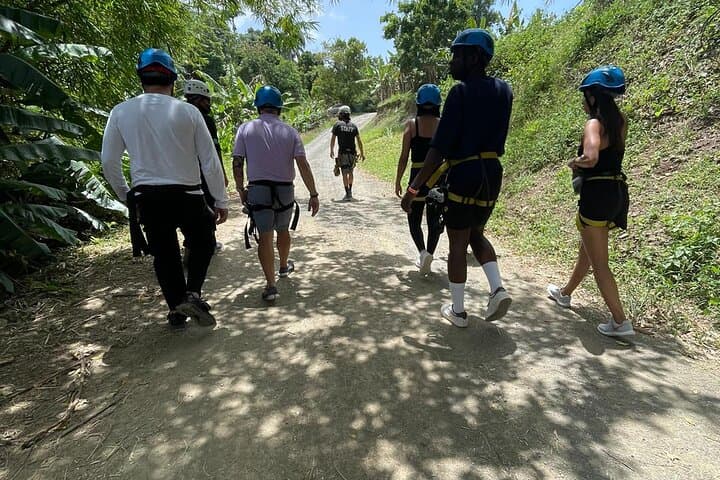
What the day feels like
You step off the minibus into a green that seems to hum—the wet, dense green of El Yunque—where clouds cling to the ridges and the air smells like wet stone and citrus. The first footfall is soft on loam; a coquí’s call threads through the trees like punctuation. Over the next six-plus hours you’ll cross ecosystems as if turning the pages of a naturalist’s field guide: mountain streams and dripping ferns, a spring-fed pool tucked beneath boulders, and finally a stretch of golden sand where the Atlantic presses its palm against the shore. This is the rhythm of the Puerto Rico Rainforest Adventure Trail Trio—a day designed to keep your legs moving and your senses awake, with diversity and pace stitched into the itinerary.
There’s a geological logic to the day. El Yunque’s slopes are remnants of volcanic uplift and ancient coral foundations, shaped by tropical rain that carves gullies and polishes bedrock into natural plunge pools. The forest itself is one of the most biodiverse pockets on the island: epiphytes clothe branches, streams veil roots, and life insists on immediacy. Moving downhill toward Luquillo the canopy opens, the humidity eases, and palms begin to tick against the wind. Finally, the shoreline at Luquillo—its sand kissed by both surf and history—offers a different kind of clarity: salt, breeze, and a horizon that rewrites depth.
The route the day follows is as cultural as it is natural. El Yunque is the only tropical rainforest in the U.S. National Forest System and was held sacred by the island’s Taíno people, who looked to these high places as the domain of spirits. Spanish colonial maps later recorded rivers turned into routes for agriculture, and modern Puerto Rico has folded the forest into a mosaic of conservation and recreation. Your guides—local experts who read weather as easily as trail markers—often fold stories of Taíno myths and colonial timbering into the practicalities of a hike, connecting each viewpoint to an earlier human chapter.
What makes this choice of trip stand out is the breadth of terrain in one day and the way the tour frames each stop as an encounter. One moment you’re balancing along rainforest pathways that thread between roots and rock; the next you’re stripping off boots to wade in a clear spring, letting the current dare you to sit in its chill. The tour’s pacing is deliberate: steady climbs and easier descents, long enough at each stop to drink in the setting without losing forward momentum. It’s an attractive day for families and small groups because variety keeps attention engaged—no single ecosystem overstays its welcome.
Practical details matter here. Expect a 6–7 hour day with roughly 3–5 miles of walking total, some modest elevation gain across rainforest trails, and padding for stops—swimming in a spring, a short beach walk, and time for photos. Trails are well-marked but can be slick; good footwear and a lightweight rain layer are non-negotiable. Water is essential: the combination of humidity and physical effort is dehydrating in a way that sneaks up on you. Locals know to time these trips to avoid swells of mid-day heat and to catch the morning cloud layer while it lingers in the mountains.
If you’re curious to book, the experience is offered as a full-day excursion from San Juan and nearby towns, bringing a mix of shuttle convenience and local expertise. For a deep dive into guide options and the small logistics—pickup points, what’s included, and cancellation policy—see the operator page here: <a href="https://app.advcollective.com/local-experts/puerto-rico-rainforest-adventure-trail-trio-el-yunque-luquillo-beach-adventure-trail">Puerto Rico Rainforest Adventure Trail Trio</a>. That link is also a good launch point for practical questions about accessibility and age guidelines.
On the cultural side, the day ends with more than sand in your shoes. Luquillo’s famous kiosks—long rows of small stands—are as much a part of the experience as the beach itself. They trade in empanadillas, fresh seafood, and local beers; after sweat and salt you’ll appreciate the immediacy of a cold Medalla and a plate of mofongo. Guides often point out the small human histories along the way: how a path was once a mule line, where a spring was traditionally used by farmers, and how conservation efforts now balance tourism with protection.
For photographers, the variety of light between cloud forest and coast is an advantage: bring a mid-range zoom and a wide-angle for sweeping canopy-to-coast shots, and plan for misty, layered images in the morning and golden, reflective light on the shore in late afternoon. Keep cameras dry—the forest’s humidity is a constant.
Why do this trip? It compresses the island’s ecological tagline—mountain to sea—into one thoughtful day. You’re not just checking boxes; you’re moving through linked habitats, each with its own sensory rules. That makes the Puerto Rico Rainforest Adventure Trail Trio ideal for anyone who wants an efficient, rewarding snapshot of the island’s wild diversity, supported by guides who know the terrain and the stories. If you want to come away with wet hair, sandy shoes, and a clearer understanding of how Puerto Rico’s uplands and coasts meet, this is the kind of day that delivers.
Trail wisdom
Small choices, better day.
Start Early
Morning light and lower crowds make the rainforest cooler and clearer—departures that leave San Juan before 8 a.m. are ideal.
Bring Waterproof Shoes
Trails and springs are slippery; closed-toe water shoes or trail runners with good grip protect feet on wet rock.
Hydration Strategy
Carry at least 1.5–2 liters of water and electrolyte snacks—the humid climate accelerates fluid loss.
Respect the Springs
Use reef-safe sunscreen and avoid soaps in natural pools to protect aquatic life and water quality.
Local knowledge
Read the place, not just the route.
Watch for native species including Coquí frog (night calls), Puerto Rican Parrot (rare, protected).
Keep an eye out for wildlife during the transition between areas and habitats. Respect distance guidelines.
El Yunque and adjacent coastal areas are protected—stay on trails, pack out trash, and use reef-safe sunscreens to minimize impact.
Follow the guide's instructions on size limits, ethical handling, and leave-no-trace practices.
Quiet pullouts on PR-191 with mini-waterfalls and fewer visitors. The Luquillo Kiosks (kioskos) for quick local bites and fresh seafood
Locally recommended viewpoints and quiet spots known best to local operators.
El Yunque was revered by the Taíno and is the only tropical rainforest in the U.S. National Forest System, with a layered history of indigenous, colonial, and conservation use.
Maritime roots and regional tradition shape the waterways and working coasts.
Seasonal guide
Four versions of the same landscape.
Spring
Best forModerate temperatures · Lush flora · Fewer storms
ChallengesIntermittent showers · Trail slipperiness after rain
Spring offers temperate conditions and vibrant growth—expect occasional showers that make trails lush but slick.
Summer
Best forWarm ocean swims · Longer daylight · Peak beach conditions
ChallengesHigher heat and humidity · Hurricane season starts June onward
Summer brings beach-perfect weather but also peak humidity and the start of the Atlantic storm season—plan accordingly.
Fall
Best forFewer crowds · Clearer skies after storms · Good beach days
ChallengesHurricane risk early fall · Variable rainfall
Fall can be rewarding with fewer visitors, though early fall carries increased storm risk—watch forecasts.
Winter
Best forCooler mountain hikes · Clear visibility · Calmer seas some days
ChallengesOccasional rain · Shorter daylight hours
Winter often provides crisp forest air and good visibility, with occasional passes of rain—pack a lightweight rain layer.
Operator details
What the booking data adds.
Included
- ✓Requires gear for adventure trail
- ✓Air-conditioned vehicle
- ✓water
Not included
- —Lunch
- —Gratuity
Good to know
- ✓Service animals allowed
- ✓Infants are required to sit on an adult’s lap
- ✓Not recommended for travelers with spinal injuries
- ✓Not recommended for pregnant travelers
- ✓Not recommended for travelers with poor cardiovascular health
- ✓Travelers should have at least a moderate level of physical fitness
Pack with intention
What to bring.
Good to know
Common questions.
This is a full-day tour lasting about 6–7 hours that visits El Yunque rainforest trails, a natural spring, and Luquillo Beach with stops for swimming and short hikes.
Plan the edges
The details that make the day easier.
El Yunque is the only tropical rainforest in the U.S. National Forest System and was designated a National Forest in 1903—its name comes from a Taíno word meaning 'white land' or possibly a corrupted Spanish reference.
After the trail, head to the Luquillo Kiosks for fried empanadillas, fresh fish and a cold Medalla; in the evening, Old San Juan offers vibrant bars and restaurants for craft cocktails and mofongo.
- Closest airport
- Luis Muñoz Marín Intl. (SJU); Typical drive from San Juan: 35–60 minutes depending on traffic; Cell service: patchy in El Yunque; Permits: generally none, but check for park notices.
This route crosses protected forest and coastal zones—stick to marked trails, pack out all trash, and use reef-safe sunscreen to protect reefs and spring-fed pools.
Explore by topic
Follow the threads.
Keep exploring
Make the story part of the trip.
Set out from Bass Harbor for a private, customizable day on Blue Hill Bay — lighthouses, puffins, seals, and the chance to feel Acadia from the water. Small groups, local captains, unforgettable views.
In four hours you can move from shaded canyon ferns to wind-scoured coastal ridgelines, guided by someone who knows where the light—and the hidden views—live. This private half-day hike on the Monterey Peninsula or Big Sur is compact, curated, and perfect for travelers who want depth without a multiday commitment.
 Related story
Beneath a sky of shifting light, Skaftafell’s ice reads like a map of time. This three-hour guided glacier hike mixes technical instruction with geology and culture: compact, safe, and unforgettable.