
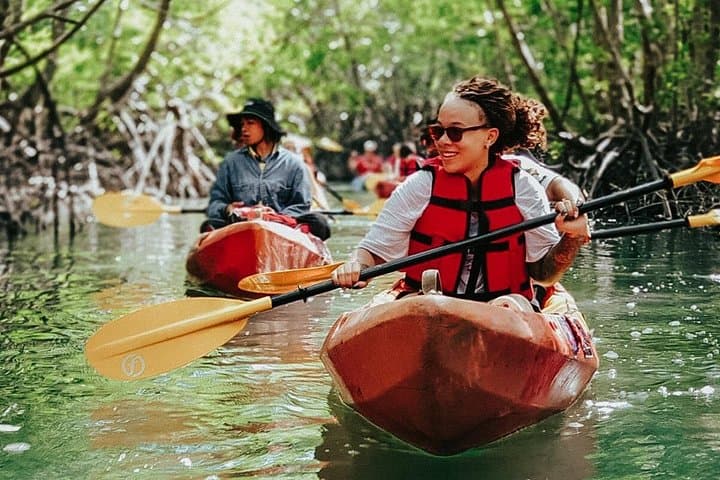
What the day feels like
By midmorning the mangroves feel like a city with no streets—only narrow green avenues cut by tidal channels. The kayaks slip forward in single-file, oars whispering, while sun filters through leaves that smell faintly of salt and earth. Around a dark bend, a kingfisher darts and the quiet shifts: the mangrove is watching you move through it, testing how quickly you notice the small, busy things. This is the rhythm of the 4-Waters Eco-Adventure—four different aquatic moods packed into a single, deliberate day.
The trip starts in Phuket but quickly turns inland to the quieter edges of Phang-Nga province, where limestone ridges and mangrove forests stitch sea and land together. The itinerary is unpretentious: paddle through shaded mangrove channels; hike rainforest trails to Ton Phrai Waterfall; soak in mineral hot springs and cool off in a natural plunge pool; then finish with a sunset on a quiet sweep of white sand at Natai Beach. For travelers who like variety without the logistics headache, it’s an efficient way to sample the ecological diversity of southern Thailand in a single day.
Geology and ecology thread through every stop. Phang-Nga’s coastline is a product of uplifted Permian limestone and recent sea-level change—hence the dramatic karsts and sheltered bays. Mangroves sit at the front line, their roots trapping sediment and buffering storms, and they’re surprisingly lively: fiddler crabs, mudskippers, herons, and small reef fish all rely on those tangled roots. The rainforest that feeds Ton Phrai is compact but verdant, the understory thick with ferns and orchids where the waterfall carves a cool corridor through otherwise humid air. The hot springs are a reminder of the area’s thermal undercurrent—minerals warmed by subterranean heat that have coaxed locals to bathe here for generations.
Culturally, the journey touches communities shaped by sea and forest. Southern Thai cuisine—fresh seafood, tangy salads, and curries with coconut sweetness—reflects that relationship. Expect a simple, authentic lunch on this tour: generous portions of rice, grilled fish or chicken, and vegetable curries that favor bold flavors rather than frills. Local guides are often from nearby villages and bring a practical knowledge of tides, trails, and seasonal behavior of wildlife.
Why go? The appeal is practical as much as aesthetic. If you have one day and want to move, learn, and relax without committing to a multi-day trek or a single-sport excursion, this trip scaffolds different modes of travel in a single, coherent arc. Paddling exercises balance and focus; the waterfall hike gets the blood moving; the hot springs are recovery; and the beach sunset is the reward. It’s an ideal day for active travelers who enjoy variety and for families who want organized access to multiple natural features.
Practicalities matter. The trip runs roughly 10 hours and typically includes hotel transfers from Phuket, a guide, equipment, and lunch; price starts around USD 119. Expect early pickup, a full day of moving between sites, and stretches of uneven trail when you hike to the waterfall. The guides handle most logistics—permits and park fees are generally bundled into the tour price—but bring cash for small purchases, tips, or a quick coffee.
Safety and comfort are simple to manage. Wear lightweight, quick-drying layers and closed-toe shoes for the hike (and water-friendly footwear for the mangrove paddle). Bring sun protection and a refillable water bottle—hydration is crucial in the hot-season months. If you’re prone to motion sickness, the inflatables used for mangrove kayaking are stable but consider medication for the boat transfers between stops.
Timing affects the experience. The dry months (December–March) offer crisp mornings, fewer mosquitoes, and clearer water at the plunge pools; the monsoon months bring lush vegetation and higher waterfalls but also heavier rains and choppy seas. Guides will adjust the order of activities and routes to suit tides and weather, so flexibility rewards the traveler.
Conservation is woven into the experience. Mangroves are fragile and essential; small behavioral changes—staying seated in the kayak, avoiding loud noises, and not touching roots or wildlife—make a big difference. The tour operators increasingly emphasize ‘leave no trace’ practices and support local conservation efforts, but visitors can help by minimizing single-use plastics and heeding guide instructions.
At day’s end, Natai Beach gives you space to breathe. A quiet stretch of sand with a broad horizon, it’s the kind of place where the sun seems to slow down just to be watched. The tide and the light here feel intentional—nature reminding you that most good trips are as much about the pauses as the motion.
For a single-day program, the 4-Waters Eco-Adventure gives variety without chaos, education without heaviness, and enough downtime to savor the last light. It’s a practical, sensory-rich way to map southern Thailand’s interface of land and sea—one paddle, one step, one soak, one sunset at a time.
Trail wisdom
Small choices, better day.
Hydrate Before You Start
Bring a refillable water bottle and sip frequently—tropical humidity and activity can dehydrate faster than you expect.
Shoes for Two Worlds
Wear lightweight hiking shoes that can handle muddy trails and brief water exposure; sandals alone aren’t sufficient for the waterfall hike.
Pack a Small Dry Bag
Protect your phone, wallet, and camera during the paddling sections and transfers to the hot springs.
Follow Tidal Advice
Guides schedule mangrove paddles to match tides—arrive on time for the smoothest channels and best wildlife viewing.
Local knowledge
Read the place, not just the route.
Watch for native species including White-bellied sea eagle, Mudskippers and fiddler crabs.
Keep an eye out for wildlife during the transition between areas and habitats. Respect distance guidelines.
Mangroves and coral bays are sensitive; avoid trampling roots, use reef-safe sunscreen, and follow guides’ instructions to minimize disturbance.
Follow the guide's instructions on size limits, ethical handling, and leave-no-trace practices.
Paddle quietly into narrow side channels for birdlife and crabs. Ask your guide for a short walk to small local viewpoints near the waterfall for different perspectives
Locally recommended viewpoints and quiet spots known best to local operators.
This coastline has long supported fishing and small coastal communities; Ao Phang Nga National Park, nearby, was established in 1981 to protect its unique karst islands and mangrove systems.
Maritime roots and regional tradition shape the waterways and working coasts.
Seasonal guide
Four versions of the same landscape.
Spring
Best forWarmer weather · Lush lowland growth
ChallengesIncreasing heat · Higher humidity
March–May bring hotter days and dense vegetation—great for tropical color but prepare for strong sun and sweat.
Summer
Best forFewer crowds at some sites · Dramatic cloudscapes
ChallengesMonsoon showers · Choppy sea conditions
June–August is hotter with intermittent heavy rains; activities continue but itineraries may be reversed or shortened.
Fall
Best forFull waterfalls after rains · Greener rainforest trails
ChallengesLingering storms early in the season · Muddy trails
September–November can offer powerful waterfalls and verdant forest, though sudden downpours are possible.
Winter
Best forDry, cooler conditions · Clear sunsets
ChallengesPeak tourist season · Higher prices
December–February is the most comfortable and reliable time for clear skies and calm seas—expect more visitors.
Operator details
What the booking data adds.
Included
- ✓All local taxes
- ✓Hotel pickup and drop-off (Kata - Karon Area), other areas extra fee
- ✓Bottled water, lunch and snacks
- ✓Small-group tour led by professional English speaking guide and driver
Not included
- —Alcoholic drinks (available to purchase)
- —Personal expenses
Good to know
- ✓Not recommended for pregnant travelers
- ✓Travelers should have at least a moderate level of physical fitness
- ✓Children must be accompanied by an adult
- ✓Please advise any specific dietary requirements at time of booking
Pack with intention
What to bring.
Good to know
Common questions.
The tour is approximately 10 hours and usually includes hotel transfers, guide, equipment for paddling, lunch, and entrance fees—confirm specifics when booking.
Plan the edges
The details that make the day easier.
Ao Phang Nga National Park, which includes many karst islands and mangrove habitats in Phang-Nga Bay, was formally protected in 1981.
After the day’s adventure, head to Phuket Town or the nearby Khao Lak area for fresh seafood and Southern Thai dishes—look for family-run stalls and beachside grills serving grilled fish, tangy papaya salad, and coconut-forward curries.
- Closest airport
- Phuket International Airport (HKT); Driving time from Phuket city: ~1–1.5 hours to pickup points; Cell service: Good in towns, limited in dense mangroves and some waterfall areas; Permits: Park fees often included by operator—ask when booking.
Mangroves and coral ecosystems are fragile—use reef-safe sunscreen, avoid single-use plastics, and follow guide instructions to reduce impact.
Explore by topic
Follow the threads.
Keep exploring
Make the story part of the trip.
Set out from Bass Harbor for a private, customizable day on Blue Hill Bay — lighthouses, puffins, seals, and the chance to feel Acadia from the water. Small groups, local captains, unforgettable views.
In four hours you can move from shaded canyon ferns to wind-scoured coastal ridgelines, guided by someone who knows where the light—and the hidden views—live. This private half-day hike on the Monterey Peninsula or Big Sur is compact, curated, and perfect for travelers who want depth without a multiday commitment.
 Related story
Beneath a sky of shifting light, Skaftafell’s ice reads like a map of time. This three-hour guided glacier hike mixes technical instruction with geology and culture: compact, safe, and unforgettable.