
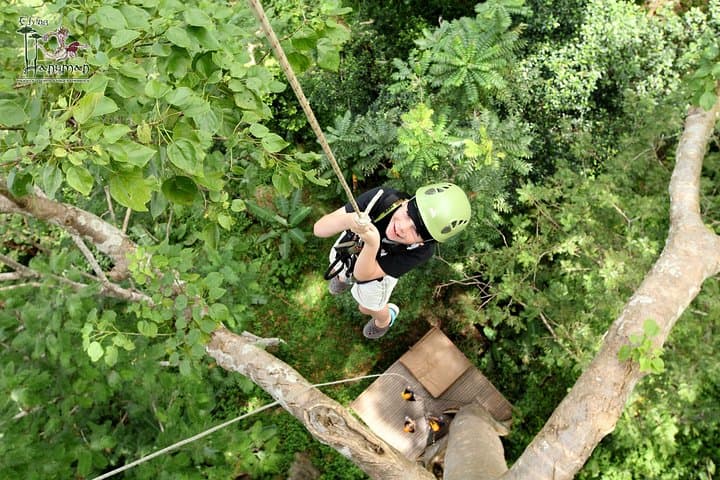
What the day feels like
There’s a particular interval between the clunk of a harness locking and the first gust of air that makes you rearrange how you think about height. At Hanuman World, that moment arrives on a spiral stair perched in a cathedral of tropical canopy—platforms anchored into old-growth branches, ropes humming with tension, and a guide checking your carabiner like a ritual. Then you step off. The world below—banana palms, rubber trees, a lattice of vines—slides away as the cable takes you forward. You’re not just moving through the forest; you’re threaded into it.
Hanuman World sits in Phuket’s interior, a compact adrenaline park built to showcase the island’s regrown rainforest and to keep the thrills accessible. The operator’s three course packages—World A+ (32 platforms), World B+ (18 platforms), and World C+ (10 platforms)—allow you to choose how long to stay suspended. Each course mixes long lines that coax speed and silence, shorter lines to catch your breath, skywalks that wobble like a nervous bridge, and rappel descents that feel like lowering yourself into the understory. The full, combined options stretch into a three- to four-hour loop of steady motion and a rhythm that turns fear into focus.
The name is purposeful: Hanuman, the monkey god of the Ramayana, watches from graphics and signage—an apt mascot in a place where long-tailed macaques and other canopy denizens still bustle. Phuket itself has a layered past; centuries ago, its tin-rich soils drew miners who altered the landscape, and much of the coastal bustle grew from that trade. Today’s interior forests are a patchwork of natural regeneration and rewilded land that zipline systems like this one try to present without leaving a heavy footprint.
Geology and ecology matter here. The island’s bedrock slopes into small ridges rather than sheer alpine faces, so Hanuman World’s platforms capitalize on big trees rather than cliffs. That makes it accessible—height without mountain hiking—but the sensation of exposure is genuine: lines sweep across gullies, arcs carve you above hollows where sunlight splices through leaves. Tropical birds call from the canopy; if you pause on a platform you might hear hornbills or bulbuls. The experience is deliberately theatrical: cables and platforms are engineered for safety, but the choreography—guides shouting clear commands, the harness that becomes second skin—turns structured risk into one of the most transportive half-days on the island.
There’s a practical edge to the romance. The operator provides harnesses, helmets, and gloves; experienced guides run a constant safety loop. The course is not a mere thrill ride—the skywalks and rappels demand balance, basic coordination, and the willingness to trust a line above a hollow. You won’t need technical climbing skills, but you will move suspended through the forest for hours, and that calls for sensible preparation: closed-toe shoes, long pants (to limit chafing against harness webbing), and hydration.
Logistics are refreshingly simple. The experience is offered with instant confirmation, a roughly three- to four-hour duration, and a published from-price (around USD 77) that typically includes park transfers from central parts of the island and a Thai lunch when booked through tour operators. It’s popular with families and mixed-ability groups; guides tailor their instruction and double-checks are routine. Rain can pause sections or shorten lines—this is a tropical island after all—so schedule the zipline for a dry morning in the high season if you want uncompromised flight time.
Culturally, the trip is a quick lesson in Thai hospitality. Guides are professional but warm, and the typical post-zipline lunch is an uncomplicated touchstone: jasmine rice, grilled chicken or tofu, and a rich, sour-sweet soup that snaps you back down to ground level. If you’re staying in Phuket Town or Patong, the park makes for a clean half-day adventure between beach days or evening markets.
How it feels: the first line is a shock and then a calibration. Later lines invite technique—leaning backward to let speed come, angling your body to reduce oscillation, trusting the pulley. The skywalks change the tempo, forcing you to focus on foot placement and the subtle language of balance. Rappels slow you down and give you downtime to look at the forest as a living structure—roots, trunks, vines stacked in a vertical city.
For anyone with an appetite for outdoor activity and a healthy respect for safety protocols, Hanuman World is an efficient, emotionally memorable way to connect with Phuket’s interior. It’s not a wilderness expedition—it’s a designed encounter—and that’s its strength: it removes the friction of logistics and guides you straight into the sensory core of the island. Whether you’re filling a day between beaches and temples, or you’ve come specifically for the thrill, expect to leave with dirt on your trousers, a slower pulse in your wrists, and a new metric for how high is high enough.
Practical: book early in the dry season (November–February) for the clearest lines, confirm age and weight limits on the booking page if you’re traveling with children, and set aside at least half a day for transport, gear check, and the post-zipline lunch. Bring a lightweight camera with a wrist strap if you want in-action shots (guides often offer photo services too), and if you’re unsure about motion or heights, choose a shorter course for your first run. Either way, the jungle has a way of recalibrating perspective—fast and honest, like a good line.
Trail wisdom
Small choices, better day.
Wear Closed-Toe Shoes
Secure, closed-toe shoes with good traction keep your feet protected on platforms and during rappels.
Dress for Movement
Lightweight long pants and a breathable shirt reduce harness chafing and protect against sun and insects.
Hydrate Before You Go
Carry or drink water before launching—hours on the line in a tropical climate dehydrate quickly.
Secure Small Items
Leave loose items behind or use zipped pockets and tethers—phones and sunglasses can’t be trusted at speed.
Local knowledge
Read the place, not just the route.
Watch for native species including Long-tailed macaque, Tropical hornbills and bulbuls.
Keep an eye out for wildlife during the transition between areas and habitats. Respect distance guidelines.
Operators tend to route platforms to minimize tree damage and often support local reforestation efforts—pack out trash and avoid feeding wildlife.
Follow the guide's instructions on size limits, ethical handling, and leave-no-trace practices.
Kathu Waterfall: a quieter natural stop nearby for a short post-zipline cooldown. Old Phuket Town: vibrant Sino-Portuguese streets for lunch or coffee after your flight
Locally recommended viewpoints and quiet spots known best to local operators.
Phuket’s interior was shaped by centuries of tin mining; today pockets of regrown rainforest host canopy tours that celebrate both nature and cultural motifs like Hanuman from the Ramayana.
Maritime roots and regional tradition shape the waterways and working coasts.
Seasonal guide
Four versions of the same landscape.
Spring
Best forWarmer dry days · Clear early-morning flights
ChallengesIncreasing heat · Shorter mid-day thunder showers
Spring (March–May) brings warming days and abundant sunshine; earlier starts help avoid rising temperatures and occasional thunderstorms.
Summer
Best forFewer tourists · Lush green scenery
ChallengesFrequent rain and humidity · Possible short course closures
Summer is lush and quieter on visitors, but heavier rains and humidity can interrupt lines and shorten runs.
Fall
Best forLower prices · Vibrant greenery after rains
ChallengesUnpredictable monsoon tail · muddy access trails
Fall is a shoulder period with patchy weather—expect dramatic clouds and occasional cancellations during heavy storms.
Winter
Best forMost reliable dry weather · Full course availability
ChallengesHigher visitor numbers · Book-outs on peak days
The dry season (Nov–Feb) is prime: most stable weather and full access to longest courses—book early for best slots.
Operator details
What the booking data adds.
Included
- ✓Admission/Entry Tickets to your selected Package
- ✓Complimentary Thai Buffet Meal
- ✓Professional English-speaking Eco-Guides
- ✓All taxes, fees and handling charges
- ✓All Premium Safety Equipment
- ✓Free Round-Trip Shared Transfer (Patong, Kata, Karon, Phuket Town, Chalong)Hotels
Not included
- —Soft drinks, alcoholic beverages, or extra snacks outside the buffet.
- —Gratuities
- —Souvenir photos (available to purchase)
Good to know
- ✓Not recommended for travelers with spinal injuries
- ✓Not recommended for pregnant travelers
- ✓Not recommended for travelers with poor cardiovascular health
- ✓Travelers should have a high level of physical fitness
- ✓Not recomended for senior citizen above 60.
- ✓Not recomended for child below 4 years.
- ✓Weight below 40 Kg or above 120 Kg will not be allowed to participate.
Pack with intention
What to bring.
Good to know
Common questions.
The listed duration is approximately 3–4 hours including gear briefings, transfers if booked, and the on-course experience.
Plan the edges
The details that make the day easier.
Hanuman World is named after Hanuman, the monkey god in the Ramayana—Thai versions of the epic remain culturally significant across the country.
After a zipline morning, head to Phuket Town’s Old Quarter for crispy pork, roti, or a coconut shake; sample local beers at a casual bar near Thalang Road and watch the restored Sino-Portuguese facades hum with evening life.
- Closest airport
- Phuket International Airport (HKT)
- Typical drive
- 30–45 minutes from popular resorts
- Cell service
- usually good near park but expect patchy signal on lines
- Permits
- none required for casual visitors—bookings confirm access
Hanuman World emphasizes low-impact canopy access; minimize waste, avoid single-use plastics, and don’t feed wildlife to protect local ecosystems.
Explore by topic
Follow the threads.
Keep exploring
Make the story part of the trip.
In four hours you can move from shaded canyon ferns to wind-scoured coastal ridgelines, guided by someone who knows where the light—and the hidden views—live. This private half-day hike on the Monterey Peninsula or Big Sur is compact, curated, and perfect for travelers who want depth without a multiday commitment.
 Related story
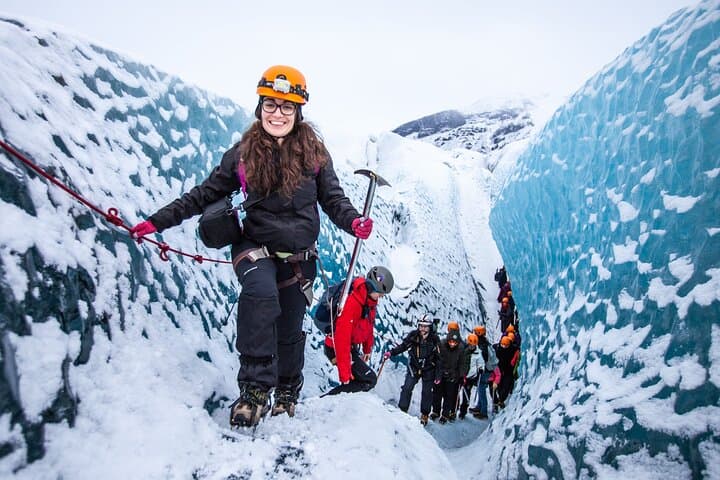
Beneath a sky of shifting light, Skaftafell’s ice reads like a map of time. This three-hour guided glacier hike mixes technical instruction with geology and culture: compact, safe, and unforgettable.
 Related story
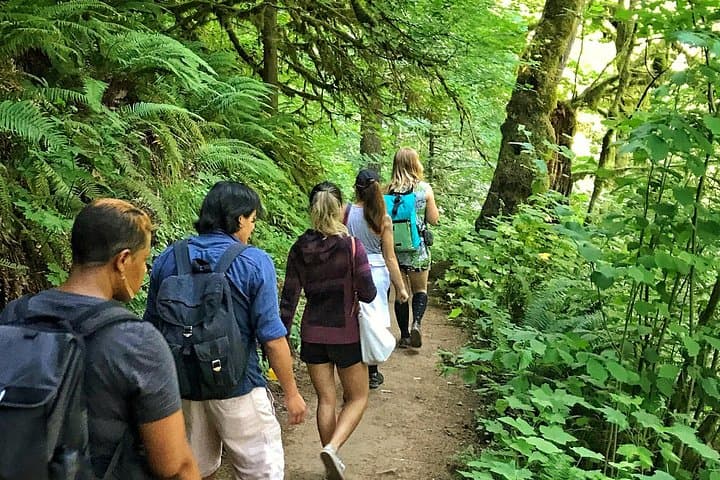
Lose the city for a few hours without leaving it: this 5-mile, 900-foot-gain Forest Park loop threads old-growth pockets, city viewpoints, and cultural landmarks for a compact taste of Portland’s wild side. Expect moss, roots, and stories.