
What the day feels like
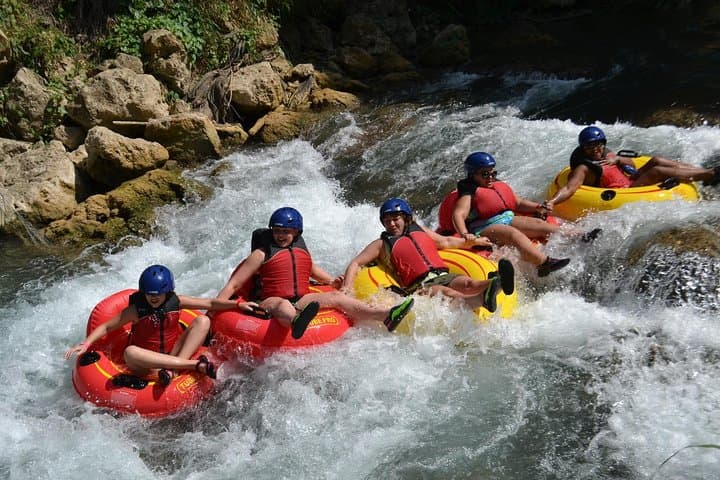
You step off the minivan into humidity that feels like a soft blanket—green, close, and alive. Insects hum with the rhythm of the forest and somewhere upstream water laughs over rock. Guides unload a stack of bright blue tubes and the river, impatient and insistent, nudges at your ankles as if reminding you it runs on its own schedule. This is river tubing from Falmouth: four hours of drifting, mild rapids, and rainforest company that makes you forget the cruise ship waiting on the harbor.
The stretch you ride is less a manic whitewater run and more a river that has personality. Currents flirt with the tube’s edge and riffles prod you forward; deeper pools offer lazy float time under a canopy of towering trees. Geologically, many of Jamaica’s rivers cut through limestone and deposit smooth boulders and palmetto-lined banks; here, the course has carved a ribbon of shade that cools the heat of the day. You get close enough to hear the river’s stones clack, and far enough from shore to feel the current’s playful authority.
There’s a small history braided into this trip: Trelawny parish grew wealthy from sugar in the 18th and 19th centuries, and many of the paths through the lowland forest trace routes once used by plantation workers and local fishermen. Falmouth, a Georgian-era seaport, is the practical start and finish—modern tourism layered onto centuries of trade and local culture. Guides are local, quick with a joke and a story; they know where a riverbank hosts wild orchids, or which bend has the prettiest light for a photo.
Culturally, a float trip like this is communal. Boats or shuttle trucks ferry groups to a drop-in point. You’ll meet travelers from cruise ships and independent visitors. Guides often double as naturalists—pointing out birds, small mammals, and the occasional iguana sunning on a rock. If you listen, you’ll hear how locals read the river: a change in bird calls, a sudden chill in the shade, a quicker ripple—each a small weather report from the land.
Why go? The trip balances ease and adventure. It’s accessible for fit beginners—no white-water expertise required—but it still delivers the satisfying friction of moving water under you. You can relax and look up at the canopy, or grab a friend’s tube and race a section of current. At about four hours from pickup to drop-off, it’s long enough to feel like an escape, short enough to make it a half-day cap to a wider Jamaica itinerary. Price is typically around USD 128 per person, with instant confirmation and free cancellation—practical details that make planning painless.
Practical rhythm matters. Most groups start mid-morning when the river is warm and the light through the canopy is clean. Wear footwear that will tolerate wet rocks—a pair of secure reef shoes rather than flip-flops—and a swimsuit under quick-dry shorts. Bring sunscreen rated for water exposure, a small dry bag for essentials, and a refillable water bottle; hydration matters more than you expect in the humid subtropics. Guides provide life jackets and safety orientation; listen—currents have opinions and you’ll want to respect them.
Expect wildlife and quiet moments. Herons hunt the edges, kingfishers flash iridescent on low branches, and if you’re lucky a shy mongoose or river turtle will slide through the shallows. Photography is straightforward: bring a small waterproof camera or a phone in a waterproof case. Low light under the canopy favors shutter speeds over tiny apertures; stabilize your frame and shoot in short bursts.
Safety is simple but not negligible. The route avoids extreme rapids but does include punchy riffles and submerged rocks. Follow the guide’s instructions for reboarding tubes and traversing eddies. If you have neck or back issues, check with the operator beforehand—tubes can jostle. There’s no technical skill required beyond basic swimming comfort; the trip is designed as an experience, not a training ground.
After the float, there’s pleasure in the small details: a roadside jerk stand for peppery chicken and festival, the smell of fresh coconut being cracked, a local guide’s recommendation for a rum shop by the harbor. Falmouth’s streets are pleasant for a post-trip walk, with Georgian architecture that hints at the parish’s colonial past.
Who this trip suits: travelers who want nature immersion without a strenuous trek, families with older kids, cruise passengers with a few hours on shore, and anyone who likes water that moves just enough to make you feel alive. It’s not for thrill-seekers craving class IV rapids, nor for those who need full wilderness solitude, but it’s a deep, sensory slice of Jamaica that balances ease and authenticity.
The river will test your attention in small, generous ways: a sudden cool current that surprises you, a pool that invites you to drift and watch sunlight find the leaves. That’s the point—the river asks you to slow, to notice, and when you finally climb out at the takeout, you’ll have a handful of bright, personal memories and a practical appreciation for how water can make a landscape talk.
Useful specifics: total tour time is about four hours door-to-door; group sizes vary but guides keep ratios comfortable; bring cash for tips and small local purchases. The experience is rated highly by past guests, and its instant confirmation and free cancellation make it easy to slot into a travel plan. If you want one reliable, satisfying way to spend a morning in Trelawny that mixes ease, nature, and local culture, this river tubing adventure delivers.
Trail wisdom
Small choices, better day.
Secure Footwear
Wear reef shoes or secure sandals to protect feet when entering and exiting the river and hiking short banks.
Waterproof Your Phone
Use a waterproof case or dry bag to protect electronics—splashes are frequent and unpredictable.
Start Mid-Morning
Launch after sunrise to avoid the day’s hottest hours and catch clear light under the canopy.
Bring Small Cash
Have local currency for guide tips, roadside snacks, and small purchases at the takeout.
Local knowledge
Read the place, not just the route.
Watch for native species including Green Heron, River Turtle.
Keep an eye out for wildlife during the transition between areas and habitats. Respect distance guidelines.
Operators commonly emphasize leave-no-trace practices—avoid single-use plastics, use biodegradable sunscreen, and respect shoreline habitats.
Follow the guide's instructions on size limits, ethical handling, and leave-no-trace practices.
A quiet river bend with orchids visible from the tubes (ask your guide). Small roadside jerk stands near the takeout offering authentic local food
Locally recommended viewpoints and quiet spots known best to local operators.
Falmouth was established in 1769 and is noted for well-preserved Georgian architecture tied to the parish's sugar-trade history.
Maritime roots and regional tradition shape the waterways and working coasts.
Seasonal guide
Four versions of the same landscape.
Spring
Best forLush greenery · Moderate flows · Fewer crowds
ChallengesOccasional showers · Higher insect activity
Spring offers vibrant riverbanks and comfortable river flows; pack insect repellent for increased bugs after brief rains.
Summer
Best forWarm water · Longer daylight · Good for families
ChallengesHigher humidity · Possible heavier rains and runoff
Summer brings warm, inviting water but afternoon showers can raise flows—choose morning departures for the calmest conditions.
Fall
Best forQuiet rivers · Good light for photos
ChallengesHurricane season risk window · Variable river levels
Fall can be excellent if weather is stable, but monitor forecasts during the Atlantic storm season.
Winter
Best forDry weather · Cooler mornings · Peak travel convenience
ChallengesBigger crowds from cruise ships · Higher tourism prices
Winter is the most reliable for dry conditions and clear skies; expect more groups and plan bookings early.
Operator details
What the booking data adds.
Included
- ✓Well-appointed air-conditioned vehicles
- ✓Hotel/Port pick up and drop off
- ✓All Safety Equipment
Not included
- —Meals and Drinks
- —Gratuity (Optional)
Good to know
- ✓Not recommended for travelers with spinal injuries
- ✓Not recommended for pregnant travelers
- ✓Suitable for all physical fitness levels
- ✓Children must be accompanied by an adult
- ✓Minimum age: 8 years
- ✓Weight limit: 250 lbs
- ✓Not suitable for pregnant women or persons with back problems
- ✓Dress code is smart casual, wear swimwear under your clothes, bring a towel and water shoes
Pack with intention
What to bring.
Good to know
Common questions.
The full experience is about four hours door-to-door, including transport, safety briefing, and the float segment.
Plan the edges
The details that make the day easier.
Falmouth is one of the Caribbean’s best-preserved Georgian towns, established in 1769 and originally built to serve sugar plantations and trade.
After your float, grab jerk chicken from a roadside stand or head to a small rum shop in Falmouth for local punch and conversation; look for seafood shacks near the harbor and a walk through Falmouth’s Georgian streets to round out the day.
- Closest airport
- Sangster International (Montego Bay); Typical driving: 20–45 minutes from Montego Bay or short transfer from cruise port in Falmouth; Cell service: patchy in river valleys; Permits: none usually required.
Support local operators who practice leave-no-trace ethics—avoid disposable plastics, use reef-safe sunscreen, and respect wildlife and shoreline vegetation.
Explore by topic
Follow the threads.
Keep exploring
Make the story part of the trip.
Set out from Bass Harbor for a private, customizable day on Blue Hill Bay — lighthouses, puffins, seals, and the chance to feel Acadia from the water. Small groups, local captains, unforgettable views.
In four hours you can move from shaded canyon ferns to wind-scoured coastal ridgelines, guided by someone who knows where the light—and the hidden views—live. This private half-day hike on the Monterey Peninsula or Big Sur is compact, curated, and perfect for travelers who want depth without a multiday commitment.
 Related story
Beneath a sky of shifting light, Skaftafell’s ice reads like a map of time. This three-hour guided glacier hike mixes technical instruction with geology and culture: compact, safe, and unforgettable.