
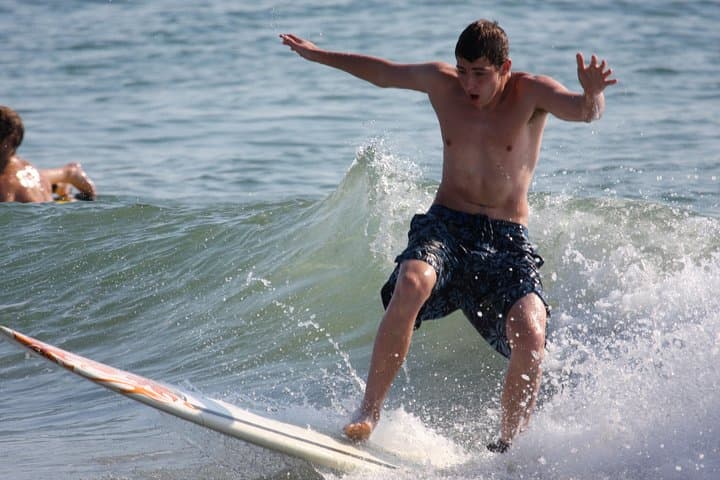
What the day feels like
The morning starts with the smell of wet sand and diesel from the fishing boats beyond the breakers. You lug your rented soft-top surfboard across a beach marked by scattered ghost crabs and dunegrass, and the Atlantic opens like a challenge: long lines of swell, sunlight scattered across the water. The instructors—patient, sun-worn, experienced—talk you through ocean safety with the same calm precision they use to judge the angle of a wave. On the Outer Banks, surf isn’t an abstract thrill; it has a rhythm, a timing. The ocean dares you to move with it.
Kitty Hawk and the neighboring barrier islands are where the shore becomes classroom. These sandbars and shoals shift with storms, shaping the waves that roll in at low tide; local instructors schedule lessons when the break is friendliest, making this one of the best places on the East Coast to learn. The lesson you book is precise: 1.5 hours with a certified instructor, a close ratio—one instructor per four students—and all the basics included: surfboard, wetsuit, paddling technique, pop-up mechanics, and in-water coaching. Kids as young as six are welcome. If you want to <a href="https://app.advcollective.com/local-experts/learn-to-surf-in-kitty-hawk-outer-banks-beginner-surf-lessons">learn to surf in Kitty Hawk</a>, this structure is designed so you actually leave with skills, not just photos.
The Outer Banks are a string of barrier islands built by centuries of storms and the slow push of sand from north to south. That geology matters: the way sandbars and tidal flows form here creates predictable breaks at certain tides and beach profiles, and instructors use that local knowledge to place you where the waves are approachable. The islands are also a cultural seam—this stretch of coast hosted the Wright brothers first powered flights in nearby Kill Devil Hills, and the communities here are built around watercraft, tourism, and a careful respect for fragile dunes and seabird nesting grounds.
On the practical side, these lessons are built for accessibility. They run at low tide for the most manageable waves, the fleet provides soft-top boards for forgiving landings, and wetsuits accommodate seasonal temperatures so you can play year-round. The provider advertises instant confirmation and free cancellation, and pricing starts at about $89—which is competitive given the small group sizes and certified instruction. You’ll learn about surfboard anatomy so you can understand why your weight distribution matters; you’ll practice paddling to build momentum and execute a clean pop-up; and, most importantly, you’ll practice reading the ocean—how to spot a rippable channel, when to paddle, and when to fold back to shore.
Safety is sewn into every lesson. Expect a short land session to practice the pop-up, then a gentle walk into waist-to-chest-deep water for initial catches. Instructors will mark the safe zone and coach escapes from small rips; still, basic swimming ability is required. Sun protection, a lightweight wetsuit in spring/fall, or a thicker suit in winter, and reef booties for colder months are practical additions to what’s already provided.
This is family-friendly surf—kids from six and up can be paired with patient instructors who scale feedback to tiny hands and short paddles. For solo learners and adults, the rhythm of repetition matters: each wave is a small test, and the instructors’ hands-on tuning accelerates progress. After several tries you’ll notice a clearer rhythm—paddling, timing, pop-up, ride—and then that first unexpected glide when balance, board, and swell align. It’s a modest triumph, not an instant epiphany, but it registers as real learning.
There’s an old-school, communal quality to surf instruction on the Outer Banks. Local shops patch boards, exchange tide reports, and recommend the best late-afternoon spots for smaller crowds. If you want to expand your session, instructors will typically offer guidance on follow-up rentals and where to practice independently. To dig deeper, look for lessons that emphasize ocean literacy: kick-outs, etiquette in crowded lineups, and how to avoid interfering with migratory birds and nesting sites.
Practical planning tips: lessons usually run at low tide and are scheduled by the local provider with surf conditions in mind—book a morning slot to avoid wind chop that builds in afternoons. Dress to dry: a quick-change poncho or hooded towel is indispensable, and most shops have rinse stations for salt and sand. If you’re traveling from afar, Norfolk International Airport (ORF) is the closest major airport; rental cars drive you across the Hampton Roads Bridge-Tunnel and down US-158 to the barrier islands.
Whether you’re a family on vacation or an adult trying something new, the Outer Banks offers surf that’s forgiving without being boring. The instructors’ local knowledge does the heavy lifting: they find the soft shoulder of a wave and coach you through repetition until the mechanics become muscle memory. Then, standing on a board for the first real ride, you’ll have a quiet, stubborn joy—the ocean challenges you, you meet it halfway, and both feel a little changed.
If you want hands-on direction before you arrive, or to compare lesson styles and schedules, check the local lesson hub for bookings and instructor bios at this link: <a href="https://app.advcollective.com/local-experts/learn-to-surf-in-kitty-hawk-outer-banks-beginner-surf-lessons">beginner surf lessons in Kitty Hawk</a>. Book a low-tide morning, bring a friend for moral support, and pack patience. The first wave is the hardest to catch—and the most worth the effort.
Trail wisdom
Small choices, better day.
Book the low-tide slot
Lessons are scheduled at low tide for more manageable, well-shaped waves—plan your travel day around morning low tides when possible.
Bring reef-safe sunscreen
Apply waterproof, reef-safe SPF before you suit up to protect skin without harming the coastal ecosystem.
Wear quick-change layers
A change poncho or large towel makes swapping out of a wetsuit fast and comfortable in breezy conditions.
Tell instructors about any medical concerns
Let your instructor know about asthma, recent injuries, or limited swimming experience so they can adapt drills and positioning.
Local knowledge
Read the place, not just the route.
Watch for native species including Atlantic bottlenose dolphins, Piping plovers and other shorebirds (seasonal).
Keep an eye out for wildlife during the transition between areas and habitats. Respect distance guidelines.
The barrier island ecosystem is fragile—stick to marked paths, avoid trampling dune grass, and respect seasonal bird nesting areas.
Follow the guide's instructions on size limits, ethical handling, and leave-no-trace practices.
Jockeys Ridge State Park sand dunes for sunset and balance practice. Kitty Hawk Woods Coastal Reserve for a quiet post-surf walk under maritime forest canopy
Locally recommended viewpoints and quiet spots known best to local operators.
The Outer Banks are barrier islands with a long maritime history; the Wright brothers made their first controlled powered flight nearby in 1903 at Kill Devil Hills.
Maritime roots and regional tradition shape the waterways and working coasts.
Seasonal guide
Four versions of the same landscape.
Spring
Best forFewer crowds · Mild water temps with a wetsuit · Learning fundamentals
ChallengesCooler water · Variable winds
Spring brings fewer tourists and workable surf; bring a 3/2mm wetsuit and expect onshore breeze some afternoons.
Summer
Best forWarmest water · Family-friendly conditions · Long daylight
ChallengesBigger crowds · Stronger sun exposure
Summer offers the warmest conditions and consistent lessons; book early to secure preferred times and use reef-safe sunscreen.
Fall
Best forPeaceful lineups · Stable surf windows · Good swell
ChallengesRapidly cooling water late season · Occasional storms
Fall delivers clean swells and fewer people—bring a 3/2mm or 4/3mm wetsuit as temperatures drop.
Winter
Best forDedicated practice · Less crowded beaches · Powerful swells for advanced progression
ChallengesCold water and air · Stronger currents
Winter lessons run year-round but require thicker wetsuits; lessons focus on technique and safety in chillier conditions.
Operator details
What the booking data adds.
Included
- ✓Learn to surf on the Outer Banks!! Lesson includes ocean safety, surfboard anatomy 101, paddling technique, proper pop up and foot placement and help in the water to catch as many waves as you can.
- ✓Surfboard, wetsuit, wax, & stoke for daze!
Good to know
- ✓Not recommended for travelers with spinal injuries
- ✓Not recommended for pregnant travelers
- ✓Not recommended for travelers with poor cardiovascular health
- ✓Travelers should have at least a moderate level of physical fitness
Pack with intention
What to bring.
Good to know
Common questions.
Yes—basic swimming ability is required; instructors will coach you in shallow water, but you should be comfortable in the ocean.
Plan the edges
The details that make the day easier.
The Wright brothers conducted their first successful powered flights in 1903 at Kill Devil Hills, just a few miles south of Kitty Hawk—this coastline is central to American aviation history.
After your lesson, refuel with a local casual meal: coastal seafood shacks and bakeries like Duck Donuts (regional favorite) are perfect for carb-loading and post-surf stories. For a local pint, head to a nearby brewery in Kill Devil Hills to swap conditions reports with other surfers.
- Closest airport
- Norfolk International Airport (ORF) ~1.5 hours drive; Trailhead
- meeting point
- 6150 North Croatan Hwy, Kitty Hawk; Driving distance from nearest town: in-town or a short drive from Kill Devil Hills; Cell service: usually good in town but can be spotty on beaches; Permits
- passes
- none required for lessons
This coastline hosts nesting shorebirds and fragile dune systems—pack out all trash, use reef-safe sunscreen, and stay off marked dunes to protect habitat.
Explore by topic
Follow the threads.
Keep exploring
Make the story part of the trip.
Set out from Bass Harbor for a private, customizable day on Blue Hill Bay — lighthouses, puffins, seals, and the chance to feel Acadia from the water. Small groups, local captains, unforgettable views.
In four hours you can move from shaded canyon ferns to wind-scoured coastal ridgelines, guided by someone who knows where the light—and the hidden views—live. This private half-day hike on the Monterey Peninsula or Big Sur is compact, curated, and perfect for travelers who want depth without a multiday commitment.
 Related story
Beneath a sky of shifting light, Skaftafell’s ice reads like a map of time. This three-hour guided glacier hike mixes technical instruction with geology and culture: compact, safe, and unforgettable.