
What the day feels like
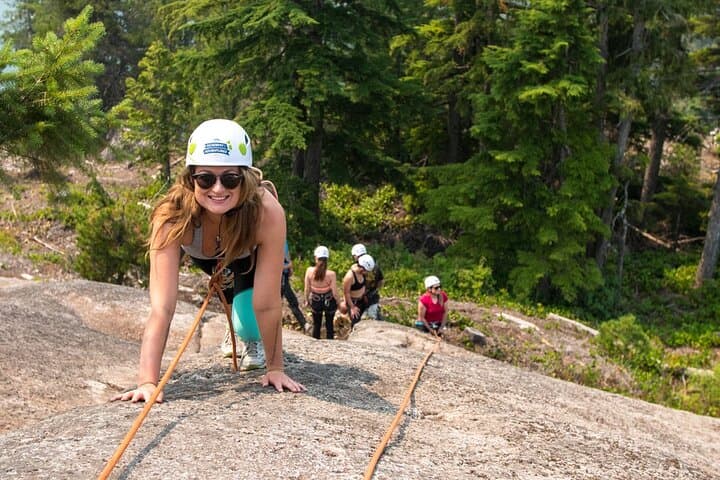
You arrive in Squamish with salt on your boots and mountains at your back. The town sits where Howe Sound narrows and a slice of granite—monolithic, textured, unapologetic—rises out of the valley like an invitation. On a four-hour guided taster, that invitation becomes work: hands searching, feet finding edges, a rope and a patient guide turning an intimidating face into a series of teachable steps. The climb is short and exacting rather than epic; it’s designed to get you comfortable moving on rock without spending a season on a rope.
There’s a particular clarity to climbing in Squamish. The granite walls here were formed from molten rock pushed up and cooled deep underground, then revealed by glacial sculpting. The result is clean, gritty stone with natural seams and cracks that feel made for hands and small edges that reward precise footwork. Historically, the area is within the traditional territory of the Sḵwx̱wú7mesh (Squamish) Nation; those timbered slopes and steep faces have been landmarks long before modern climbers arrived. By the mid-20th century, local climbers began establishing routes that now form the backbone of the region’s light-crack and face-climbing repertoire.
A taster day with a professional guide compresses all of that into instructions, repetition, and the steady accumulation of confidence. You’ll learn how to tie in, weight a harness, move on a rope, and read a route—skills best practiced on single-pitch climbs of moderate height. It’s a controlled environment: anchors and protection are set by the guide, belays are managed, and the goal is exposure without danger. For a newcomer, the sensation of leaving the ground with nothing but friction and balance beneath you is both precise and oddly peaceful; the rock doesn’t beg for bravado, it demands technique.
Squamish itself supplies more than rock. The mountain town has a culture of outdoor hospitality—casual cafes filled with climbers comparing beta, a couple of breweries where you can sip a crisp lager and rehash the move that tested your forearms, and trailheads that double as community spaces. Guides often end the day with notes about conditioning and local crag etiquette: brush holds gently, clip quickdraws cleanly, and respect fixed gear and local access agreements.
Practical details are tidy. The Rock Climbing Taster runs roughly four hours and is designed for absolute beginners up through recreational outdoorsy types looking to add climbing to their repertoire. Price starts around USD 101.51, and professional guides supply ropes, harnesses, helmets, and instruction—your main job is to show up with the right mindset and a few sensible items in your pack. The experience is rated highly by those who try it; expect patient coaching and an emphasis on safe progression.
Logistically, the climb is accessible from Vancouver by a straightforward drive up the Sea-to-Sky Highway—about an hour to an hour and a half under normal conditions. Local meeting points are usually in or near Squamish; guides will confirm exact locations when you book. Cell service is generally reliable in town but can be patchy on approach trails and in deeper valleys, so download directions and any confirmations before you leave.
Beyond the lesson, the day opens opportunities. Stretch your legs on a short hike to a lookout, jump in a cold alpine-fed lake in summer at a nearby provincial park, or simply sit with a beer as eagles sail over the fjord. If you want to build on the taster, ask your guide about multi-pitch progression, lead-climbing clinics, or top-rope techniques practiced at other local crags. The learning path in Squamish is generous: it offers both forgiving single-pitch climbs for nervous beginners and technical granite lines for climbers who fall quietly in love with the sport.
This is not a story of conquering a mountain but of gaining language—how to read a face, place your feet, and trust the system. It’s a day that demystifies vertical terrain and turns an imposing wall into a sequence of moves you can repeat and improve. For anyone curious about climbing but wary of solo experiments on unknown rock, a guided taster is the cleanest, safest, and most exhilarating introduction.
If you go: book a morning slot for cooler rock and lighter traffic on popular cliffs; bring a light daypack with water, layered clothing, and a willingness to learn. Leave ego at home and bring curiosity; the best moves you make will probably be the quiet ones that follow a coach’s prompt.
Where to book and how much: the experience is available as an instant-then-manual booking through the provider and often sells for about USD 101.51 for the four-hour session. Check the provider’s page for current availability and any age or group-size limitations. The climb is as much a cultural entry point as an athletic challenge—one afternoon, and the steep history of Squamish’s granite feels suddenly within reach.
Trail wisdom
Small choices, better day.
Start Early
Morning sessions mean cooler rock, fewer people at popular cliffs, and better light for movement instruction.
Hydrate and Snack
Bring 1–1.5 L of water and compact, salty snacks—your forearms will fatigue faster than you expect.
Wear Approach Shoes
Comfortable approach shoes or grippy sneakers help on the trail and on low-angle sections of rock.
Listen to Beta
Guides set anchors and give step-by-step coaching—follow instructions to build safe technique quickly.
Local knowledge
Read the place, not just the route.
Watch for native species including Bald eagles, Black bears.
Keep an eye out for wildlife during the transition between areas and habitats. Respect distance guidelines.
Stick to established trails and bolted lines, pack out all trash, and follow your guide’s advice to minimize impact on fragile vegetation and cultural sites.
Follow the guide's instructions on size limits, ethical handling, and leave-no-trace practices.
Murrin Provincial Park lakes and short beach access. Shannon Falls viewpoint and picnic area
Locally recommended viewpoints and quiet spots known best to local operators.
The area sits on the traditional territory of the Sḵwx̱wú7mesh (Squamish) Nation; the granite faces have long been important landmarks for local Indigenous communities.
Maritime roots and regional tradition shape the waterways and working coasts.
Seasonal guide
Four versions of the same landscape.
Spring
Best forCool rock temps · Fewer crowds
ChallengesMud on approach trails · Snow patches at higher access points
Spring offers crisp rock and quieter crags but watch for muddy approaches and lingering snow in shaded gullies.
Summer
Best forWarm weather climbs · Extended daylight
ChallengesCrowded crags on weekends · Higher temps can sap strength
Summer is prime for comfortable belaying and extended clinic time—pick early starts to avoid crowds and heat.
Fall
Best forStable, cool conditions · Peak foliage on approaches
ChallengesShortening days · Occasional rain fronts from the coast
Fall brings some of the best climbing conditions with cool, grippy granite—plan for shorter daylight windows.
Winter
Best forTechnical training indoors or sheltered crags · Off-season solitude
ChallengesCold, wet rock and icy approaches · Many outdoor areas are less accessible
Winter climbs are possible but require weather-aware logistics; guided programs may offer alternatives or indoor instruction.
Operator details
What the booking data adds.
Included
- ✓Photos taken by the guide
- ✓Rock climbing equipment: climbing shoes, harness, helmet, ropes
- ✓Professional certified guide
Not included
- —Guide gratuity (suggested)
- —Accommodation
- —Snacks and water
- —Transportation
Good to know
- ✓Not recommended for travelers with spinal injuries
- ✓Not recommended for pregnant travelers
- ✓Not recommended for travelers with poor cardiovascular health
- ✓Suitable for all physical fitness levels
Pack with intention
What to bring.
Good to know
Common questions.
No—this taster is designed for beginners; guides supply basic instruction and all core gear.
Plan the edges
The details that make the day easier.
The Stawamus Chief is one of the largest granite monoliths in the world and is a culturally significant landmark for the Sḵwx̱wú7mesh (Squamish) Nation.
After the climb, warm up with a pint at Howe Sound Brewing or grab a farm-to-table meal at a downtown cafe; the Squamish Farmers Market (seasonal) is a good place to reconnect with local growers and artisans.
- Closest airport
- Vancouver International (YVR); Driving distance: ~60–90 minutes via Sea-to-Sky Highway; Meeting point: confirmed by guide (typically in Squamish or nearby parking lot); Cell service: generally good in town, patchy on some approaches; Permits: no climb permit required for guided sessions, but park parking passes or fees may apply.
Respect cultural sites and follow Leave No Trace: pack out waste, avoid creating new trails, and clean up any chalk or fixed gear left inappropriately—guided companies often follow best-practice protocols to reduce impact.
Explore by topic
Follow the threads.
Keep exploring
Make the story part of the trip.
Set out from Bass Harbor for a private, customizable day on Blue Hill Bay — lighthouses, puffins, seals, and the chance to feel Acadia from the water. Small groups, local captains, unforgettable views.
In four hours you can move from shaded canyon ferns to wind-scoured coastal ridgelines, guided by someone who knows where the light—and the hidden views—live. This private half-day hike on the Monterey Peninsula or Big Sur is compact, curated, and perfect for travelers who want depth without a multiday commitment.
 Related story
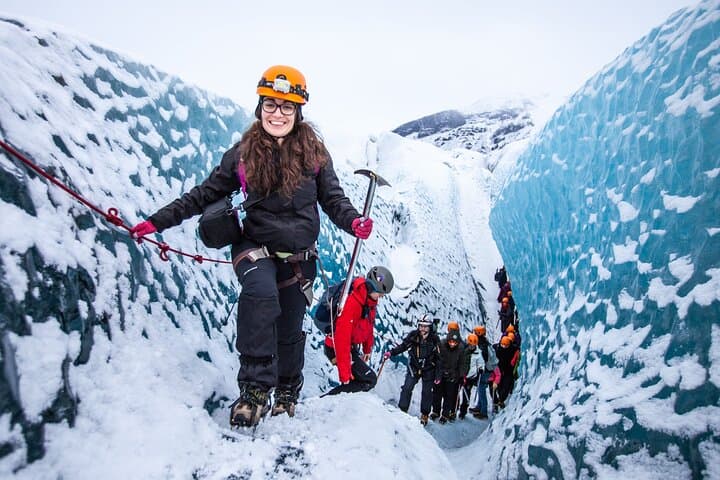
Beneath a sky of shifting light, Skaftafell’s ice reads like a map of time. This three-hour guided glacier hike mixes technical instruction with geology and culture: compact, safe, and unforgettable.