
What the day feels like
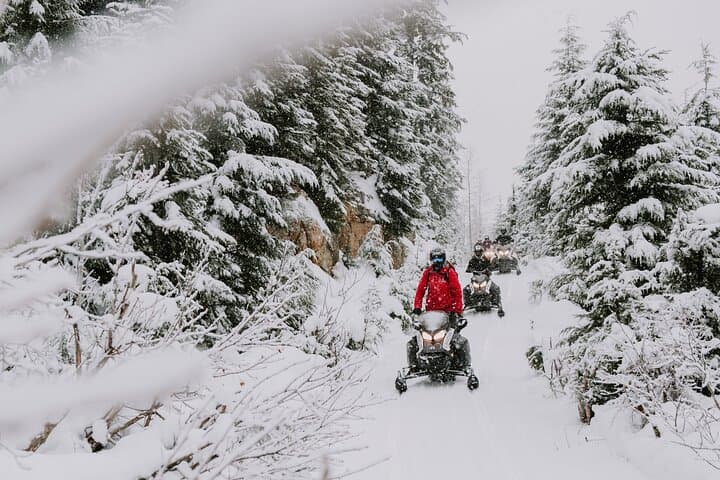
The machine breaths before you do. A low, eager growl — not aggressive, more like a dog raring to run — and the hard aluminum of the sled feels almost warm against your palms. Ahead, the Callaghan Valley opens like a folded sheet of paper: white, wide, and waiting. Pines bow under the weight of the season, and distant ridgelines cut the sky in hard, blue lines. You’re on a three-hour loop designed for first-time riders and families, but for the first ten minutes it’s a new kind of attention: throttle and balance, listening for the guide’s voice and for the snow, which in this place seems to respond, compressing and sighing beneath runners as the sleds pass.
This is the Callaghan Cruiser Snowmobile Tour — a beginner-friendly introduction to backcountry riding that threads wide, winding trails through protected alpine meadows and stands of subalpine fir. Guides shepherd small groups to the historic Northair Goldmine site, where rusted timbers and the ghost of early prospecting punctuate the hush. It’s a trip that pairs the modest thrill of learning a machine with an intimacy of place: the valley’s glaciers live in the background, the winter light is clean and refracted, and wildlife leaves a quiet, weathered language in the snow.
Callaghan Valley sits in the Coast Mountains above Whistler, British Columbia, a landscape chiseled by glaciers and pushed up along fault lines and ancient uplifts. The valley’s long snow seasons and open benchlands made it an Olympic training ground — the Whistler Olympic Park staged Nordic events in 2010 — and today the trails are shared between skiers, snowmobilers, and guided tours that emphasize low-impact access. The Northair Goldmine itself is a reminder of the region’s turn-of-the-century rushes; rails, mine openings, and scattered cribbing are respectful historical touchpoints rather than commercialized attractions.
What makes this guided experience work for families and novice riders is deliberate design: wide trails, measured pace, and hands-on instruction. Guides demonstrate throttle and safety before you leave the staging area, then lead you at a comfortable speed that lets you look up. Snow here can be a character in its own right — from sugary powder that wants to bury a runner, to dense crust after a thaw that makes the sled ride firm and fast. The valley’s tree lines act like sentries, narrowing views and then spilling you out into broad, panoramic bowls where mountain after mountain layers the horizon.
Practical detail is part of the appeal. The tour runs about three hours round trip and is explicitly tailored for beginners; the minimum age is five, and groups are kept relatively small so the guide’s attention never feels spread thin. The price point starts around USD 232.66 and includes instruction, gear briefing, and the guiding itself. Most guests leave feeling confident, slightly exhilarated, and with a sense of having seen a part of British Columbia that’s rarely experienced from the ground at this pace.
How to make it go well: timing matters. Morning departures capture the cold, quiet hour when tracks are fresh and the valley feels held in reserve. Midday can bring warmer temperatures and slushier snow; late afternoon gilds the ridgelines but shortens daylight. On any outing, layers are your best ally — breathable base layers, an insulating mid-layer, and a windproof, waterproof outer shell. Goggles and a balaclava are practical: they keep wind and glare from stealing the simple pleasures of speed and space. Guides typically provide helmets and some protective gear, but check what’s included when you book.
Beyond mechanics, there’s a cultural rhythm to a Callaghan visit. Guides are often local riders who can point out avalanche terrain, historic prospector camps, and the subtle signs of mountain life: lynx tracks across a snowfield, grouse flushed from a low bush, the echo of a distant icefall. After the tour, most people loop back into Whistler village for coffee or an early dinner. Local pubs and late-afternoon cafés are built for stories like this — tales of firsts, of a line through deep powder, or of a family who just learned to lean into a corner.
Booking practicalities are straightforward but worth noting: the tour is a manual-confirmation product with free cancellation options, though weather can always change itineraries. Wear warm, moisture-wicking clothing, arrive 30–45 minutes early for orientation, and be ready to sign waivers. The guides insist on safety basics — no speeding, no passengers unless the sled is designed for it, and careful spacing between machines to prevent one-track pileups.
If you’re motivated by photos, shoot early or late for low-angle light that sculpts the snow and gives faces warmth. Ask your guide to stop at the Northair Goldmine site for a few minutes — the rusted equipment framed by snow and the distant peaks makes a simple, cinematic shot. But respect the site: leave structures intact and don’t venture into unsafe mine openings.
There’s a restrained sort of magic here: nothing dramatic or staged, just a close-up apprenticeship with wind and machine and the geography of a place that has quietly shaped people’s winter lives for generations. Whether you’re traveling with a child taking their first ride or arriving as an adult who’s never mindfully operated a sled, the Callaghan Cruiser is less about adrenaline and more about access — access to a quiet backcountry, narrated by people who know how to keep it safe, and by a valley that still rewards attention.
Learn more and secure a spot for a guided departure on this beginner-friendly route via the local experts page, which details availability and helps answer questions about gear and meeting logistics: https://app.advcollective.com/local-experts/explore-callaghan-valley-beginner-friendly-snowmobile-tour-to-northair-goldmine. Book early in peak winter months to lock in preferred time slots and insure yourself against fully booked tours — the valley fills with visitors over holidays and long weekends.
In the end, it’s a tidy, human-sized adventure: three hours of learning and landscape, with enough technical teaching to feel competent and enough scenery to feel transported. The valley itself remains the protagonist — patient, grand, and always ready to teach the newcomer how to read its slopes.
Trail wisdom
Small choices, better day.
Layer for variable conditions
Use breathable base layers, an insulating mid-layer, and a waterproof outer shell to adapt to cold mornings and warmer midday sun.
Protect your eyes and face
Bring goggles and a balaclava to reduce windburn and glare on bright, snowy days.
Listen to your guide
Guides pace the group for safety — maintain spacing and follow throttle guidance for a controlled learning curve.
Hydrate and snack
Cold weather hides dehydration; carry an insulated water bottle and a compact energy snack for the return leg.
Local knowledge
Read the place, not just the route.
Watch for native species including Black bear (winter denning nearby), Snowshoe hare and grouse tracks commonly seen in the valley.
Keep an eye out for wildlife during the transition between areas and habitats. Respect distance guidelines.
Tours operate on designated trails to limit impact; follow guide instructions, pack out waste, and avoid entering old mine openings to protect both visitors and fragile sites.
Follow the guide's instructions on size limits, ethical handling, and leave-no-trace practices.
Northair Goldmine historical remnants (ask your guide for safe viewpoints). Quiet viewing benches on the valley floor for panoramic photo stops
Locally recommended viewpoints and quiet spots known best to local operators.
Callaghan Valley hosted Nordic events and training facilities for the 2010 Winter Olympics, and the Northair Goldmine reflects the area’s early 20th-century prospecting history.
Maritime roots and regional tradition shape the waterways and working coasts.
Seasonal guide
Four versions of the same landscape.
Spring
Best forLonger daylight · Quieter trails · Milder temperatures
ChallengesVariable snowpack · Thaw-related slush · Unpredictable weather
Spring offers milder temperatures and longer days but expect mixed snow conditions and potential slush on south-facing trails.
Summer
Best forN/A — tour not offered · Planning future trips · Hiking research
ChallengesNo snow for snowmobiling · Tour typically not available in summer
Summer is off-season for snowmobiling in Callaghan Valley; use the months to plan and research winter availability.
Fall
Best forEarly planning · Off-season rates · Scenic prep trips
ChallengesLimited snowpack · Tour availability varies
Fall is best for booking and logistical prep; trails aren’t reliably snow-covered until later in the season.
Winter
Best forSnowmobiling · Family outings · Olympic Park scenery
ChallengesCold temperatures · Shorter daylight in deep winter
Winter is prime time for this tour — reliable snowpack and spectacular alpine light make it the optimal season.
Operator details
What the booking data adds.
Included
- ✓3 hour snowmobile tour, roundtrip - includes shuttle, training & ride time
- ✓Local, professional guide
- ✓Kids 5-12 years old ride for free with a paying adult
- ✓Helmet, gloves and goggles
Not included
- —Gratuities
- —Hotel pickup and drop-off
- —Mandatory Collision Coverage per driver. This covers minor accidental damage to the snowmobile.
Good to know
- ✓Public transportation options are available nearby
- ✓Suitable for all physical fitness levels
- ✓Driver’s License: Drivers must be 19 years of age + with a full (unrestricted), valid driver's license equivalent to a BC Class 5 or Class 6 license. All drivers who are under 25 years old and under are required to present their license upon check in.
- ✓It is mandatory for all tour participants to sign a Release of Liability and Waiver Form. Any participants under the age of 19 must have a parent or guardian present to sign on their behalf.
- ✓Under no circumstances is any person suspected of intoxication beyond the legal driving limit in British Columbia permitted to participate as a driver or passenger in any tour. Persons denied participation will not receive a refund.
- ✓Minimum numbers apply. There is a possibility of cancellation after confirmation if there is not enough passengers to meet requirements. In the event of this occurring, you will be offered an alternative or full refund
- ✓The maximum combined weight for a snowmobile on our Callaghan Cruiser tour is 400lbs/180kgs.
- ✓We operate in all weather conditions - wear appropriate clothing. Warm layered clothing, winter jacket, snow pants, ski goggles, winter gloves and winter boots. We strongly encourage you to wear your own winter gear, however we have limited outerwear to borrow in the event you are missing any pieces.
- ✓Child passengers must be a minimum age of 5 years, a minimum height of 48 inches, and fit into our smallest helmet.
- ✓Language: To participate in snowmobile tours, there must be one adult (per group of up to 7 snowmobile's) who can speak a conversational level of english.
- ✓Need more than one snowmobile? A separate booking is required.
- ✓If you are travelling with someone who has a separate booking, please note their name in the "Special Requirements" box so we can group you together.
- ✓Safety regulations require the tour provider to not permit pregnant women to ride as driver or passenger on a snowmobile, dogsled, ATV or buggy. All mother's to be are welcome on the snowcat or Jeep tours.
- ✓Adventure sport activities are not recommended for individuals who suffer back or neck pain, heart or respiratory distress. Consult your physician prior to participation.
Pack with intention
What to bring.
Good to know
Common questions.
Minimum age is 5 years old; younger riders can usually sit as passengers on designated sleds if the operator allows.
Plan the edges
The details that make the day easier.
Callaghan Valley hosted Nordic events during the 2010 Winter Olympics at the Whistler Olympic Park.
After the tour, head back into Whistler Village for a warming meal — local favorites include hearty pub food and Pacific Northwest fare at breweries and bistros; sample smoked salmon or a craft beer to complement the mountain air.
- Closest airport
- Vancouver International (YVR) ~2 hours drive; Trailhead: Callaghan Valley staging area (25–35 minutes from Whistler Village); Cell service: limited in the valley — expect spotty reception; Permits: none required for guided tours but waivers are mandatory.
This valley sees multiple users; stick to marked trails, avoid creating new tracks in sensitive alpine zones, and pack out all waste to preserve the area’s winter habitats.
Explore by topic
Follow the threads.
Keep exploring
Make the story part of the trip.
Set out from Bass Harbor for a private, customizable day on Blue Hill Bay — lighthouses, puffins, seals, and the chance to feel Acadia from the water. Small groups, local captains, unforgettable views.
In four hours you can move from shaded canyon ferns to wind-scoured coastal ridgelines, guided by someone who knows where the light—and the hidden views—live. This private half-day hike on the Monterey Peninsula or Big Sur is compact, curated, and perfect for travelers who want depth without a multiday commitment.
 Related story
Beneath a sky of shifting light, Skaftafell’s ice reads like a map of time. This three-hour guided glacier hike mixes technical instruction with geology and culture: compact, safe, and unforgettable.