
What the day feels like
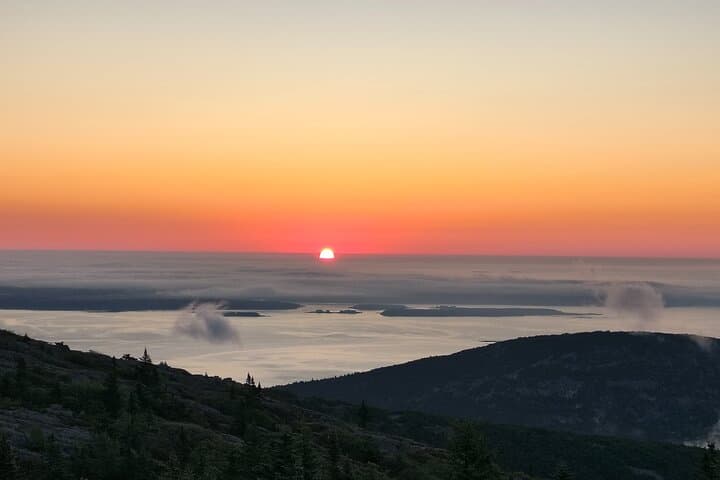
Before the sun clears the horizon, Bar Harbor is a quiet punctuation: a few streetlights linger, gulls argue in the dark, and a cool, eastern wind carries salt and pine. You climb the Cadillac Summit Road with a small group—maybe a couple on their honeymoon, a solo traveler who swears they rise with the tide, and a guide who knows exactly where the light will hit the granite. The car eases into the parking area and for a few breathless minutes you stand on a wind-swept promontory, the Atlantic daring you to stare into the blank slate of morning. Then the first strip of gold unfurls across the ocean. It’s not theatrical in the way a staged show is; the world simply tilts a little brighter, and you understand why people plan trips around this exact moment.
Cadillac Mountain, at 1,530 feet, is the crown of Acadia National Park and a study in contrasts—polished pink granite shaped by glaciers, coastal scrub that clings to wind, and the near-immediate edge of ocean. The mountain is stitched into both geological and human histories. The bones underfoot were carved by Ice Age glaciers and then re-scoured by waves and wind; the area sits within lands long stewarded by the Wabanaki peoples. The name “Acadia” itself—given by French settlers centuries ago—echoes a complicated past of indigenous life, colonial settlement, and a later wealth that built the Victorian-era cottages of Bar Harbor.
To arrive for sunrise or sunset is to witness a cultural ritual. Locals still keep an eye on the summit forecast; photographers pack tripods and thermoses; guide-run groups like this one time the ascent so the first chips of daylight are yours alone. For visitors who want convenience without missing the moment, guided trips that use Cadillac Summit Road compress logistics: a brief drive, a short paved stroll to view points, and the peace of knowing you’re in the right place at the right minute. If you prefer to sweat for the view, the mountain is ringed by trails—some steep and granite-stepped, others gentle and wooded—each offering a different vantage of the ocean and the crescent of islands below.
Why make the effort? Aside from the obvious romance of being among the first eyes in America to see the sun—Cadillac Mountain is often the first place in the U.S. to greet dawn during part of the year—the light here reads differently. Mornings slice through salt air and spruce and make granite glow; evening light slants long and warm and turns cliffs into amber reliefs. The experience is compact but profound: you measure time by the sun’s angle and learn to lean into wind and cold with the same calm you use to sip coffee.
Practicalities matter. The guided summit tour lasts roughly two hours and is highly customizable; you’ll get an emailed run-down from your guide ahead of time. The road to the summit is paved and the final approach is a short walk from the parking area, so the outing suits a wide range of fitness levels. Still, weather on the coast can flip quickly—wind, fog, or rain can truncate views, so flexible clothing, a headlamp for pre-dawn arrivals, and a compact camera with a wide lens are worth carrying. For photographers, the window of magic is narrow: arrive early, set up, and consider bracketing exposures because the dynamic range between ocean shadow and sunlit sky is dramatic.
Logistics are simple but not trivial: Acadia charges a park entrance fee and seasonal policies for vehicle access can change—your guide will flag any reservation or time-slot requirements. The nearest town, Bar Harbor, is 10–20 minutes away depending on traffic; Bangor International Airport is the most practical commercial gateway. Cell service can be patchy at the summit, which helps you be present but also means you should nail down meeting times in advance.
For the thoughtful traveler, the experience extends beyond light. Afterward, head to Jordan Pond House for a historic popover and tea, or stroll Bar Harbor’s Main Street for lobster shacks, galleries, and the local brewing scene. Respect for the place matters: stick to marked viewpoints, pack out everything you bring in, and avoid short-cutting fragile vegetation. The mountain is both a showpiece and a habitat—mosses and lichens, nesting shorebirds, and the occasional deer share the summit with human visitors.
A guided sunrise or sunset is short but formative: it’s an efficient way to sample the elemental drama of Maine’s coast without an overnight commitment, and it’s a balm for any traveler who wants meaning in a neat, two-hour window. If you want a tried-and-true way to experience that morning hush or the slow burn of sunset without worrying about navigation, consider booking a local guide who times the ascent, reads the weather, and adds context: geology, indigenous history, and the best photo angles. For reservations and local guide options, see this expert run: <a href='https://app.advcollective.com/local-experts/experience-sunrise-and-sunset-at-cadillac-mountain-summit-in-acadia-national-park'>Sunrise and Sunset at Cadillac Mountain Summit in Acadia</a>.
There’s a reason people schedule alarms for 4 a.m. and tolerate nips of wind and cold: the moment is as clean and honest as any you’ll find. And if you time it right—off-peak season, a clear horizon, a patient guide—you’ll find more than a postcard view. You’ll find a place that asks only that you arrive on time and leave with both photos and a quieter gait back into everyday life. Book smart, bring layers, and let the ocean push your expectations of simple beauty a little farther.
Book this tour or find local experts to plan sunrise or sunset visits at <a href='https://app.advcollective.com/local-experts/experience-sunrise-and-sunset-at-cadillac-mountain-summit-in-acadia-national-park'>Sunrise and Sunset at Cadillac Mountain Summit in Acadia</a>.
Trail wisdom
Small choices, better day.
Time your arrival
Arrive 20–30 minutes before sunrise or sunset to secure a good viewpoint and set up camera gear.
Dress in layers
Coastal wind and elevation produce chill; bring an insulating midlayer and a windproof shell.
Bring a headlamp
For pre-dawn paths and finding parking, a headlamp keeps your hands free and your pace steady.
Respect wildlife and plants
Stay on paved areas and established viewpoints to protect fragile alpine flora and nesting birds.
Local knowledge
Read the place, not just the route.
Watch for native species including White-tailed deer, Migratory seabirds (terns, cormorants).
Keep an eye out for wildlife during the transition between areas and habitats. Respect distance guidelines.
Acadia faces pressure from visitation and fragile coastal ecosystems—stay on trails, minimize noise, and pack out all waste to protect habitat.
Follow the guide's instructions on size limits, ethical handling, and leave-no-trace practices.
Quiet overlook west of the summit with fewer crowds. Short hike to the North Ridge for ocean-facing viewpoints
Locally recommended viewpoints and quiet spots known best to local operators.
Acadia’s landscape was shaped by glaciers and maritime industry; the area was long inhabited by Wabanaki peoples before European settlement and later Gilded Age development.
Maritime roots and regional tradition shape the waterways and working coasts.
Seasonal guide
Four versions of the same landscape.
Spring
Best forMigratory birds · Fewer crowds
ChallengesUnpredictable weather · Chilly mornings
Spring offers emerging greens and quieter trails, but expect brisk temperatures and occasional fog that can obscure sunrises.
Summer
Best forLong daylight · Warm evenings
ChallengesCrowds · Higher parking demand
Summer delivers reliably warm air and clear evenings; book early and allow extra time for parking and access.
Fall
Best forFall color · Crisp light
ChallengesShorter daylight · Higher demand
Autumn is prime for foliage and sharp, golden light—plan in advance, as tours and accommodations fill quickly.
Winter
Best forSnow-blanketed views · Solitude
ChallengesIcy conditions · Limited services
Winter transforms the summit into a quiet, snow-quieted lookout; expect cold, wind, and possible road closures.
Pack with intention
What to bring.
Good to know
Common questions.
Yes—Acadia National Park requires a park entrance pass. Your guide will usually handle logistics and advise on any seasonal vehicle reservations.
Plan the edges
The details that make the day easier.
From early October through early March, Cadillac Mountain can be the first place in the United States to see the sunrise due to its eastern location and elevation.
After the summit, head to Jordan Pond House for historic popovers, or grab lobster rolls and local ales in Bar Harbor—search for Atlantic Brewing Company and small seafood shacks for genuine coastal flavor.
- Closest airport
- Bangor International (BGR) ~1–1.5 hours drive; Driving distance from Bar Harbor: 10–20 minutes; Cell service: intermittent at summit; Permits
- passes
- Acadia park entrance pass required—check for seasonal vehicle reservation rules.
This summit sits within a fragile coastal ecosystem—pack out all trash, stay on durable surfaces, avoid disturbing wildlife, and follow Leave No Trace principles.
Explore by topic
Follow the threads.
Keep exploring
Make the story part of the trip.
Set out from Bass Harbor for a private, customizable day on Blue Hill Bay — lighthouses, puffins, seals, and the chance to feel Acadia from the water. Small groups, local captains, unforgettable views.
In four hours you can move from shaded canyon ferns to wind-scoured coastal ridgelines, guided by someone who knows where the light—and the hidden views—live. This private half-day hike on the Monterey Peninsula or Big Sur is compact, curated, and perfect for travelers who want depth without a multiday commitment.
 Related story
Beneath a sky of shifting light, Skaftafell’s ice reads like a map of time. This three-hour guided glacier hike mixes technical instruction with geology and culture: compact, safe, and unforgettable.