
What the day feels like
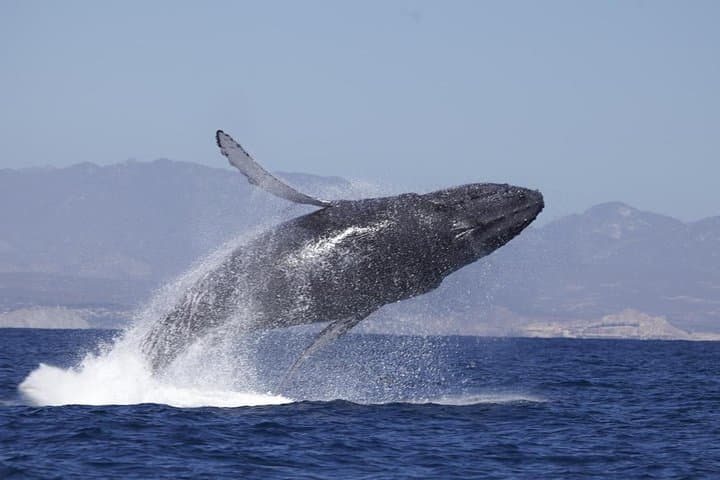
The boat noses out from Cabo San Lucas marina before the sun has fully warmed the water, and for a few minutes everything is a study in quiet—seagulls tacking low over glassy wakes, pelicans rigged like low-flying kites, and the Arch at Land's End already carved sharp against a pale sky. On the upper deck, coffee steam draws a small, expectant ring of bodies. The first exhale of the guide—part bird-spotter, part marine naturalist—carries across the bow: "There—three blows." The sea answers with a soft percussion and then a broad, curious back breaks the surface. A humpback tests the world with an eye-level roll, and for two full minutes the boat becomes a slow, reverent witness.
Cabo San Lucas sits where the Pacific meets the Sea of Cortez, and that confluence makes the waters off Land's End a migratory magnet. From December through April, breeding and nursing grounds further south draw baleen whales from as far as Alaska; Cabo becomes a front-row seat. The two-level big boat tour—an easy 120 minutes of searching, with breakfast and drinks included—was designed around that seasonal migration. It is low-effort, high-reward adventure: a chance to trade the hum of the marina for the creaking poetry of whales surfacing a few hundred yards away.
This coastline is as much geology as theater. Land's End, or El Arco, is the eroded punctuation mark of a peninsula formed by seismic uplift and marine chiseling. The sculpted granite and sea stacks are both a navigational landmark and an ecological hub—kelp beds and nutrient upwellings make the area rich for fish, dolphins, and the cetaceans that follow them. Culturally, Cabo's identity is braided between traditional fishing towns and a modern tourism economy; for locals, whale season is a reminder of ecological abundance and a thriving tourism calendar tethered to the rhythms of the ocean.
Onboard, the mood is practical: binoculars are passed around, cameras with telephoto lenses are readied, and guides replay rules with a friendly finality—keep distance, avoid loud noise, and let the animals choose the interaction. While many tours promise "close encounters," ethical whale watching means the animals set the pace. At optimal moments a whale will approach with its own curiosity; more often sightings are dramatic glimpses—flukes, breaches, long slow exhalations that mark the surfacing rhythm of these giants.
Why choose the two-level big boat? The upper deck gives panoramic sightlines for scanning the horizon; the main deck is stable for those who are nervous about rolling seas. Breakfast and drinks included and a two-hour window make this an excellent fit for early-morning or late-morning schedules—short enough for families and day-trippers, long enough to place you in the right tier of whale traffic. This departure is also a great way to see the iconic Arch, Lover's Beach, and Land's End from the water, where the tide scrapes the granite and sea lions claim the rocky islets.
Practical edge: bring binoculars (10x42 is ideal), a windproof layer, and a camera with optical zoom; if you get queasy, plan to ride the lower deck and take motion-sickness meds proactively. Tours run with certified guides who know the local migration patterns and follow Mexican whale-watching guidelines—operators maintain respectful distances and limit engine noise when in proximity.
If you want to make the most of whale season, go in February–March. Sightings peak as mothers and calves arrive and social behavior increases; mornings are calmer and the light is better for photography. Book a guided trip that includes briefing time and a knowledgeable crew; a narrated tour will tell you what species you are seeing—humpbacks and dolphins are common, the occasional orca or blue whale a rare but memorable sighting.
This two-hour tour is ideal as a single, high-impact experience within a broader Baja adventure. Combine it with a morning in the marina district, fresh ceviche for lunch, or an afternoon snorkel off Pelican Rock if the sea state is calm. For photographers it’s a lesson in rapid adaptation: use a fast shutter, track the horizon line as the boat moves, and keep sensitivity high enough to freeze a breach but low enough to retain detail.
To book, check the tour page that handles reservations and practical details, including instant confirmation and the operator's cancellation policy. The experience is seasonal and runs only December to April; outside of those months, the whales have moved on and the tour is not offered. For travelers who want a straightforward, low-hassle marine wildlife outing with strong odds of sightings, the two-level boat option balances comfort, safety, and spectacle.
The real reward of any whale trip isn’t the number of breaches you can photograph; it’s the moment when a massive, ancient body breaks the water with no agenda but survival and curiosity, and you become acutely small and present. That sense—of being a temporary observer in a much larger system—is what brings people back to Cabo year after year. If you want to join them, a well-run, two-hour tour that includes breakfast and drinks gives you the essentials: good timing, experienced guides, and front-row seats to one of the Pacific’s most moving migrations. For details and booking, check the Cabo whale-watching tour here: <a href="https://app.advcollective.com/local-experts/cabo-san-lucas-whale-watching-2-level-boat-breakfast-drinks">Cabo whale watching tours</a>.
Trail wisdom
Small choices, better day.
Bring binoculars
A mid-range binocular (10x42) makes distant blows and behaviors visible without crowding the rail.
Dress in layers
Mornings can be cool on deck; windproof and a light hat make the outing more comfortable.
Take motion-sickness precautions
If you are prone to seasickness, take medication an hour before boarding and ride the lower deck.
Listen to the guide
Guides enforce safe-distance rules and offer the best interpretation—ask questions for better sightings.
Local knowledge
Read the place, not just the route.
Watch for native species including Humpback Whale, Common Dolphin.
Keep an eye out for wildlife during the transition between areas and habitats. Respect distance guidelines.
Operators follow responsible whale-watching guidelines—maintain distance, avoid chasing animals, and limit engine noise to reduce stress on marine life.
Follow the guide's instructions on size limits, ethical handling, and leave-no-trace practices.
Sea lion colony near the Arch and small coves you can only see from a boat. Pelican Rock snorkeling spots if seas are calm after your whale tour
Locally recommended viewpoints and quiet spots known best to local operators.
Cabo’s coastline has long been a seasonal route for migratory whales, with local communities adapting fishing and tourism around these annual arrivals.
Maritime roots and regional tradition shape the waterways and working coasts.
Seasonal guide
Four versions of the same landscape.
Spring
Best forCalf sightings · Milder seas · Photography
ChallengesCrowds increase · Variable weather in late spring
March and April often deliver calm mornings and frequent mother-calf activity, making spring excellent for up-close behavior and photos.
Summer
Best forBoating activities in general · Snorkel and dive trips
ChallengesWhales have migrated away · Tours focused on other marine life
Summer is outside the whale season—this specific tour is not offered; focus shifts to snorkeling and sport fishing opportunities.
Fall
Best forWarm water activities · Fewer crowds
ChallengesLimited whale activity · Higher afternoon winds
Fall offers pleasant ocean temperatures but is not prime for whale watching; check operator schedules before planning.
Winter
Best forPeak whale watching · Calm morning seas · Family-friendly outings
ChallengesCooler mornings · High demand and sold-out days
December through February are core months for migration—book ahead for the best seats and morning departures.
Operator details
What the booking data adds.
Included
- ✓Soda/Pop
- ✓Alcoholic Beverages
- ✓Breakfast
- ✓Coffee and/or Tea
Not included
- —Tips
- —Hotel pick up , hotel drop off
- —Dock fee is five dollars per person
Good to know
- ✓Service animals allowed
- ✓Public transportation options are available nearby
- ✓Suitable for all physical fitness levels
Pack with intention
What to bring.
Good to know
Common questions.
No—wildlife is unpredictable. However, December through April is peak season and experienced operators have high sighting rates.
Plan the edges
The details that make the day easier.
Cabo San Lucas lies near the meeting point of the Pacific Ocean and the Gulf of California; the mixing of these waters creates nutrient-rich conditions that attract migratory whales each winter.
After the water, head to the marina district for fresh ceviche or fish tacos and a local cerveza; rest your sea legs at a waterfront palapa and watch the sunset over the Arch.
- Closest airport
- Los Cabos International Airport (SJD)
- Driving from airport to Cabo San Lucas marina
- ~45 minutes
- Cell service
- reliable near marina, patchy offshore
- Permits
- None for passengers; operators hold required marine permits
This tour operates during whale season—respect local whale-watching guidelines: keep distance, do not feed wildlife, and support operators that limit noise and engine interference.
Explore by topic
Follow the threads.
Keep exploring
Make the story part of the trip.
Set out from Bass Harbor for a private, customizable day on Blue Hill Bay — lighthouses, puffins, seals, and the chance to feel Acadia from the water. Small groups, local captains, unforgettable views.
In four hours you can move from shaded canyon ferns to wind-scoured coastal ridgelines, guided by someone who knows where the light—and the hidden views—live. This private half-day hike on the Monterey Peninsula or Big Sur is compact, curated, and perfect for travelers who want depth without a multiday commitment.
 Related story
Beneath a sky of shifting light, Skaftafell’s ice reads like a map of time. This three-hour guided glacier hike mixes technical instruction with geology and culture: compact, safe, and unforgettable.