
What the day feels like
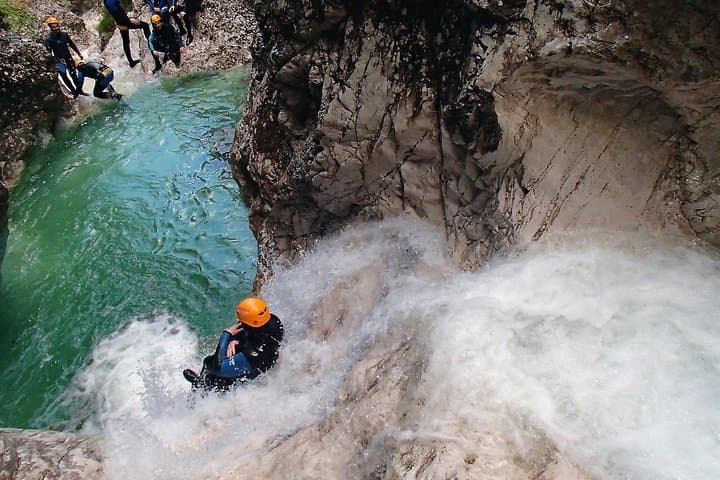
The first jump feels like a punctuation mark—you step, the world compresses into a handful of air and rock, then the cold water takes over and the gorge rewrites your pace. Susec Gorge narrows into a corridor of polished limestone and sheer walls, and the river, the color of a cut jewel, dares you onward. Guides check gear with the calm of people who know every seam and eddy; the group moves as a small machine, rope and laughter connecting one nervous step to the next confident slide. For three hours you trade the predictable contours of valley trails for a vertical playground—slides worn into bedrock, waterfalls that double as ropes for controlled descents, and pools so clear you can see your toes float out of focus as you surface.
This is canyoning in the Soča Valley, and Susec Gorge is one of its most immediate introductions. The gorge is a chapter in a longer geological story: rain and snowmelt feeding limestone, grinding centuries into the narrow passages you pass through now. The Soča watershed is famous for its emerald tones—minerals and pristine sources give the water its unique pigment and clarity—so every plunge feels theatrical, like stepping into a green-lit theater. Geologically, the region is classic karst: underground drainage, sudden chasms, and limestone that reveals caves and clefts at the water's will.
Culturally, Bovec is a mountain town with an alpine sensibility and a border-town history. In the early 20th century, this valley was a frontline on the Isonzo battles of World War I; the rivers and ridges that now host adventure sports once shaped military strategy. Today, the community leans into outdoor life—guides, gear shops, and river-minded cafés supply everything you need to translate that past into present-day recreation.
On the water, the gorge feels alive and opinionated. Rock lips and slides have personality—they invite, then test. Water plays the role of both highway and gatekeeper: it carries you forward but insists you respect current and flow. Guides interpret that language, showing where to trust a natural slide and where a belayed descent is necessary. For first-timers the mix of jumps, rappels, and swims is thrilling but approachable: you won’t be hanging from a cliff for hours, but you will be consistently engaged. The most memorable moments aren’t the biggest jumps but the small surprises—a cascade that sings as you move beneath it, a sun-slit pool where your breath hangs briefly as steam against the chill, a ripple that draws a smile out of even the most composed participant.
Practical matters: the Viator-listed experience runs about three hours and commonly departs from Bovec, with pricing from around $78. Operators typically outfit participants with wetsuits, helmets, harnesses, and instruction—so the high-level technical gear is handled for you. What you bring matters: a swimsuit under the wetsuit, secure footwear with good toe protection, and a small daypack for post-adventure layers. Fitness-wise, expect steady movement, short climbs, and swims; you don’t need to be an elite athlete but steady knees and comfortable open-water swimming will keep the day relaxed.
Safety is intrinsic to the rhythm. A guided group means briefings on jumps and rappel points, mandatory safety checks, and a clear chain of command when water and rock disagree. The canyon’s narrowness can amplify sound and intensity—trust the guide’s pace, avoid pushing beyond your comfort zone, and pay attention to footwear and foot placement; the rocks are slippery in places even with neoprene soles.
Timing matters too. Summer brings warmth and longer daylight, and the gorge runs full and glacial-cool; spring can mean higher flows from snowmelt (a wilder ride); fall cools the water and thins the crowds; winter typically shuts canyoning down due to cold and ice. For most travelers the sweet spot is mid-summer, when water temperature and weather are comfortable and operators run frequent departures.
Beyond the canyon, Bovec rewards lingering. Post-canyon, a riverside café and a local plate of trout or hearty stew anchors the day: you’ll want something restorative and local. If you have time, a drive along the Soča River reveals other emerald reaches and WWII memorials that give the landscape another layer of meaning.
Why do this trip? It’s efficient adventure: three hours of high-engagement fun in a landscape that feels curated by the elements. It suits mixed groups—novices who want a guided thrill, families with older kids who love water, and active travelers looking to sample the Soča Valley’s best. It also connects to a broader understanding of place: geology you can feel, history you can visit, and a local community that makes adventure accessible.
If you go, move with curiosity and respect. Be ready for cold, for sudden beauty, and for the easy laughter that follows a shared plunge. The gorge isn’t just a route down the mountain—it’s a conversation between water and rock that leaves you wet, grinning, and attentive to the quieter lines of the valley.
Trail wisdom
Small choices, better day.
Wear secure water shoes
Closed-toe shoes with good traction protect toes and help on slippery rocks—no flip-flops.
Bring a dry change of clothes
Post-canyon warmth matters—pack a towel and dry layers to change into immediately after the trip.
Confirm gear provided
Most operators supply wetsuits, helmets, and harnesses—double-check before arrival so you only bring personal items.
Hydrate and snack beforehand
Three hours of activity in cold water is surprisingly energy-consuming—eat and hydrate before you enter the gorge.
Local knowledge
Read the place, not just the route.
Watch for native species including Common European brown trout in the Soča and tributaries, Birds like dippers and common kingfishers along the river corridor.
Keep an eye out for wildlife during the transition between areas and habitats. Respect distance guidelines.
Operators emphasize leave-no-trace in sensitive karst systems; stick to group paths, avoid disturbing riverbanks, and take all waste back to town.
Follow the guide's instructions on size limits, ethical handling, and leave-no-trace practices.
A short walk to less-crowded river pools upstream of Bovec for a quiet swim. WWI open-air memorials and trenches nearby that contextualize the valley’s history
Locally recommended viewpoints and quiet spots known best to local operators.
The Soča Valley was part of the Isonzo Front in WWI—battle lines and memorials dot the landscape and are accessible by short drives from Bovec.
Maritime roots and regional tradition shape the waterways and working coasts.
Seasonal guide
Four versions of the same landscape.
Spring
Best forHigher-flow adrenaline · Fewer crowds
ChallengesColder water · Variable weather and higher flows
Snowmelt increases flow through the gorge—expect stronger currents and cooler water; guided groups may limit certain jumps or require more rappels.
Summer
Best forWarm air temps · Frequent departures
ChallengesPopular and busier · Sun exposure at staging areas
Mid-summer offers the most comfortable air temperatures and regular tours—water remains cool but manageable with a wetsuit.
Fall
Best forFewer visitors · Crisp light for photos
ChallengesCooler water and air · Shorter daylight hours
Fall reduces crowds and brings clear light, but water and air temps drop; plan for warmer post-trip layers.
Winter
Best forNot recommended for canyoning · Off-season alternatives like hiking
ChallengesIcy, unsafe conditions · Operators often closed
Freezing conditions make canyoning unsafe; operators generally suspend trips—explore nearby trails or museum sites instead.
Operator details
What the booking data adds.
Included
- ✓Locker
- ✓Equipment
- ✓Professional guide
- ✓Straps for glasses
- ✓Driver/guide
- ✓Free photos
- ✓Action camera mount on helmets
- ✓Changing room and toilet
Not included
- —Hotel pickup and drop-off
Good to know
- ✓Public transportation options are available nearby
- ✓Not recommended for travelers with spinal injuries
- ✓Not recommended for pregnant travelers
- ✓Not recommended for travelers with poor cardiovascular health
- ✓Travelers should have at least a moderate level of physical fitness
- ✓Children must be accompanied by an adult
- ✓May be operated by a multi-lingual guide
- ✓A minimum of 2 people per booking is required
- ✓Not recommended for guests without swimming knowledge.
- ✓Not recommended for guests with BMI higher than: for women 30, for men 40.
Pack with intention
What to bring.
Good to know
Common questions.
No—this is a guided introductory canyoning trip designed for beginners; guides provide instruction and manage technical rigging.
Plan the edges
The details that make the day easier.
The Soča River’s distinctive emerald color is due in part to limestone and mineral content in its karst watershed, which filters and clarifies the water.
After your canyon, head back to Bovec for trout or hearty alpine stews at riverside eateries; sample local beers and chat with guides about other Soča adventures like rafting or via ferrata.
- Closest major airport
- Ljubljana Jože Pučnik (approx. 2–2.5 hours drive) or Trieste (1.5–2 hours); trailhead
- staging area
- near Bovec town—short drive to Susec Gorge; cell service: intermittent in the gorge, reliable in town; permits: none required for this guided tour—book with the operator.
This canyon runs through a sensitive karst environment—pack out everything, follow guide instructions, and avoid introducing soaps or sunscreens into pools.
Explore by topic
Follow the threads.
Keep exploring
Make the story part of the trip.
Set out from Bass Harbor for a private, customizable day on Blue Hill Bay — lighthouses, puffins, seals, and the chance to feel Acadia from the water. Small groups, local captains, unforgettable views.
In four hours you can move from shaded canyon ferns to wind-scoured coastal ridgelines, guided by someone who knows where the light—and the hidden views—live. This private half-day hike on the Monterey Peninsula or Big Sur is compact, curated, and perfect for travelers who want depth without a multiday commitment.
 Related story
Beneath a sky of shifting light, Skaftafell’s ice reads like a map of time. This three-hour guided glacier hike mixes technical instruction with geology and culture: compact, safe, and unforgettable.