
What the day feels like
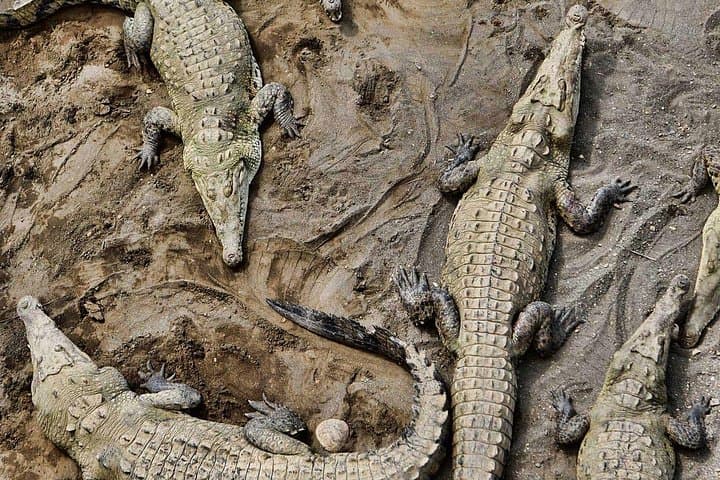
The boat eases through tannin-dark water and the forest closes in like a held breath. Mangrove roots lace the banks and a distant tree sluices a streak of sunlight that looks almost like a pathway on the surface. Every so often the water smooths into a mirror and the hull reflects the sky; then a ripple appears — deliberate, slow — as a crocodile slides down a muddy bank and disappears with nothing more than a geometric disturbance to prove it was there. On the Tarcoles River, near Costa Rica’s Central Pacific coast, the crocodiles run the shorelines like old kings, and the human visitors come in quiet boats to watch their domain.
This 90–120 minute crocodile adventure out of Jaco is not a safari in the cinematic sense. It’s close, intimate, and structured: a local skipper pilots a shallow-draft boat through river bends while a guide translates behavior into narrative — why certain animals sun on the banks, what the distinct belly patterns tell about age and health, how the river’s tidal rhythm shapes feeding. The reward is a kind of natural history with teeth; the risk is only the reality of being a guest in a place where predators are comfortable.
The Tarcoles system has a story beyond the waterline. Geologically, the river drains a mix of volcanic highlands and lowland coastal plains. Sediment from the Central Mountain Range combines with Pacific tides, producing broad mangrove fringes and sandbars that the American crocodile (Crocodylus acutus) prefers. Historically, the area sat on the edge of pre-Columbian trade routes, and later the road between San José and Puntarenas amplified its importance as transit and as a place where human modification — the old bridge over the Tarcoles — altered the river’s ecology and, inadvertently, the visibility of crocodiles. Today the bridge is a famous crocodile viewing spot for motorists; the boat trip puts you at water level.
Culture and community are visible on the shore: fishermen mending nets, shrimp farms tucked back in mangrove shadows, and small riverside restaurants where the smell of frying fish competes with the river’s humid breath. Guides on these tours are often local, and their knowledge is as much oral tradition as scientific observation. They point out egrets that fish at the crocodile’s side, describe the local names for mangrove species, and explain conservation tensions — tourism provides income and awareness, but it also requires careful management to avoid habituating wildlife.
Practicalities matter here. The trip is short — advertised as 1 hour 45 minutes but usually runs about two hours including a short orientation — and it’s designed for a wide range of travelers. Boats are open, low-slung, and stable but you will get closer to splashes and spray than you would on a land-based observation point. Expect sun, heat, and the possibility of mosquitoes at dawn or dusk. Photography is excellent if you come prepared with a telephoto lens and a steady hand. Your guide will likely time turns with tide and light, seeking the banks where crocodiles bask.
Why do this trip? It’s a compact, high-yield wildlife experience: in a couple of hours you’ll see adult crocodiles in high density, watch wading birds and kingfishers, and learn about a dynamic coastal ecosystem without a long expedition. For families it’s educational and thrilling; for photographers and naturalists it’s an efficient way to collect raw observations and images. For travelers with limited time in Costa Rica’s Central Pacific — perhaps stopping in Jaco between surf sessions or combining it with Carara National Park — it’s about as high-value an outing as you can buy.
Getting the most from the tour is straightforward. Choose a morning or late-afternoon departure for softer light and more active wildlife. Wear light, quick-drying clothes and closed shoes that grip wet surfaces. Bring sunscreen and a reusable water bottle; plan to sit low and steady so everyone on board gets equal viewing time. Ask the guide about the local seasons — crocodiles are resident year-round, but their behavior shifts with tide, river flow, and human activity.
Conservation is not merely a sidebar here: the Tarcoles crocodile population, historically persecuted, has rebounded in places thanks to protections and awareness. Responsible operators follow rules that keep animals wild — no feeding, no reckless approaches — and the best tours contribute to local economies and conservation groups. In short, this is a tour where patience, respectful distance, and curiosity pay generous dividends.
When the boat turns back toward the dock, the river exhales. You’ll likely have a new mental image of a crocodile — not just mythic jaws but patterns of behavior, seasonal rhythms, and a critical role in a coastal ecosystem that links mountain run-off to the Pacific. On shore, a small sodalicious soda or a plate of fresh ceviche can reconnect you to human rhythms; the short trip leaves a long impression.
If you go: combine the river nearly seamlessly with a day in Jaco or Carara. Book with a reputable operator that includes bilingual guides and a clear sustainability policy. Expect simple logistics, excellent wildlife viewing, and a kind of raw, honeyed natural history that’s rare to experience in such a short window of time.
Trail wisdom
Small choices, better day.
Time it for light
Book early morning or late afternoon tours for cooler temperatures and the best wildlife activity and light for photos.
Bring a telephoto
A 200–400mm lens or a 2x teleconverter helps capture eye-level portraits without disturbing animals.
Mind the tide
Tidal schedules affect where crocodiles sun and where boats can approach; ask your operator about tide timing.
Respect wildlife
Do not feed, touch, or provoke crocodiles; stay seated when the guide asks and keep noise low.
Local knowledge
Read the place, not just the route.
Watch for native species including American Crocodile, White Ibis (and other wading birds).
Keep an eye out for wildlife during the transition between areas and habitats. Respect distance guidelines.
Local guides and operators now emphasize non-interference and work with conservation groups; tourism income has helped reduce crocodile persecution but also requires vigilant best practices.
Follow the guide's instructions on size limits, ethical handling, and leave-no-trace practices.
Quiet mangrove arms where herons concentrate at low tide. Small riverside sodas serving fresh ceviche and local shrimp dishes
Locally recommended viewpoints and quiet spots known best to local operators.
The Tarcoles area has long been a transit corridor between inland valleys and the Pacific; the old bridge and nearby settlements have shaped how locals interact with the river.
Maritime roots and regional tradition shape the waterways and working coasts.
Seasonal guide
Four versions of the same landscape.
Spring
Best forDry-season clarity · Active sunning behavior
ChallengesHigher tourism volumes · Stronger sun
Spring months (Dec–Apr in Costa Rica’s local calendar) bring lower rainfall and clearer river visibility, but expect more visitors and stronger midday sun.
Summer
Best forLush vegetation · Birdwatching diversity
ChallengesAfternoon showers · Higher humidity
Early summer (May–Jun) ushers in greener landscapes and diverse bird activity; short rains can affect scheduling but also intensify riverside life.
Fall
Best forFewer crowds · Active feeding before wet season
ChallengesIncreasing rains late season · Muddy banks
Fall (Sep–Nov) often sees fewer tourists and interesting behaviors as the river’s flows change with seasonal rains.
Winter
Best forCalmer seas nearby · Cooler mornings
ChallengesShorter daylight hours · Occasional heavy storms
Winter months can be cooler at dawn and still productive for crocodile viewing, though tropical storms during the rainy season can disrupt plans.
Operator details
What the booking data adds.
Included
- ✓certified crew
- ✓Safety equipment
- ✓60 birds species field guide
- ✓Water to refill your bottle
- ✓Free parking lot
Not included
- —pick up/drop off not included
Good to know
- ✓Suitable for all physical fitness levels
Pack with intention
What to bring.
Good to know
Common questions.
Guides maintain safe, non-invasive approaches; boats often get within 10–30 meters of basking crocodiles for good viewing without provoking the animals.
Plan the edges
The details that make the day easier.
The Tarcoles River hosts one of the highest known densities of American crocodiles (Crocodylus acutus) in Central America, making it a global hotspot for crocodile viewing.
After the tour, head back to Jaco for fresh ceviche at a beachfront soda or a cold craft beer at a local brewpub; pair the outing with a visit to Carara National Park for rainforest trails and birding.
- Closest airport
- Juan Santamaría Intl (SJO); Driving time from SJO to Tarcoles
- Jaco area
- 1–2 hours; Meeting point: Jaco or Tarcoles river dock (operator dependent); Cell service: generally available but patchy along some river stretches; Permits: none required for commercial tours.
Operators should avoid feeding wildlife and keep a respectful distance; use refillable water bottles, minimize single-use plastics, and choose companies that invest in local communities and conservation.
Explore by topic
Follow the threads.
Keep exploring
Make the story part of the trip.
 Related story
Less than two hours from Nairobi, Kereita Forest pairs hands-on canopy adventure with quiet montane trails and a sobering colonial history—perfect for families, teams, and curious travelers seeking a full-day pulse of nature.
Set out from Bass Harbor for a private, customizable day on Blue Hill Bay — lighthouses, puffins, seals, and the chance to feel Acadia from the water. Small groups, local captains, unforgettable views.
In four hours you can move from shaded canyon ferns to wind-scoured coastal ridgelines, guided by someone who knows where the light—and the hidden views—live. This private half-day hike on the Monterey Peninsula or Big Sur is compact, curated, and perfect for travelers who want depth without a multiday commitment.