
What the day feels like
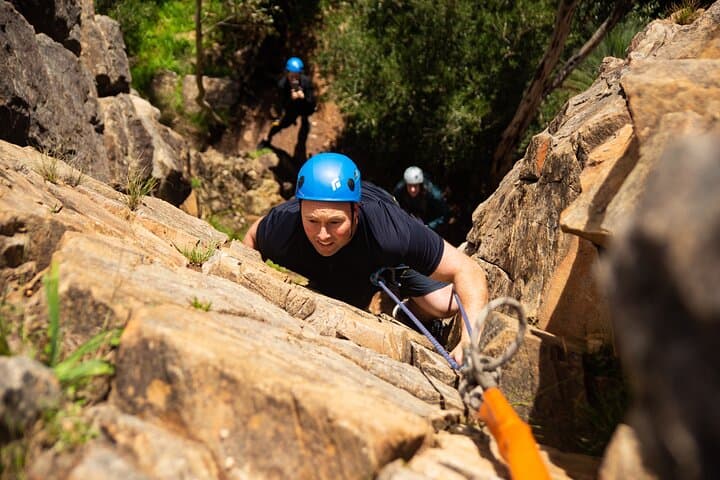
By mid-morning the gorge narrows and the trees tighten like a crowd closing in—eucalypts leaning over the trail, their rough bark a hands-on history of wind and fire. The path spills onto a terrace and there it is: a vertical face of pale rock that, from the carpark, looks like a photograph of distance. Up close it laughs at distance. Moss gathers in hairline cracks; the cliff’s surface is a weathered mosaic of hard bands that have resisted the Adelaide Hills’ slow unmaking. When your guide clips you into the rope, the cliff stops being a picture and becomes a proposition.
Morialta Conservation Park sits in the creased edge of the Mount Lofty Ranges, a short drive from Adelaide but a world away in scale and pace. The park’s steep-walled gorge—carved by the seasonal run of Fourth Creek—gives you climbing routes that range from straightforward slab to steep faces that reward a confident belay. On a guided full-day like this one (about seven hours), you’ll move deliberately through both instruction and exposure: knot work and belaying on the shaded approach, then the body-language of climbing itself—finger placements, weight shifts, trusting friction between shoe and rock. The payoff is kinetic and immediate: the top of a route, the long inhale at the belay, a view that includes the rust-bright gum canopy and, beyond it, the flat blue of St Vincent Gulf.
Geology here is practical. The rock is a tough Adelaidean quartzite and sandstone mix; it tests your feet and rewards careful smearing more than brute pulling. That texture makes the cliff popular with local climbers and excellent for beginners who want to learn the movement without a hundred-meter exposure. The gorge’s waterfalls—serious only in wet months—announce the presence of Fourth Creek, a seasonal artery that has sculpted ledges and chimneys over millennia. Plants that cling to cliff shelves and gumtrees at the rim create a living frame for the routes, and if you’re quiet you might notice koalas dozing in the forks above, ajar-eyed at the procession of humans below.
This place carries stories. The Kaurna people are the traditional custodians of the land, and these hills held seasonal camps and movement routes long before European settlement. Later, the Adelaide Hills became a rural hinterland for the city—orchards, vineyards and small towns—while pockets like Morialta were set aside for conservation and public enjoyment. The park’s proximity to the city means it has always been a backyard for adventurers and a training ground for climbers wanting to learn technical movement without losing a day to travel.
What sets the guided full-day apart from a solo trip is rhythm and safety: experienced guides break big skills into manageable chunks and build confidence by repetition. You won’t just top-rope a few routes and call it a day; you’ll abseil. The descent is the other side of the coin—controlled, deliberate, and for many the highlight. There is a distinct, quiet ceremony to locking your belay, stepping backward, feeling the rope take your weight, and letting the cliff decide how fast you fall. The guides teach you to read the rock on descent as they do on ascent—finding the path of least resistance, avoiding loose holds, and learning to move with the rope instead of against it.
Practicalities are simple but essential. The day runs roughly seven hours; expect about one to two hours of instruction and gear orientation, followed by guided climbs and at least one full abseil. Terrain is uneven; approaches can be rocky and steep. Climbers use harnesses, helmets, and single-rope systems provided by the operator, but footwear and hydration are your responsibility. Summer sun can be fierce; spring offers wildflowers, while winter brings dramatic skies and the possibility of wet rock.
Who is this for? Casual hikers with a head for heights, adventurous families with older teens, and first-time climbers who want a structured, safe introduction. The day is intentionally paced to teach participants, so prior climbing experience is not required. That said, a baseline of fitness—reasonable stamina for uphill approaches and the ability to move across uneven ground—is recommended.
Make the most of the trip by timing it. Spring—September to November—balances mild weather with high wildflower diversity and active wildlife. Arrive with a lightweight daypack, layered clothing, and shoes that can handle both trail and rock approaches. Bring a camera; the viewpoints above the gorge frame the Adelaide plains in a way that reads grand even on ordinary days.
Beyond the ropes, there’s a cultural and culinary afterlife to the day: small towns in the Adelaide Hills like Norton Summit and Hahndorf offer bakeries, pubs and craft breweries—good places to land an aching body and celebrate earned verticals with local beer and pie. Locals will tell you Morialta is a place to come back to: each season rewrites the light, and each route reveals a different face.
At its best, a day of climbing and abseiling here is a tidy education in exposure, geology and the etiquette of small-group adventure. The cliffs dare you and the gumtrees keep you honest, offering a pared-back, tactile lesson in how vertical ground meets the human body. You return to Adelaide with sun on your forearms, sandy chalk in your hair, and a clearer sense of what you can do when you trust instruction and your own feet. It’s a full day that rewards patience, curiosity, and a willingness to step backward into the ropes.
Trail wisdom
Small choices, better day.
Hydrate early and often
Bring at least 2 liters of water; climbs and approaches in sun dehydrate quickly even in mild weather.
Wear sticky-soled shoes
Approach trails are rocky—trail runners with grippy soles or light approach shoes are best for both hiking and low-angle routes.
Time your visit for light
Morning or late afternoon provides softer light for climbing and photos and cooler temperatures for sweaty sections.
Respect wildlife and cliff flora
Keep noise low near gumtrees and don’t disturb koalas; avoid knocking vegetation off cliff-shelves when moving ropes.
Local knowledge
Read the place, not just the route.
Watch for native species including Koala, Kangaroo.
Keep an eye out for wildlife during the transition between areas and habitats. Respect distance guidelines.
Stick to established trails and belay ledges, avoid feeding wildlife, and follow guides’ instructions to protect fragile cliff vegetation and koala habitat.
Follow the guide's instructions on size limits, ethical handling, and leave-no-trace practices.
First Falls lookout and short creekside walk below the main carpark. Cliff-top vantage points that look toward St Vincent Gulf—best near late afternoon light
Locally recommended viewpoints and quiet spots known best to local operators.
Morialta sits on the traditional lands of the Kaurna people; the gorge has been a local recreation spot since European settlement and was set aside for conservation in the early 20th century.
Maritime roots and regional tradition shape the waterways and working coasts.
Seasonal guide
Four versions of the same landscape.
Spring
Best forWildflowers · Mild temperatures · Active wildlife viewing
ChallengesUnstable weather shifts · Occasional wet rock after rains
Spring offers mild days, blooming understory and higher chances of spotting koalas and native birds—but watch for short wet spells that can make routes slippery.
Summer
Best forLong daylight hours · Dry, grippy rock · Early morning climbs
ChallengesHigh heat and sun exposure · Lower water availability
Summer delivers dry, generally better friction but intense sun—start early, carry shade and plenty of water, and avoid midday in hot spells.
Fall
Best forStable weather · Warm afternoons · Fewer crowds
ChallengesCooler evenings · Shortening daylight
Autumn is often the most predictable season with warm days and cool nights—ideal for full-day instruction without the peak-season crowding.
Winter
Best forDramatic skies · Quiet trails · Moody photography
ChallengesCold, damp rock · Possible closures after heavy rain
Winter brings moody conditions and sometimes wet rock—perfect for photographers but expect lower temperatures and the need for warmer layers.
Operator details
What the booking data adds.
Included
- ✓Guidance from highly experienced and qualified instructors
- ✓All climbing and abseiling equipment provided
- ✓Opportunities for photos to capture your day
- ✓Customised climbs to match your goals and ability
Not included
- —Please bring your own snacks and enough water for the day
- —Additional spectators, unless agreed upon. Please contact us
- —Participants must have their own transport for the 10 minute convoy drive up the hill. If you require a lift, please get in touch before your tour date.
Good to know
- ✓Not recommended for travelers with spinal injuries
- ✓Not recommended for travelers with poor cardiovascular health
- ✓Not recommended for pregnant travelers
- ✓Suitable for all physical fitness levels
- ✓Close toed shoes must be worn
- ✓Pants or shorts mid thigh length or longer are recommended
- ✓Please bring enough water for the day
- ✓Sunglasses and Sunscreen are recommended for sunny days
- ✓Participants must not be under the influence of drugs or alcohol
Pack with intention
What to bring.
Good to know
Common questions.
No—this full-day experience is designed for beginners and progressing climbers; guides teach knots, belays and abseil technique on site.
Plan the edges
The details that make the day easier.
The gorge’s waterfalls flow on Fourth Creek—Morialta’s formations are carved into older Adelaidean quartzite and sandstone, producing textured climbing surfaces.
After the climb, head to nearby Norton Summit or the historic German village of Hahndorf for bakery treats, pub meals and local craft beers—perfect for cooling down and swapping route stories.
- Closest airport
- Adelaide Airport (ADL)
- Nearest city
- Adelaide CBD ~15–25 minutes drive
- Trailhead
- Morialta Conservation Park carpark
- Cell service
- patchy in the gorge
- Permits
- none for day visits; tour operator supplies gear and briefing
Morialta is valued for remnant native bush and koala habitat—pack out trash, avoid disturbing fauna, and stay on established tracks and belay ledges to protect cliff vegetation.
Explore by topic
Follow the threads.
Keep exploring
Make the story part of the trip.
Set out from Bass Harbor for a private, customizable day on Blue Hill Bay — lighthouses, puffins, seals, and the chance to feel Acadia from the water. Small groups, local captains, unforgettable views.
In four hours you can move from shaded canyon ferns to wind-scoured coastal ridgelines, guided by someone who knows where the light—and the hidden views—live. This private half-day hike on the Monterey Peninsula or Big Sur is compact, curated, and perfect for travelers who want depth without a multiday commitment.
 Related story
Beneath a sky of shifting light, Skaftafell’s ice reads like a map of time. This three-hour guided glacier hike mixes technical instruction with geology and culture: compact, safe, and unforgettable.