
What the day feels like
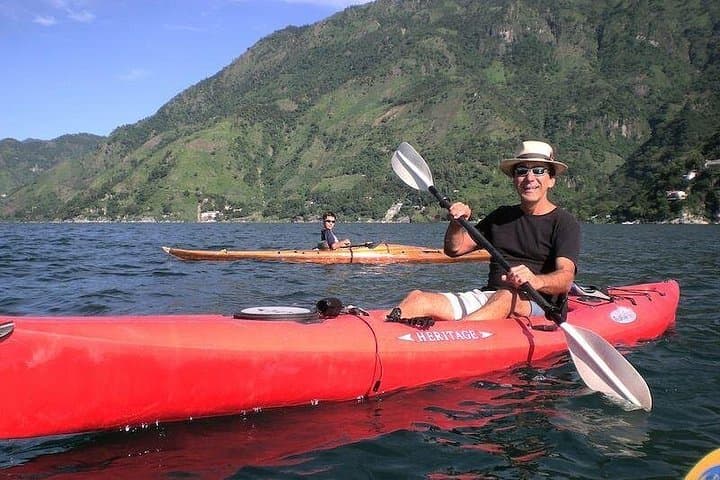
You push off from the wooden dock in Panajachel as the morning light unrolls across Lake Atitlán. The water answers with a cool, tactile hush that nudges the kayak forward; the three volcanoes framing the basin—Atitlán, Tolimán and San Pedro—stand like slow-moving sentries. The first strokes fall into a rhythm: paddle, breathe, scan for the color change where the water goes deeper and the shoreline narrows into jungle-stuffed cliffs. By the time the town of Santa Cruz La Laguna appears—painted houses clinging to the slope like notes on a staff—you feel less like a tourist and more like someone invited into the lake's pace.
This is a half-day that folds two elemental activities into one neat arc: open-lake paddling followed by a hike into the north shore's less-traveled interior. The tour packages roughly six hours of motion and discovery—about 3–4 km of paddling across glassy caldera water and a 2–4 km hike that climbs through coffee terraces and ancient Mayan footpaths with an elevation gain in the neighborhood of 200–300 meters (estimates vary by route). It's an experience that balances muscle and curiosity: the lake challenges you on the paddle, the trail asks for steady feet and a willingness to slow down and look.
Lake Atitlán's story is geological as much as it is cultural. The basin is a volcanic caldera born of a catastrophic eruption tens of thousands of years ago; within that raised rim, communities of Tz'utujil and Kaqchikel Maya have farmed, woven and worshiped for centuries. The north shore—reachable by a short boat ride from Panajachel and less shaped by mass tourism—is where you'll encounter steep, jungle-lined coves, coffee fincas tucked into terraced slopes, and villages where hand-woven textiles and murals still speak the language of place.
On the water the lake takes on personality: it can be serene and reflective one moment, then push you with a pulse of wind the next. The kayak leg gives you time to notice the small, telling things—kingfishers darting like punctuation, fishermen mending nets off narrow boats, and the smell of damp earth rising from the shore. After landing near Santa Cruz, the hike threads into a patchwork of ancient stone ways and modern trails, climbing past coffee plants and fields of maize. Locals tending crops often nod hello; a few will invite you for a cup of shade-grown coffee, a direct reminder that this is living countryside, not a nature preserve frozen in time.
There's an optional cliff jump on many of these departures—an adrenaline note for the daring. Guides will let you know which spots are safe and which are not; it's never mandatory, and it should come after you've scoped depth and current (and your own tolerance for vertical comedy). The presence of guides matters in more ways than thrill; they interpret local history, arrange the logistics of the crossing, and point out quiet corners few visitors see.
Practical details are tidy: the outing runs about six hours, costs from roughly USD 108, and is rated highly by past guests—an indication that the logistics have been vetted and the routes are guide-friendly. Physically, expect a moderate day: some prior kayaking experience helps but is not required, and the hike is steady rather than technical. Dress in layers for sun and wind, use reef or water shoes for the paddle-to-trail transition, and bring a dry bag for camera gear.
Timing matters. The dry season—November through April—is the most reliable for calm water and clearer volcano views. Rainier months bring green intensity and dramatic clouds, but they also bring slick trails and fewer safe cliff-jump options. If you travel during the high-sun months, start early to avoid the midday heat and to catch the lake before wind builds.
Culturally the trip connects visitors with communities that maintain traditional crafts and agricultural rhythms. Many villages around Atitlán participate in cooperative tourism—the money you spend on a guided tour, a cup of coffee or a woven textile can go a long way locally. That said, expect simple comfort rather than luxury: boat docks are functional, trail amenities are minimal, and cell service can be patchy on the north shore.
For planning: bring cash for small purchases and local fees, confirm the meeting point in Panajachel (most departures use the main dock), and check whether your tour includes transport back to the town. If you want to add a coffee finca visit or a village market stop, tell your guide ahead of time; they can usually accommodate quick cultural add-ons.
Why do this trip? It distills what makes Lake Atitlán distinctive: volcanic drama, alive lakeside communities, and an intimacy of scale that bigger destinations lack. The paddle puts you on the water that shaped local life; the hike moves you into the rhythms and vantage points gardeners, weavers and farmers know well. Combined, they make for a day that’s physically engaging, culturally resonant and scenically unforgettable—one that rewards both steady breath and a curious mind.
Trail wisdom
Small choices, better day.
Start Early
Depart at first light to enjoy calm water and clear volcano views; winds pick up mid to late morning.
Stow Gear in a Dry Bag
Bring a small dry bag for phone, camera and a light layer—wet landings are possible during the kayak disembark.
Footwear Transition
Wear water-friendly shoes you can hike in—reef shoes or lightweight trail shoes cut down on transfers between kayak and trail.
Respect Local Customs
Carry small bills to tip guides and buy local crafts; ask before photographing people and private property.
Local knowledge
Read the place, not just the route.
Watch for native species including Common kingfisher, Howler monkey.
Keep an eye out for wildlife during the transition between areas and habitats. Respect distance guidelines.
Community-based tourism supports local incomes; visitors should avoid single-use plastics, stick to marked paths and buy from local cooperatives to reduce environmental and economic leakage.
Follow the guide's instructions on size limits, ethical handling, and leave-no-trace practices.
Cliffside lookouts above Santa Cruz La Laguna for unobstructed volcano reflections. Small coffee fincas near San Juan La Laguna offering tasting sessions and short tours
Locally recommended viewpoints and quiet spots known best to local operators.
Lake Atitlán sits within a volcanic caldera and is surrounded by towns with strong Tz'utujil and Kaqchikel Maya traditions; many villages still practice weaving and community agriculture.
Maritime roots and regional tradition shape the waterways and working coasts.
Seasonal guide
Four versions of the same landscape.
Spring
Best forDry weather and clear volcano views · Comfortable daytime temperatures
ChallengesOccasional wind in afternoons · Growing crowds during high season
Spring (March–May) is prime for visibility and stable weather—early starts keep you ahead of the afternoon breeze.
Summer
Best forLush green landscapes · Fewer international tourists
ChallengesAfternoon thunderstorms · Slippery trails after rain
Summer brings intense greenery and dramatic skies; expect wet conditions and pack quick-dry layers.
Fall
Best forGood light for photography · Harvest-time coffee aromas
ChallengesTransitioning weather and occasional showers · Shorter daylight hours later in season
Fall is a shoulder season with crisp mornings and colorful skies—watch the weather and plan flexible returns.
Winter
Best forCalmest water and clearest air · Crisp mornings and cooler temperatures
ChallengesCooler mornings requiring layers · Peak tourist season can be busier
Winter (Nov–Feb) is the dry season—ideal paddling conditions and strong views, so book ahead.
Operator details
What the booking data adds.
Included
- ✓Round-trip shared boat transfer
- ✓Professional kayak guide
- ✓Hotel pickup and drop-off (centrally located Panajachel and Santa Cruz hotels)
- ✓All activities
Not included
- —Food and drinks (available for purchase)
- —Transportation to/from Adventure Center from other locations
- —Gratuities
Good to know
- ✓Travelers should have at least a moderate level of physical fitness
- ✓Children must be accompanied by an adult
- ✓Operates in all weather conditions, please dress appropriately
- ✓A minimum of 2 people per booking is required
Pack with intention
What to bring.
Good to know
Common questions.
Moderate fitness is sufficient—expect several kilometers of paddling and a few kilometers of hiking with some steady elevation gain; guides pace groups to ability.
Plan the edges
The details that make the day easier.
Lake Atitlán formed in a volcanic caldera tens of thousands of years ago and is the deepest lake in Central America—its dramatic bowl-shaped basin is a product of past volcanic events.
After the tour, return to Panajachel for lakefront restaurants serving fried lake trout, pepián (a slow-simmered Maya stew), and house-roasted coffee; for a quieter scene, take a short boat ride to Santa Cruz’s dock cafés and try a community-run coffee tasting.
- Closest airport
- La Aurora International Airport (GUA); meeting point: Panajachel main dock; driving distance from Guatemala City: ~2.5–3 hours by road; cell service: reliable in Panajachel, patchy on north shore; permits: no formal permits but local boat fees and guide costs apply.
This tour visits community lands and sensitive shoreline habitats—pack out all trash, avoid single-use plastics, support local guides and cooperatives, and refrain from disturbing shorebird nesting areas.
Explore by topic
Follow the threads.
Keep exploring
Make the story part of the trip.
Set out from Bass Harbor for a private, customizable day on Blue Hill Bay — lighthouses, puffins, seals, and the chance to feel Acadia from the water. Small groups, local captains, unforgettable views.
In four hours you can move from shaded canyon ferns to wind-scoured coastal ridgelines, guided by someone who knows where the light—and the hidden views—live. This private half-day hike on the Monterey Peninsula or Big Sur is compact, curated, and perfect for travelers who want depth without a multiday commitment.
 Related story
Beneath a sky of shifting light, Skaftafell’s ice reads like a map of time. This three-hour guided glacier hike mixes technical instruction with geology and culture: compact, safe, and unforgettable.