
What the day feels like
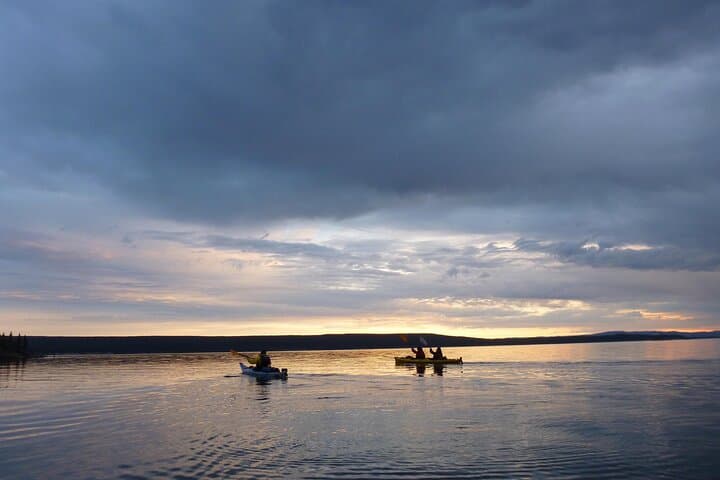
When the day lets go of its last heat and the caldera exhales thin steam into a lavender sky, Yellowstone Lake changes temperament. The water turns a dense, ink-blue; puffs of geothermal steam hover like lanterns along the shore; and from a single shoreline launch, a small group of kayaks slips quietly into a giant that still remembers how to rumble. This is the moment for a Yellowstone Lake sunset paddle — a rare, low-angle window on the park’s geology and wildlife where water and fire seem to trade secrets.
Guides clip life vests tight, adjust skeg lines, and point out the low spit of shoreline that hides the West Thumb Geyser Basin. From the kayaks you can peer into thermal pools that lap right into the lake, plumes of warm water seeping below the surface. There are no boardwalks here, no signage — just primitive thermal features and the sound of paddles tapping the hull as the sun finds the horizon. As the light softens, the basin’s colors — sulfur yellows, rusty reds, and startling turquoise — punch through the dusk. It’s intimate and wild in a way the main park roads rarely are.
Yellowstone Lake sits at about 7,733 feet and fills part of the park’s massive caldera, the remnant of a volcanic system that has shaped the region for hundreds of thousands of years. West Thumb itself is a smaller crater that formed within the larger Yellowstone caldera. The interplay between the lake and geothermal heat creates conditions that produce underwater hydrothermal vents and hot springs spilling directly into the lake — features you can sense rather than fully see from shore. That geologic theater is why a guided kayak visit to the West Thumb shoreline is more than a scenic paddle; it’s a close-up primer on how heat and water continue to sculpt the park.
Cultural echoes lurk here too. Indigenous peoples, including the Crow and Shoshone nations, fished, traveled, and told stories about these waters long before the U.S. government created Yellowstone National Park in 1872. The lake has been a crossroads of food, trade, and seasonal movement for generations; modern visitors would do well to approach with humility and respect for those histories.
Practicalities matter as much as the view. The excursion runs about three hours and suits first-time paddlers and experienced kayakers alike. Guides provide instruction, single and double kayaks, and the micro-briefing you need to feel confident on the water. Weather on Yellowstone Lake is famously changeable — warm sun can flip to wind-whipped spray in minutes — so timing is everything. The sunset paddle is planned to maximize calm conditions and that fleeting golden hour, but come prepared for evening chill and wind.
Wildlife is part of the show. Trumpeter swans and waterfowl slide past in silhouette; otters play around submerged thermal outflows; and if you’re lucky a moose may pick its way through a marshy shelf near the shore. Keep a respectful distance; wildlife on water has limited escape routes. Guides enforce the park’s buffer rules, and for good reason: close approaches can stress animals and endanger paddlers.
If you’re weighing this experience against a late-afternoon drive or a crowded boardwalk, consider what’s unique about paddling the shoreline: access. The tour approaches thermal features and shoreline vents that have no boardwalks, making them visible only from the water. That exclusivity comes with responsibility — leave no trace, avoid stepping onto fragile microbial mats, and listen to your guide about where it’s safe to lean and peer.
The logistics are straightforward. Most visitors stay in West Yellowstone, MT, or in-park lodging like Grant Village or Lake Yellowstone Hotel; meeting points vary by operator. Park entrance fees apply, and the tour includes gear and instruction, so you don’t need to bring a personal kayak. Book a sunset slot in mid-summer for the warmest water and longest evenings; shoulder seasons are quieter but colder.
What to expect physically: the paddle itself is steady and rhythmic, an opportunity to move at your own pace while the guide breaks the silence with geology and history. The biggest hazards are weather, cold water, and unexpected gusts. This isn’t a race; it’s a sensory reconnaissance of a place where steam and shore meet.
To plan the best experience, think layers, light, and timing. Bring a thin insulating midlayer and a waterproof outer shell, a dry bag for your camera, and a headlamp for the walk back once the sky finishes its show. Hydrate early; the altitude and evening breeze can mask how much water you’re losing. And finally, arrive ready to be quiet. The payoff of a Yellowstone Lake sunset paddle is the way the landscape answers silence: with steam, color, and an unedited skyline.
For reservations and details, see this guided option for the <a href="https://app.advcollective.com/local-experts/yellowstone-lake-sunset-paddle-kayak-west-thumb-geyser-basin-dusk">Yellowstone Lake sunset paddle along West Thumb Geyser Basin</a>, which includes equipment and instruction. If you prefer to read more about what you’ll see from the water, this <a href="https://app.advcollective.com/local-experts/yellowstone-lake-sunset-paddle-kayak-west-thumb-geyser-basin-dusk">kayak the geothermal shoreline</a> link is a good primer.
The light will go eventually, but that’s when the memory of this place becomes most persistent: a rim of steam, the echo of paddles, and a horizon that seems to have been carved by time itself. This isn’t just another sunset; it’s an elemental late-day lesson in what happens when heat meets water on a landscape that’s still alive.
Trail wisdom
Small choices, better day.
Layer for Altitude
Temperatures drop quickly after sunset at 7,700+ ft—bring an insulating midlayer and a waterproof shell.
Mind the Microbial Mats
Do not step on or touch thermophilic mats; they’re fragile and protected—observe from your kayak.
Hydrate Before Launch
Altitude and cool evening air can mask dehydration—drink water before you paddle.
Secure Electronics
Use a dry bag for cameras and phones—sudden wind or chop can send spray over the bow.
Local knowledge
Read the place, not just the route.
Watch for native species including Trumpeter Swan, River Otter.
Keep an eye out for wildlife during the transition between areas and habitats. Respect distance guidelines.
This shoreline includes fragile thermal communities—avoid stepping on microbial mats, pack out all trash, and follow guide instructions to minimize impact.
Follow the guide's instructions on size limits, ethical handling, and leave-no-trace practices.
Kayak views of little-seen shoreline vents and underwater fumaroles. Dusk glassing for trumpeter swans near the basin's warm outflows
Locally recommended viewpoints and quiet spots known best to local operators.
West Thumb formed as a later caldera within Yellowstone’s larger volcanic system; the lake and its shorelines have long been used by Indigenous peoples for food and seasonal travel.
Maritime roots and regional tradition shape the waterways and working coasts.
Seasonal guide
Four versions of the same landscape.
Spring
Best forFewer crowds · Migratory bird sightings
ChallengesCold water and air · Unpredictable weather
Early season paddles can be quiet and wildlife-rich but expect cool temperatures and variable conditions.
Summer
Best forLong daylight · Warmer water · Stable weather
ChallengesHigher visitor numbers · Thunderstorms in afternoon
Summer is ideal for comfort and windowed sunsets, but book ahead to secure an evening slot.
Fall
Best forCrisp light for photos · Elk rut nearby
ChallengesShorter days · Cooling water temps
Fall’s golden light and migrations make for memorable paddles, though evenings are brisk.
Winter
Best forUnique solitude (limited offerings)
ChallengesMost operators do not run; ice and extreme cold
Winter paddles are rare; most guided services pause due to hazardous conditions.
Operator details
What the booking data adds.
Included
- ✓Professional guides will provide an introduction to Yellowstone's history and geology of the Lake, along with the kayaking equipment and techniques.
- ✓All necessary equipment and instruction.
Not included
- —Guide Gratuities are not included but greatly appreciated.
- —Hotel pickup and drop-off
Good to know
- ✓Wheelchair accessible
- ✓Travelers should have at least a moderate level of physical fitness
- ✓All children 12 and under must paddle in a tandem kayak with an adult. If booking with children, you must choose the tandem kayak option. This is the rate per kayak, for 2 people.
- ✓If you wish to have single kayaks (not available for children under 13), the rate is per person.
- ✓Please come dressed for cold weather, as it is usually colder in Yellowstone than you are expecting. Keep in mind that while kayaking, you will get wet. The weather in Yellowstone can vary greatly, and change quickly. Typically the days are sunny with temps in the upper 60's to low 80's, however it does get cold at night and early morning. Afternoon showers and passing thunderstorms are always possible in the mountains. We plan to go in rain or sunshine. We will provide all the necessary kayaking equipment. You should arrive dressed according to the weather, keeping in mind that while you wont ever be submerged in the water, you will get wet. Therefore dressing in layers is always best, with shorts or wind pants made of synthetic quick drying material, and shoes that you dont mind getting wet. Having a rain or wind jacket, extra layers, and/or a change of warm dry clothes for after the trip ends, is also a good idea. Guide gratuities are always appreciated, but never expected. If you have any questions any time, please dont hesitate to ask.
Pack with intention
What to bring.
Good to know
Common questions.
No — guides provide instruction and the tour is suitable for beginners, with single and double kayaks available.
Plan the edges
The details that make the day easier.
Yellowstone Lake sits at about 7,733 feet and covers roughly 136 square miles, making it one of the largest high-elevation lakes in North America.
After the paddle, head to the Lake Yellowstone Hotel dining room for classic park fare with lakeside views or drive to West Yellowstone for a beer and pizza at a local brewpub—both offer a chance to compare in-park calm with town energy.
- Closest airport
- Bozeman Yellowstone International (BZN) ~90 miles to West Yellowstone; Driving from West Yellowstone to West Thumb area ~45–60 minutes; Cell service: intermittent to none around the lake; Permits
- passes
- Yellowstone Park entrance fee required; tour gear provided; operator offers instant confirmation and free cancellation policy.
This shoreline contains delicate thermal ecosystems—stay in your kayak, avoid touching mats, pack out waste, and follow your guide’s instructions to protect these rare habitats.
Explore by topic
Follow the threads.
Keep exploring
Make the story part of the trip.
Set out from Bass Harbor for a private, customizable day on Blue Hill Bay — lighthouses, puffins, seals, and the chance to feel Acadia from the water. Small groups, local captains, unforgettable views.
In four hours you can move from shaded canyon ferns to wind-scoured coastal ridgelines, guided by someone who knows where the light—and the hidden views—live. This private half-day hike on the Monterey Peninsula or Big Sur is compact, curated, and perfect for travelers who want depth without a multiday commitment.
 Related story
Beneath a sky of shifting light, Skaftafell’s ice reads like a map of time. This three-hour guided glacier hike mixes technical instruction with geology and culture: compact, safe, and unforgettable.