
What the day feels like
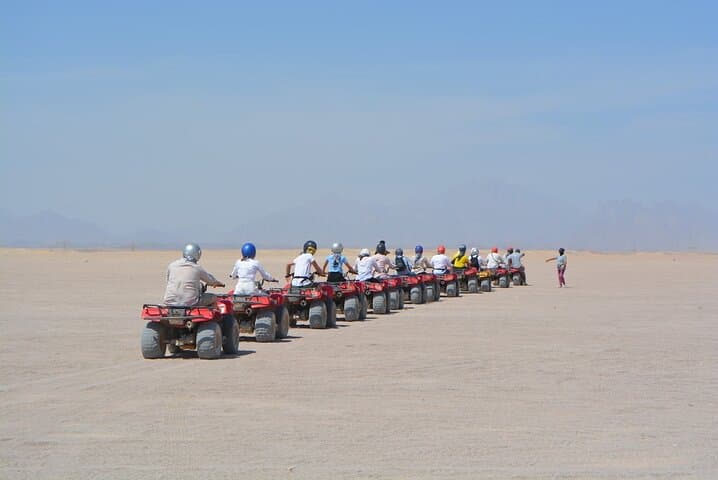
You meet the desert at the quad station—helmets clattering, dust already beginning to rise from a dozen tires, the air tasting faintly of salt even though the Red Sea is a distant blue smear. The first roar of engines breaks the morning hush, and for a moment the dunes seem to lean in, curious and ready. Then you are moving: sand under the wheels that gives and pushes back, the horizon a rolling rhythm of gold and ochre, and a line of Bedouin tents pinning the sky like punctuation.
This is not a race. It is a short, concentrated conversation with a landscape that has been both barrier and highway for millennia. The Hurghada Quad Drive Adventure Tour lays out 25 kilometers of desert one way—25 back—across terrain that alternates between compact tracks, wind-sculpted dunes, and occasional rocky outcrops. The total loop is about 50 kilometers of riding, and four hours from pickup to hotel drop-off is enough to feel both the adrenaline and the calm that follows.
Egypt’s Eastern Desert is younger in tourist terms than the pharaonic monuments of the Nile, but it carries a layered history. Coastal Hurghada was once a small fishing village until the late 20th century when Red Sea resorts transformed it into a global dive and beach destination. Inland, the desert belongs to the Bedouin—nomadic and semi-nomadic people whose relationship with the land is practical and ceremonial. The tour threads those cultural notes into a short, respectful program: a ride into a traditional Bedouin village, a cup of sweet, fragrant tea, and a short camel trek that is as much an exercise in heritage as it is in novelty.
Geologically, you are riding on the edge of the Red Sea rift basin. The ground changes quickly—riverbeds, or wadis, that funnel wind and rain into stony channels; flat, compact sand tracks that allow a steady cadence; and the dunes themselves, alive with ridgelines that shift with every storm. Give the dunes personality and you start to understand how to read them: a windward face that dares you up and a lee slope that offers a quick, pulsing rush down. The quads are steady and forgiving, and local guides know which lines keep the ride fun without sending anyone tumbling.
Practicalities are simple but important. The operator handles hotel pickup and drop-off, helmets and basic safety instruction, and the group is given time to acclimate before the first acceleration. The pace is adjustable—steady for families and sharp for riders who want to push a bit harder. The Bedouin tea break is not staged; it’s a gracious pause where the village elders welcome visitors and share a brief look into daily life. The camel ride that follows is short—enough to understand the animal’s slow geometry and to enjoy the quiet view from a height you do not usually hold.
For photographers, the desert is a forgiving subject. Early morning and late afternoon light carve depth into dunes and ridges, and the contrast between pale sand and blue sky is film-friendly. Wear sunscreen, bring a small microfiber cloth for lenses, and be ready to swap from wide-angle for landscapes to a short telephoto for candid portraits of village life.
Safety depends less on heroics than on preparation. Hydration and sun protection are the simplest measures that separate a good day from a ruined one. The terrain is mostly forgiving but can become technical across large dunes or rocky sections. Guides scan the route constantly; listen to them. Expect intermittent cell service once you are away from the coastline, and be willing to surrender your schedule to the day’s pace.
This tour is compact enough to fit into a longer Red Sea itinerary. After the ride, your hotel drop-off is a relief—cold drink in hand, sand brushed from your ankles—and the rest of Hurghada is waiting with its dive shops, seafood grills, and a coastline that feels utterly removed from the arid miles you just crossed. The tour’s price point is accessible, and the operator often confirms bookings instantly, making it an easy add-on to any stay in town.
Why go? The quad ride is immediate and tactile. It scratches the itch for speed while delivering meaningful cultural contact and a chance to read one of Egypt’s quieter landscapes. If you want a short, high-value day that mixes adrenaline, scenery, and a glimpse into Bedouin hospitality, this is a clean, well-managed way to spend a morning or afternoon on the margins of the Red Sea.
Final note: the desert is resilient and fragile at once. Stick to the tracks, respect village spaces, and take nothing but photographs. The dunes will keep their shape only if visitors keep theirs—small, considerate, and well-prepared.
Trail wisdom
Small choices, better day.
Hydrate before you start
Bring and drink at least 1.5–2 liters of water; the desert heat and wind dehydrate quickly.
Wear closed-toe shoes
Sturdy trainers or hiking shoes protect your feet from grit and provide grip on the quad pegs.
Listen to the guide
Follow instructions for dune crossings and overtaking; guides read the terrain and set safe lines.
Protect your skin and eyes
Sunscreen, a neck gaiter, and sunglasses cut glare and shield against blowing sand.
Local knowledge
Read the place, not just the route.
Watch for native species including Dromedary camels, Sinai agama lizards.
Keep an eye out for wildlife during the transition between areas and habitats. Respect distance guidelines.
Stay on designated tracks to prevent dune erosion and ask before photographing people; supporting local Bedouin vendors helps ensure tourism benefits the community.
Follow the guide's instructions on size limits, ethical handling, and leave-no-trace practices.
A small Bedouin crafts stall in the village where locals sell hand-stitched goods. Nearby rocky outcrops that catch late-afternoon light for dramatic photos
Locally recommended viewpoints and quiet spots known best to local operators.
Hurghada evolved from a small fishing settlement into a major Red Sea resort town in the late 20th century, while the inland desert remains shaped by centuries of Bedouin tradition.
Maritime roots and regional tradition shape the waterways and working coasts.
Seasonal guide
Four versions of the same landscape.
Spring
Best formild temperatures · wildflower sightings on rare rainy years
Challengeswindy afternoons · occasional cool nights
Spring brings comfortable daytime temperatures and manageable winds, making it one of the most pleasant seasons to ride.
Summer
Best forearly morning rides · combining with Red Sea diving trips
Challengesextreme heat · risk of heat exhaustion midday
Summer is very hot; rides are best scheduled at first light or late afternoon and require extra hydration and sun protection.
Fall
Best forstable weather · ideal daytime temperatures
Challengesshortening daylight hours in late fall
Fall is the sweet spot—warm days, cooler evenings, and reliable conditions for both riding and visiting the Bedouin village.
Winter
Best forclear skies · cool comfortable riding in daytime
Challengeschilly mornings and evenings · possible wind
Winter offers crisp air and great visibility; pack an insulating layer for the start and finish of the tour.
Operator details
What the booking data adds.
Included
- ✓Air-conditioned vehicle
- ✓We offer 2 bottles of water
Good to know
- ✓Not recommended for travelers with spinal injuries
- ✓Not recommended for pregnant travelers
- ✓Not recommended for travelers with poor cardiovascular health
- ✓Suitable for all physical fitness levels
Pack with intention
What to bring.
Good to know
Common questions.
You cover approximately 25 km out and 25 km back, with the full activity including transfers and village visit taking about four hours.
Plan the edges
The details that make the day easier.
Hurghada was a small fishing village until major resort development in the late 20th century transformed it into one of Egypt's busiest Red Sea destinations.
After the ride, head back to the Hurghada Corniche or Sheraton Road for grilled seafood and a cold drink; many beachfront hotels offer relaxed bars with live music, and sampling Bedouin tea during the village stop will give you a taste of genuine local hospitality.
- trailhead
- Hurghada International Airport (HRG); Driving distance: 20–45 minutes from most Hurghada hotels to the quad station; Cell service: Reliable near town, intermittent in the desert; Permits or passes required: None for standard tours.
Stick to established tracks to limit dune erosion, pack out all litter, and purchase souvenirs directly from village artisans to support the local economy.
Explore by topic
Follow the threads.
Keep exploring
Make the story part of the trip.
Set out from Bass Harbor for a private, customizable day on Blue Hill Bay — lighthouses, puffins, seals, and the chance to feel Acadia from the water. Small groups, local captains, unforgettable views.
In four hours you can move from shaded canyon ferns to wind-scoured coastal ridgelines, guided by someone who knows where the light—and the hidden views—live. This private half-day hike on the Monterey Peninsula or Big Sur is compact, curated, and perfect for travelers who want depth without a multiday commitment.
 Related story
Beneath a sky of shifting light, Skaftafell’s ice reads like a map of time. This three-hour guided glacier hike mixes technical instruction with geology and culture: compact, safe, and unforgettable.