
What the day feels like
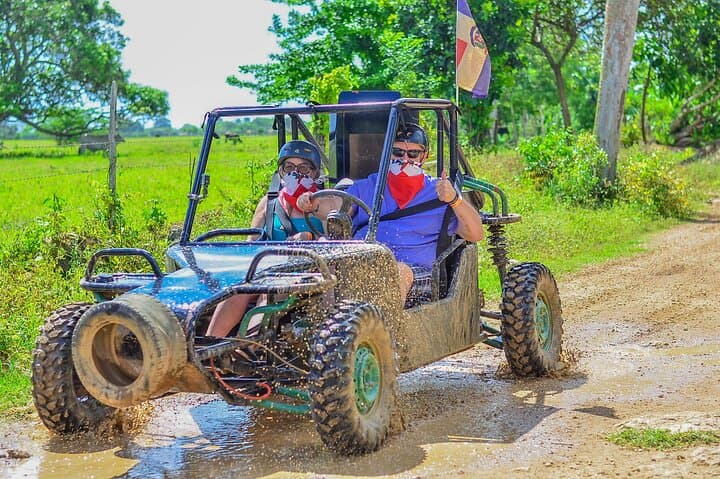
The first thing you notice when the dune buggy spits you out onto Playa Macao is the sound: that wide Caribbean hush punctured by the surf’s percussion. Wind tugs at your sunglasses, sand blooms off the rear tires, and salt hangs in the air with the faint scent of tobacco from a nearby farmer’s field. For four concentrated hours this Viator-run experience hands the wheel to you and the coast to the Atlantic—part playground, part cultural roadside museum, part off-road adrenaline fix.
You start inland, where the land is a patchwork of small farms, palms and scrub. The guide briefs you quickly—safety, hand signals, and the basic line of the route—and then the buggy answers when you do: a nimble two-seater built to chew through sandy tracks and shallow streams. Expect a mix of packed dirt, loose sand, and the occasional river ford that will spray the chassis and your shoes. Speeds spike on open stretches; traction disappears in the soft dunes. It’s a physical kind of fun—the seat vibrates, your hands are busy, and the landscape keeps throwing new challenges at you.
Halfway through the route the route opens to the shore. Playa Macao is one of the most honest beaches near Punta Cana: no sprawling resort façade, just a broad bar of sand, surfers dotted like barnacles in the waves, and a handful of palapa shacks serving fish and cold beer. On a good swell this stretch is consistent for board riders—locals say Macao is the closest reliable break to the resort corridor. The buggy’s tires hiss to a soft stop, and you trade engine roar for wind and surf. The guide points out tide lines and a cove where the current tilts—you’re encouraged to wade or take a sunbreak, but not to underestimate the surf; lifeguards aren’t guaranteed here.
The other highlight is the river cave: a short walk from the parking spot that turns into an amphitheater of limestone and cool, dripping rock. It’s not a spelunking expedition, more a place where river action over millennia carved a shallow chamber you can step into and let the Atlantic breeze chase away the heat. The experience folds in cultural stops too—tastings of Dominican coffee, cacao, and tobacco at small family stands along the way—reminders that this coastline supports a living agriculture and centuries-old craft traditions.
Geologically, this strip of the Dominican Republic is a young, sunbaked collage. Limestone outcrops are interspersed with alluvial flats and coastal sand deposited by longshore currents; over time, water has hollowed pockets that now show as shallow caves and sinkholes. Culturally, you’re in La Altagracia province—home to a small-farm economy where cacao and tobacco are legacy crops. The tour’s brief stops for tasting aren’t just tourist theater; they are entry points into local economies where yield and craft matter to families who’ve worked the land for generations.
Practicalities matter here. The tour runs roughly three to four hours and is marketed as an accessible, family-friendly thrill: you do the driving but your guide sets the route and safety limits. Price starts from about $45. You will get wet and dusty; that’s part of the promise. Helmets and goggles are normally provided, and guides offer basic instruction, but your attentiveness is a key safety item.
What this trip rewards—the thing that keeps people smiling after the dust settles—is contrast. In a handful of hours you’ve gone from dusty interior tracks to a windswept beach, from mechanized thrust to treading barefoot in surf. There’s a rhythm to the day that mimics the coastline itself: push, coast, pause, learn. Whether you’re a first-time rider or you’ve spent summers in ATVs and buggies, this run is satisfying because it’s immediate and varied—part active adventure, part cultural snapshot.
A few honest notes: the ride is not hardcore technical—this isn’t rock-crawling or mountain driving—but soft sand and ruts demand attention. Weather matters: the dry months offer manageable tracks and clearer caves; the wet season can make some stretches slick. Expect to return with sand in every crevice and a camera full of images—your phone or camera should be in a ziplock to protect it from spray.
If you’re planning this as a half-day from Punta Cana, block a morning slot to avoid the hottest part of the day and offshore winds that can whip sand across the beach in the afternoon. Bring cash for small purchases at the tasting stops and leave your best jewelry at the hotel. Finally, treat the visit as both a playground and a place of work for locals—buy a coffee tasting or a cigar from the family stand if you can.
The buggy tour is short on fuss and long on sensory detail. It’s the kind of half-day that reorients you to the Dominican coast: loud, salty, agricultural, and stubbornly real. For travelers who want to mix a little throttle time with culture, beach time, and a damp limestone cavern, it’s a tidy, emphatic dose of why this stretch of the Caribbean still surprises.
Trail wisdom
Small choices, better day.
Protect your electronics
Stow phones and cameras in waterproof cases or ziplocks—sand and spray will find them.
Wear closed-toe shoes
Sandals will fill with sand and won’t protect your feet during river fords or when climbing into the buggy.
Bring cash for tastings
Small stands offering coffee, cacao, and tobacco accept cash—buying supports local families.
Choose a morning slot
Morning runs avoid the midday heat and typically have calmer wind and better driving conditions.
Local knowledge
Read the place, not just the route.
Watch for native species including Brown pelicans, Herons and shorebirds.
Keep an eye out for wildlife during the transition between areas and habitats. Respect distance guidelines.
Stick to marked tracks, avoid driving over dunes, and purchase from local vendors to support small-scale farmers and minimize environmental footprint.
Follow the guide's instructions on size limits, ethical handling, and leave-no-trace practices.
Small family-run cacao and coffee stands along the route where you can sample freshly made local products. A tucked-away palapa at Playa Macao favored by surfers for shade and fresh fish served beachfront
Locally recommended viewpoints and quiet spots known best to local operators.
La Altagracia has long been an agricultural region; cacao, coffee and tobacco have been cultivated here for generations and remain part of local livelihoods.
Maritime roots and regional tradition shape the waterways and working coasts.
Seasonal guide
Four versions of the same landscape.
Spring
Best formilder temps · stable tracks
Challengesoccasional showers · variable surf
Spring (March–May) brings warm, comfortable weather and good driving conditions; brief showers are possible.
Summer
Best forlusher inland scenery · fewer crowds
Challengeshigher humidity · heavier rains possible
Summer is hot and humid, and tropical downpours can make some tracks slick—expect dense foliage and dramatic skies.
Fall
Best forbetter rates · fewer tourists
Challengeshurricane season risk · inconsistent road conditions
Fall can reduce crowds and prices but overlaps with hurricane season—book flexible dates and check forecasts.
Winter
Best fordry, sunny days · clean ocean swell
Challengeshigher tourist volume · earlier bookings required
Winter (Dec–Apr) is peak travel season—dry, stable weather and some of the best conditions for the ride and the beach.
Operator details
What the booking data adds.
Included
- ✓Water
- ✓The transport is shared with other people.
- ✓The pick up is collective.
- ✓The tour is shared with other people.
- ✓Guided dune buggy tour
- ✓Pickup transportation to your hotel
- ✓This is not a private tour
Not included
- —Photos (Available to Purchase)
- —The client must be aware of their belongings, our company is not responsible for lost items.
- —This tour does not include pickup in Verón/Bávaro Pueblo, but we can arrange a nearby meeting point.
- —This tour does not have pick-up in Cap Cana or the airport area, the taxi is at the client's expense
Good to know
- ✓Not recommended for pregnant travelers
- ✓Travelers should have at least a moderate level of physical fitness
- ✓The tour is shared with other people.
- ✓The pick up is collective.
- ✓The transport is shared with other people.
- ✓This is not a private tour
- ✓To drive the buggui you must know how to drive
- ✓This tour does not include pickup in Verón/Bávaro Pueblo, but we can arrange a nearby meeting point.
- ✓This tour does not have pick-up in Cap Cana or the airport area, the taxi is at the client's expense.
Pack with intention
What to bring.
Good to know
Common questions.
The activity runs about 3–4 hours, including driving sections, beach time at Playa Macao, the river cave visit, and short cultural tasting stops.
Plan the edges
The details that make the day easier.
Playa Macao is one of the few public beaches on the east coast near Punta Cana and is known locally for its consistent surf—making it popular among both local and visiting surfers.
After the ride, head to a beachfront palapa at Playa Macao for grilled fresh fish, plantains and a cold Presidente beer. Try local coffee and cacao samples sold by family vendors along the route, and pick up a hand-rolled cigar as a practical souvenir that supports local growers.
- Closest airport
- Punta Cana International Airport (PUJ); Driving distance from most Punta Cana hotels: 25–60 minutes depending on location; Cell service: Generally good but may be limited at remote beach
- cave stops; Permits
- None required for tourists—operator provides vehicle and safety briefing.
Respect coastal dunes and vegetation—stay on designated tracks, avoid littering, and support vendor tastings to contribute directly to local livelihoods.
Explore by topic
Follow the threads.
Keep exploring
Make the story part of the trip.
Set out from Bass Harbor for a private, customizable day on Blue Hill Bay — lighthouses, puffins, seals, and the chance to feel Acadia from the water. Small groups, local captains, unforgettable views.
In four hours you can move from shaded canyon ferns to wind-scoured coastal ridgelines, guided by someone who knows where the light—and the hidden views—live. This private half-day hike on the Monterey Peninsula or Big Sur is compact, curated, and perfect for travelers who want depth without a multiday commitment.
 Related story
Beneath a sky of shifting light, Skaftafell’s ice reads like a map of time. This three-hour guided glacier hike mixes technical instruction with geology and culture: compact, safe, and unforgettable.