
What the day feels like
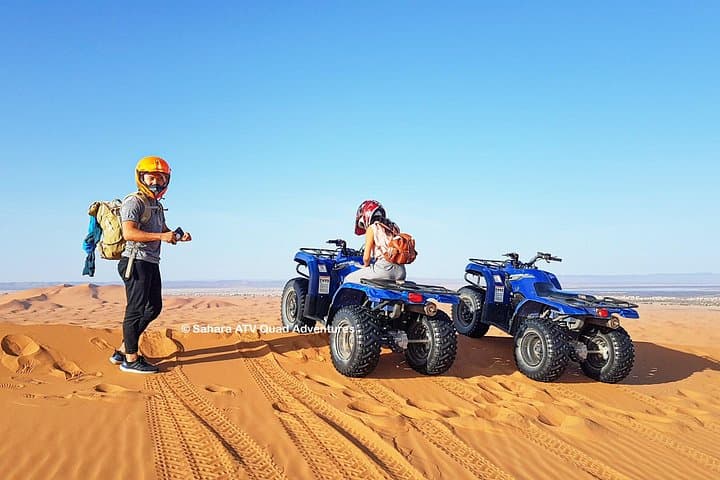
The engine growls, a clean mechanical heartbeat that harmonizes with wind and sand. You lean into the Yamaha 350 as the quad bites into a slope of copper dune and the world opens into a chocolate horizon of wind-sculpted ridges. In one hour you won’t cross the Sahara, but you will understand a piece of it: how the desert reads the sky, how tracks vanish behind you like punctuation, and how a single afternoon of throttle and dust can strip a city week down to its essentials.
Merzouga’s Erg Chebbi is not the endless flat seen in postcards; it is a living, breathing topography of dunes that rise and fall like ocean swells. The Merzouga one hour Quad Bike Adventure Tour centers on nimble, automatic Yamaha 350 4x4 quads—machines built to translate rocky tracks, compacted interdunes, and soft sand into a focused, often playful off-road conversation. The route is flexible by design: guides read conditions and rider experience and sew together a line of ridges, salt flats, and steep faces that test your balance and reward you with towering viewpoints.
This place is both recent and ancient. Geologically, Erg Chebbi is a Saharan erg—an accumulation of wind-transported sand—formed over thousands of years as sediments from dried riverbeds and surrounding plateaus were swept into long, crescent and linear dunes. Historically, Merzouga has been a waypoint on trans-Saharan routes and a meeting ground for Berber communities; today the dunes sit beside small guesthouses and family-run camps where Gnawa rhythms and sweet mint tea mark the end of a desert day.
The cultural imprint is subtle but present. Guides are often local Berbers who grew up on these shelves of sand and know the dunes by gait and shadow. They’ll tell you about the caravan past—how camels navigated by stars and how seasonal flows of travelers shaped trade in salt and spices—and about the fossils picked up around nearby Erfoud, a reminder that this place was once underwater during the Devonian. Listening to these short histories between dunes adds texture: the tour becomes a modern, motorized conversation with a landscape that remembers other climates.
Why book this? For one thing, it’s efficient. If you’ve got a few hours in Merzouga, an hour of guided quad time delivers adrenaline, views, and a tangible sense of the desert’s scale without committing to a multi-day expedition. The Yamaha 350 is forgiving for beginners while satisfying enough for riders who want to test their sand technique—popping a crest, adjusting throttle mid-slide, using body weight for cornering. For photographers the dunes provide high-contrast compositions: sunlit ridges, shadowed gullies, and a sense of scale when riders become small figures against a vast canvas.
Practical nuts and bolts: the experience is private and instant-confirmation, priced from about USD 55.6, using top-of-the-line quads and local guides. Expect dust; you will get dusty. Expect variable terrain: compact tracks bordering the dunes are firm while climbing the faces will reward momentum and smooth throttle control. There’s no formal elevation gain in the hiking sense—the challenge is technical: reading sand and maintaining momentum on soft slopes.
Safety is straightforward but non-negotiable. Helmets, goggles, and an orientation briefing are standard. Wear closed-toe shoes, long sleeves for sun and abrasion protection, and bring water. If you’re new to sand riding, start conservative: learn to shift weight, avoid sudden braking uphill, and follow your guide’s line. The guides set the pace and will scale the route to skill levels—ask for a slower, wider line if you want fewer climbs.
Best time to go is during the shoulder seasons—fall and spring—when temperatures are comfortable for active riding. Early mornings and late afternoons offer the best light and cooler sand, while midday sun is intense and more fatiguing. Bring sunscreen and a small pack for essentials; phones and cameras survive if stowed and secured but be mindful of dust and sand infiltration.
Beyond the hour: Merzouga is a doorway to longer experiences. Stay overnight in a desert camp to hear drum circles under a galaxy-swept sky, or combine a quad ride with a camel trek to feel the difference between machine and beast. If you have time, explore the fossil markets of Erfoud or the palm oases along the Ziz Valley to round out a short but rich Saharan itinerary.
The Merzouga quad hour is not about conquering the desert; it’s about sampling its scale and feeling the wind restructure your sense of speed. It’s loud, immediate, and honest: machines and sand, local knowledge and a landscape that will, in an hour, leave tracks that wind will re-sculpt and forget. That’s the point. The desert keeps its memory but forgets our footprints, and for an hour you get to write across that blank slate with throttle and grin.
Trail wisdom
Small choices, better day.
Book a shoulder-season slot
Temperatures are far more comfortable in fall and spring; mornings and late afternoons offer the best light and cooler sand.
Wear goggles and sealed pockets
Wind will kick up sand—protect eyes and keep electronics in zip-sealed cases or inner pockets.
Start slow if new to sand
Tell your guide you’re a beginner—maintain momentum on climbs and use body weight to steer.
Hydrate before and after
An hour of riding in dry desert air dehydrates quickly—drink water before mounting and after dismounting.
Local knowledge
Read the place, not just the route.
Watch for native species including Desert fox (Fennec), Various desert lizards and migratory birds.
Keep an eye out for wildlife during the transition between areas and habitats. Respect distance guidelines.
The dunes are fragile; follow established tracks, do not litter, and support local operators who practice responsible riding to reduce erosion and habitat disturbance.
Follow the guide's instructions on size limits, ethical handling, and leave-no-trace practices.
Climb a nearby dune at sunrise for panoramic light with fewer tourists. Visit fossil workshops around Erfoud to see Devonian sea fossils and lapidary artisans
Locally recommended viewpoints and quiet spots known best to local operators.
Merzouga sits on former trans-Saharan caravan routes and close to Erfoud, a town known for extensive fossil finds that point to the region’s ancient marine past.
Maritime roots and regional tradition shape the waterways and working coasts.
Seasonal guide
Four versions of the same landscape.
Spring
Best forMild temperatures · Wildflower blooms nearby · Longer daylight for photography
ChallengesOccasional strong winds · Cool mornings
Spring brings comfortable riding temperatures and good light for photos, though wind can whip up sand in the afternoons.
Summer
Best forClear skies · Long daylight hours
ChallengesVery high temperatures · Risk of heat fatigue
Midday heat can be intense—plan morning or late-afternoon rides and carry extra water.
Fall
Best forIdeal temperatures · Sunset rides · Comfortable nights for camping
ChallengesOccasional seasonal winds
Fall is the sweet spot—cooler days and dramatic evenings make for the most comfortable rides.
Winter
Best forCool riding conditions · Stargazing at night
ChallengesCold mornings, especially after sunset · Possible chilly winds
Winter mornings can be crisp; layer up and expect cold nights if you’re staying in desert camps.
Operator details
What the booking data adds.
Included
- ✓Live entertainment
- ✓Use of quad
- ✓Hotel pick-up and drop-off (if option selected)
- ✓Use of helmet
- ✓All activities
Not included
- —Drinks
- —Food and drinks
Good to know
- ✓Service animals allowed
- ✓Public transportation options are available nearby
- ✓Specialized infant seats are available
- ✓Not recommended for travelers with spinal injuries
- ✓Not recommended for pregnant travelers
- ✓Not recommended for travelers with poor cardiovascular health
- ✓Suitable for all physical fitness levels
- ✓May be operated by a multi-lingual guide
- ✓Operates in all weather conditions, please dress appropriately
- ✓Passport name, number, expiry and country is required at time of booking for all participants
- ✓Seats are assigned by the theater box office and will not be known in advance of the performance date
Pack with intention
What to bring.
Good to know
Common questions.
No—guides provide a safety briefing and will tailor the route to your skill level; beginners are welcome but should communicate comfort levels.
Plan the edges
The details that make the day easier.
Erg Chebbi’s dunes can reach heights of up to about 150 meters (roughly 492 feet), making them among Morocco’s tallest and most dramatic sand formations.
After your ride, share mint tea and a tagine at a local guesthouse or desert camp where Berber hosts offer live Gnawa or Amazigh music; try a roadside camel-cooked flatbread and look for handcrafted silver and leather goods in local stalls.
- Closest airport
- Errachidia (ERH) or fly into Errachidia
- Marrakech and drive; Driving distance from Merzouga center
- usually 10–20 minutes to dune access; Cell service: intermittent—some coverage near towns, limited in remote dune areas; Permits: none required for standard tourist quad tours; operator provides helmet and briefing.
Riding disturbs a delicate dune surface—stay on designated routes, avoid loud off-route driving, support local operators who minimize ecological impact, and pack out all trash.
Explore by topic
Follow the threads.
Keep exploring
Make the story part of the trip.
In four hours you can move from shaded canyon ferns to wind-scoured coastal ridgelines, guided by someone who knows where the light—and the hidden views—live. This private half-day hike on the Monterey Peninsula or Big Sur is compact, curated, and perfect for travelers who want depth without a multiday commitment.
 Related story
Beneath a sky of shifting light, Skaftafell’s ice reads like a map of time. This three-hour guided glacier hike mixes technical instruction with geology and culture: compact, safe, and unforgettable.
 Related story
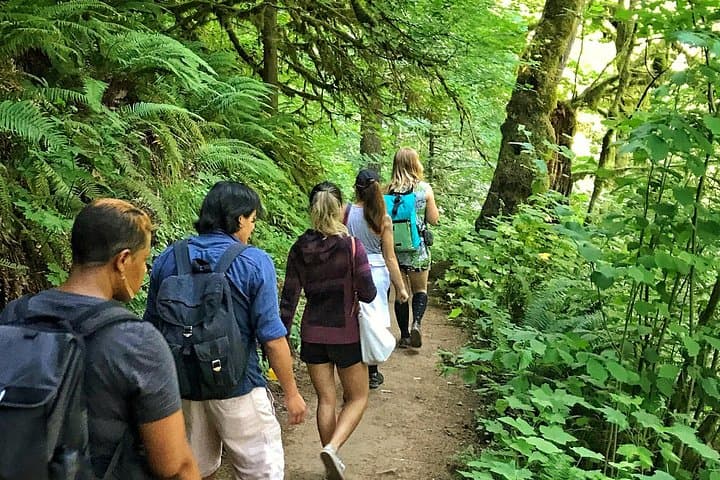
Lose the city for a few hours without leaving it: this 5-mile, 900-foot-gain Forest Park loop threads old-growth pockets, city viewpoints, and cultural landmarks for a compact taste of Portland’s wild side. Expect moss, roots, and stories.