
What the day feels like
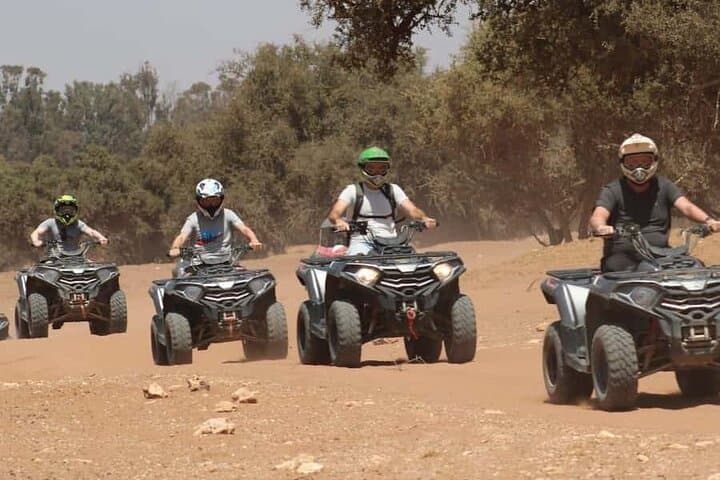
The engine coughs to life like a nervous animal, then settles into a steady, throaty hum beneath your seat. Dust lifts in slow ribbons from the track and the Atlantic wind—salt-sweet and insistent—presses at your cheeks. Ahead, a low spine of dunes rolls into the mid-distance, their crests catching late-morning light in pale bands. Behind the last coastal scrub, argan trees squat like sentinels; their twisted limbs and glints of green seem to nod at your passing. For the next two to three hours, you and the quad are in conversation with the landscape: a negotiation of throttle, line choice, and the occasional, unavoidable grin.
This is Agadir, but not the city with its manicured beach promenade. The quad route slips into the region’s margins—where the Atlantic cliffs drop away into sandy, wind-swept plains and where small Berber settlements sit quietly among argan groves. The ride itself is straightforward: guided, accessible, and built to thrill without demanding a technical skillset. Expect 2–3 hours of riding across mixed terrain—hard-packed coastal tracks, argan-studded dirt roads, and short stretches of soft sand where the vehicle leans and the dunes dare you to push harder.
The Berber tea break feels like a cultural punctuation: a low tent, the ritual of steeping green tea with mint and sugar, and the warm, dry hospitality of the people who have lived off this land for generations. Tea is offered as a sign of welcome and a reminder that this place has its own rhythm, one measured by tides, harvests, and the slow resilience of argan trees.
Geology and ecology collide here. The sands under your wheels are young, having been shifted by wind and water over millennia. Argan (Argania spinosa) trees—endemic to southwest Morocco—dot the landscape and form a unique ecosystem recognized by UNESCO as a biosphere reserve. Their gnarled roots stabilize the soil; their fruit supports local cooperative economies that press oil still prized worldwide. Driving through these patches feels like moving through living history: a landscape shaped as much by human adaptation as by weather.
Culturally, the excursion is compact but meaningful. Local guides—typically from the region—introduce riders to the mechanics of the machines, teach desert-aware driving lines, and translate the gestures and stories offered during the tea stop. The Berber hospitality at the tent is the highlight: a simple ceremony that connects you with culinary tradition and with a root-deep hospitality that has weathered colonial shifts and modern tourism alike.
Practically: this is a short, high-adrenaline outing. The tour runs about 120–180 minutes with convenient meeting points in Agadir and optional hotel pickup. Pricing starts at roughly $37.26 per person (USD) for the standard package, and with a stellar average review score—4.96 from 25 reviewers—you’re riding a well-liked product. The tour offers instant confirmation, free cancellation, and private-tour options for those who want a more tailored, intimate experience.
Skill and fitness demands are modest: riders should be comfortable on a single-rider ATV and able to control the throttle and brakes for a couple of hours at moderate pace. Riders as young as mid-teens can often join (confirm exact age restrictions with the operator), and no formal license is usually required—though a basic briefing and safety equipment are standard.
Tips from the trail: choose a mid-morning or late-afternoon slot to avoid the hottest part of the day, bring eye protection against wind and dust, and keep a small pack of water and sunscreen within easy reach. If you want better photos, ask your guide for short, scenic stops—those argan groves and the dune ridgelines make excellent backdrops.
Why go? The combo of hands-on riding, quick immersion in Berber hospitality, and the chance to see coastal desert and argan forest in a single outing is rare and efficient—perfect for travelers with limited time in Agadir. It scratches the itch for speed without sacrificing context: the tea ceremony keeps the trip grounded in local life rather than turning it into pure spectacle.
For planning: confirm hotel pickup if you want convenience, ask about group sizes (private tours are available), and check weather—strong onshore winds can change how the dunes ride. Respect the land: remain on designated tracks, don’t disturb argan trees or livestock, and support local cooperatives by buying argan oil or crafts if the chance arises.
The ride ends the way it began: with dust on your clothes and a quiet sense that the landscape has shifted you a bit—no dramatic summits, just a small recalibration of speed and silence. You return to Agadir with a story that mixes engine notes and mint-scented steam, a simple souvenir of time spent at the edge of the Atlantic and in the company of deep-rooted tradition.
Trail wisdom
Small choices, better day.
Time your ride
Book mid-morning or late afternoon to avoid peak heat and harsh midday light.
Protect your eyes
Bring goggles or wraparound sunglasses to guard against wind-blown sand.
Layer up
Light windproof layers are useful—the coast can be cool in the shade and brisk when moving fast.
Hydration matters
Carry a hydration pack or water bottle—chairs in the Berber tent are a rest, not a substitute for water.
Local knowledge
Read the place, not just the route.
Watch for native species including Barbary ground squirrels, Various shore and migratory birds.
Keep an eye out for wildlife during the transition between areas and habitats. Respect distance guidelines.
Respect the argan groves by staying on designated tracks; support local cooperatives rather than buying unverified products to ensure sustainable livelihoods.
Follow the guide's instructions on size limits, ethical handling, and leave-no-trace practices.
Small argan cooperatives where you can sample and buy local-pressed argan oil. Coastal viewpoints near low dunes for unobstructed sunset views
Locally recommended viewpoints and quiet spots known best to local operators.
The argan woodland and the people of southwest Morocco have adapted to semi-arid conditions for centuries; argan oil production has been a key local industry.
Maritime roots and regional tradition shape the waterways and working coasts.
Seasonal guide
Four versions of the same landscape.
Spring
Best formild riding temperatures · wildflower accents in argan groves
Challengeswindier days in March · occasional rain early season
Spring offers comfortable temps and green accents among the argan trees—expect occasional gusts and cool mornings.
Summer
Best forlong daylight hours · combined beach and quad day trips
Challengeshigh daytime heat · harsher sun and dust
Summer can be hot; schedule rides for morning or late afternoon to avoid peak heat and bring extra water.
Fall
Best forstable weather · ideal temperatures for riding
Challengesincreased tourist numbers in October · sporadic coastal winds
Fall—especially October—is often the sweetest window: warm but not oppressive, with steady conditions for riding.
Winter
Best forcooler rides · combined cultural experiences
Challengeschillier mornings · shorter daylight hours
Winter rides are cooler and very comfortable mid-day; layers help for brisk mornings and chilly sea breezes.
Operator details
What the booking data adds.
Included
- ✓Moroccan mint tea and sweets
- ✓Local guide
- ✓Quad bike ride
- ✓Bottled water
- ✓Berber tent experience
- ✓Pickup and drop-off at designated locations in Agadir
- ✓Helmet and safety equipment
- ✓Camel ride
Not included
- —Personal expenses
Good to know
- ✓Public transportation options are available nearby
- ✓Not recommended for travelers with spinal injuries
- ✓Not recommended for pregnant travelers
- ✓Suitable for all physical fitness levels
Pack with intention
What to bring.
Good to know
Common questions.
Most operators do not require an international driving license for standard quad tours, but you must be able to follow safety briefings and ride responsibly; always confirm local age and ID requirements when booking.
Plan the edges
The details that make the day easier.
Argania spinosa, the argan tree, is endemic to southwest Morocco and the argan forest was designated a UNESCO Biosphere Reserve for its ecological and cultural importance.
After the ride, head into Agadir’s port quarter for fresh grilled sardines or to the Souk El Had for a tajine and mint tea; look for small shops selling artisan-pressed argan oil from local women’s cooperatives.
- Closest airport
- Agadir–Al Massira (AGA); Typical drive from Agadir city center to meeting point: 20–45 minutes depending on pickup; Cell service: generally available near roads, patchy in dunes; Permits: none required for tourist ATV tours, but always book with licensed operators.
Stay on designated tracks, avoid disturbing vegetation or livestock, and purchase argan oil from certified local cooperatives to support sustainable land use and community incomes.
Explore by topic
Follow the threads.
Keep exploring
Make the story part of the trip.
 Related story
Less than two hours from Nairobi, Kereita Forest pairs hands-on canopy adventure with quiet montane trails and a sobering colonial history—perfect for families, teams, and curious travelers seeking a full-day pulse of nature.
Set out from Bass Harbor for a private, customizable day on Blue Hill Bay — lighthouses, puffins, seals, and the chance to feel Acadia from the water. Small groups, local captains, unforgettable views.
In four hours you can move from shaded canyon ferns to wind-scoured coastal ridgelines, guided by someone who knows where the light—and the hidden views—live. This private half-day hike on the Monterey Peninsula or Big Sur is compact, curated, and perfect for travelers who want depth without a multiday commitment.