
What the day feels like
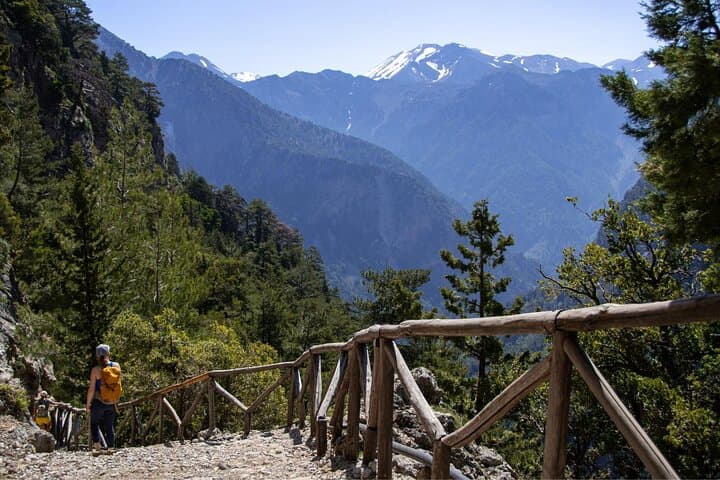
You leave Rethymno before sunrise in a small bus of fellow walkers, tires crunching on gravel as the island light leans gold. By the time the village of Imbros slides into view, the valley already smells of sage and sun-warmed rock. The gorge opens like a throat in the limestone—narrow at first, with the trail threaded between walls of stone that seem to lean toward you, then widening into sunlit terraces that hint at the sea ahead. The passage is steady and intimate: boots on dusty earth, the occasional clack of heels on limestone, pine needles falling like punctuation.
Imbros is short but concentrated—an 8-kilometer cut through Crete’s southern flank that most hikers finish in about three hours if they keep a brisk pace. It’s the island’s quieter cousin to Samaria, not as dramatic but more immediate: an everyday gorge you can walk without permits and with the chance to finish your effort in the briny blue of Frangokastello’s shoreline. On this tour you get the full arc of Cretan terrain—shaded canyon, scrubby plateau, coastal plain—and a proper dose of local character: the village of Imbros, a fortress on the sea, and tavernas that serve raki as though it were a state beverage.
Geologically, Imbros is a limestone incision carved by millennia of water and weather. The walls keep a muted palette of cream and ochre, stripped down to essential rock. Where the passage opens, you’ll notice terraces and old shepherd trails: human adjustments to a landscape shaped by glacial cycles, sea-level shifts, and long human occupation. Frangokastello, the day’s endpoint, is home to the 14th-century Venetian fortress that stands guard over a narrow crescent of sand—its squat silhouette a reminder that this coast has been contested and occupied for centuries, from Venetians to Turks to Cretans defending their land.
Culturally, this route stitches together two rhythms: the mountain’s measured pace and the coast’s looser cadence. In Imbros, shepherds and olive growers still tend stone terraces; at Frangokastello, fishermen mend nets and families stretch out on the sand. After the hike, the sea is a deliberate punctuation—a way to cool, to reset, to reward kilometers of walking.
Why go? Because the day balances challenge with comfort. The hike itself is satisfying but not extreme: varied terrain, close-up geology, pockets of shade and dramatic light. The payoff is a wide, shallow bay where you can swim, laze, and eat—often together with locals who’ve done the same sequence for generations. For travelers who want a single-day immersion into Crete’s interior and coast, this is a tidy, gratifying package: outdoors, history, and a genuinely restorative swim.
Practicalities matter here. The gorge is roughly 8 km and most hikers finish it in about three hours; the full excursion lasts a full day (the operator schedules about 8–9 hours including transfers and a couple of free hours at Frangokastello). Footwear that grips and ankle support are non-negotiable—expect limestone slabs, loose scree, and steps carved into stone. Water matters: bring at least 1.5–2 liters for the walk, more if it’s summer heat. Timing helps, too: go in spring or early fall for cooler hiking and clear water, or late summer if your priority is a warm sea.
For planning: the tour departs from Rethymno and includes vehicle transfers; cell service drops in and out inside the gorge; there’s no need for permits or specialized guiding beyond a knowledgeable local operator. Respect the land—stay on the trail, carry out trash, and leave terraces and ruins untouched. Your presence supports small businesses along the route: local drivers, tavernas, and occasional shepherd-guides who orient visitors to this stretch of Crete.
On the ground, the rhythm of the day is simple. Start early, move steady through the gorge, and let the pace of the landscape set your cadence. Pause where the canyon frames the light. At the exit, take time at the cliffs’ edge to read the sea’s angle and the shelter of Frangokastello’s bay. There are wide, sandy pockets for sun and a handful of tavernas within walking distance where you can eat grilled fish, dakos salad, and a slow afternoon of Cretan hospitality paired with local wine. After the swim and a long lunch, the drive back to Rethymno gives you time to fold the day into memory: salt drying on shoulders, dust on shirt, a clearer sense of why Crete lives comfortably at the intersection of high stone and open water.
If you want an authentic single-day Crete: take Imbros. It’s not about being the island’s tallest achievement; it’s the compactness of experience—good hiking, quieter trails, and an easy plunge into the sea. The gorge dares you forward with narrow passages and manages to release you into a modest Venetian watchtower and a beach that feels like a reward you earned with each step.
Trail wisdom
Small choices, better day.
Start Early
Begin in the morning to avoid peak sun on exposed sections and to secure a shaded spot at Frangokastello for your post-hike swim.
Bring Enough Water
Carry 1.5–2 liters for the hike and plan to top up or buy drinks at Frangokastello after the descent.
Wear Grippy Shoes
Sturdy hiking shoes with good tread and ankle support handle limestone slabs and loose scree better than trainers.
Pace for Terrain
The trail includes narrow, rocky stretches—move deliberately and give way in tight spots to maintain steady progress.
Local knowledge
Read the place, not just the route.
Watch for native species including Kri-kri (wild Cretan goat) sightings on higher terraces, Various lizards and raptors like kestrels over the gorge.
Keep an eye out for wildlife during the transition between areas and habitats. Respect distance guidelines.
Stick to established trails to protect fragile terraces and native scrub; local communities rely on sustainable tourism to preserve these landscapes.
Follow the guide's instructions on size limits, ethical handling, and leave-no-trace practices.
A short side path near the middle of the gorge opens onto a quiet rock amphitheater ideal for a shaded break. Early-morning light on the fortress walls at Frangokastello makes for excellent low-crowd photography and a peaceful stroll
Locally recommended viewpoints and quiet spots known best to local operators.
Frangokastello’s fortress was built by the Venetians in the 14th century to control the south coast and still anchors local legends and annual commemorations.
Maritime roots and regional tradition shape the waterways and working coasts.
Seasonal guide
Four versions of the same landscape.
Spring
Best forWildflowers · Cool hiking temperatures · Clear sea before crowds
ChallengesOccasional rain · Loose footing after winter runoff
Spring offers mild temperatures and blossoming hillsides—ideal for hiking, though bring a lightweight rain layer for surprise showers.
Summer
Best forWarm sea swims · Long daylight · Beach time
ChallengesHigh heat midday · Strong sun exposure · Crowds at the beach
Summer guarantees swimming weather but start early to avoid the hottest hours and carry extra water and sun protection.
Fall
Best forWarm sea in early fall · Fewer crowds · Stable weather
ChallengesShortening days · Cooler evenings
Autumn combines pleasant hiking temperatures and warm water, especially September; ideal for pairing trail and swim.
Winter
Best forQuiet trails · Green landscapes after rain
ChallengesPossible rain and trail muddiness · Cool sea temperatures
Winter is quiet and green but can be wet; dress in layers and expect limited swimming opportunities.
Operator details
What the booking data adds.
Included
- ✓Air-conditioned vehicle
Not included
- —Imbros entrance
Good to know
- ✓Not recommended for travelers with spinal injuries
- ✓Not recommended for pregnant travelers
- ✓Not recommended for travelers with poor cardiovascular health
- ✓Travelers should have at least a moderate level of physical fitness
- ✓its not recommented without suitable shoes
Pack with intention
What to bring.
Good to know
Common questions.
The gorge is approximately 8 km and most hikers complete the walk in about three hours at a steady pace.
Plan the edges
The details that make the day easier.
Imbros Gorge is approximately 8 km long and is often described as Crete’s second-major gorge after Samaria, offering a shorter, more accessible canyon hike that finishes at the south coast.
After the hike, head to Frangokastello’s seafront tavernas for grilled fish, dakos, and a cooling raki; back in Rethymno, the Old Town’s Venetian harbor and narrow alleys are ideal for a post-hike dinner and local beer.
- Closest airport
- Heraklion (HER) or Chania (CHQ); Typical departure: Rethymno (tour includes transfers); Driving distance: ~1–1.5 hours depending on pick-up; Cell service: intermittent in the gorge; Permits: none required.
This route passes through delicate terraces and coastal habitats—pack out all waste, avoid disturbing wildlife, and support local eateries that source regional ingredients.
Explore by topic
Follow the threads.
Keep exploring
Make the story part of the trip.
Set out from Bass Harbor for a private, customizable day on Blue Hill Bay — lighthouses, puffins, seals, and the chance to feel Acadia from the water. Small groups, local captains, unforgettable views.
In four hours you can move from shaded canyon ferns to wind-scoured coastal ridgelines, guided by someone who knows where the light—and the hidden views—live. This private half-day hike on the Monterey Peninsula or Big Sur is compact, curated, and perfect for travelers who want depth without a multiday commitment.
 Related story
Beneath a sky of shifting light, Skaftafell’s ice reads like a map of time. This three-hour guided glacier hike mixes technical instruction with geology and culture: compact, safe, and unforgettable.