
What the day feels like
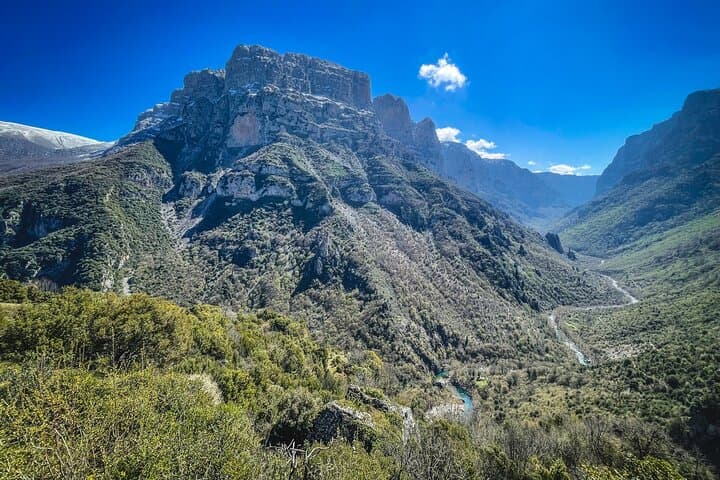
You start above the rim before dawn, when the valley is a black seam and the first light paints the limestone white. A single path threads away from the village, and the air smells like wet stone and mountain tea. Beneath you, the gorge yawns, a stitched ribbon of shadow and glinting water. The Voidomatis River—cold as rainwater and clear enough to see the riverbed—hurries along inside that seam, daring you to follow.
Vikos Gorge is not merely a scenic notch in the earth; it is a geologic argument rendered in rock and water. Carved over millions of years by meltwater and erosion, Vikos slices into the Pindus range with walls that reach close to 900 meters at their deepest. It sits inside the Vikos–Aoös National Park, a protected pocket of Epirus where limestone cliffs, alpine meadows, and ancient villages form a landscape that feels stubbornly old and surprisingly intimate. Local villages such as Papingo and Monodendri lean into the gorge like watchful sentinels—white houses with red-tile roofs, narrow alleys, and tavernas that still pull smoked trout from the Voidomatis.
This particular day hike—often offered as a full-day guided experience lasting about seven hours—pulls together everything that makes Zagori special: a steady dose of cardio, some exposed descents, and repeat rewards in the form of sudden viewpoints. Expect to cover roughly 10–12 kilometers on trails that alternate between packed dirt, loose scree, and stone steps hewn by villagers centuries ago. Total elevation gain is route-dependent but commonly ranges between 600–800 meters for the out-and-back or loop options used by local guides. The trail moves from ridge to rim to river and back, so you’ll feel the landscape’s verticality as much as you’ll see it.
Geology fans will notice the limestone’s striations—records of ancient seabeds lifted and folded by tectonic force. Botanists will appreciate the microclimates: shady canyon walls nurture mosses and ferns; sunny ledges host thyme and oregano that scent the air when crushed. Culturally, the gorge has been part of village life for centuries: shepherds and stone-masons refined the dry-stone bridges and mule tracks that still connect settlements. The geology shaped the people as much as the people shaped the trails.
The Voidomatis is a personality in its own right. It runs fast, turquoise and obstinate; in spring it swells with snowmelt and roars, and by mid-summer it settles into eddies that beg for a quick wade. Local guides emphasize respect: the water is supremely clear but startlingly cold—brisk swims are thrilling but brief. In late spring and summer, guided rafting and light paddling are common lower in the valley where the current softens.
Why go? Because Vikos is compact in its drama. In a single day you descend from village terraces into a world cut deep into stone, you pass pools where the river pauses like a secret, and you climb back out to a panoramic finale where the canyon opens like a theater. The walk is simultaneously accessible and elemental—enough challenge to feel earned, enough comfort to welcome capable newcomers.
Practical bones: set aside a full day (the typical guided tour is around seven hours). Wear sturdy hiking shoes with good traction; the trail includes loose scree and occasional wet rock. Bring two liters of water per person in summer, high-energy snacks, and a windproof shell—the canyon can channel cool drafts even when the day is hot. Start early to avoid midday heat and to have the best light for photography; late afternoon offers softer, more flattering tones on the limestone.
If you’re going with a guide (recommended for first-timers), you’ll gain local context—natural history, the safest route choices, and likely a stop at a village taverna for lunch or post-hike refreshments. If you go solo, the marked trails are generally clear but remain cautious on cliff-edge sections and in the gorge bottom where river crossings or wet steps can be slippery.
Conservation matters here: Vikos–Aoös is protected, and the canyon’s ecosystems are fragile. Stick to established trails, avoid trampling plant communities on ledges, and pack out everything you bring in. Waste from careless visitors concentrates quickly in clamp-like valleys; the best visitors leave the place better than they found it.
Where to end the day: the small tavernas in Papingo and Monodendri specialize in Epirus comfort food—pies (pites) stuffed with local greens and cheeses, grilled meats, and trout from the Voidomatis. A beer or a glass of tsipouro tastes particularly good after a long descent.
For active travelers who want a day that blends physical challenge, sweeping scenery, and cultural texture, a hike in Vikos Gorge is an efficient and memorable choice. It asks for reasonable fitness, proper footwear, and a curiosity about the land; in return it gives hours of shifting light, a river that seems to move with intent, and the rare satisfaction of having walked into a place that feels as old as it looks and as immediate as the next step.
Trail wisdom
Small choices, better day.
Start early
Morning light softens the limestone and temperatures are cooler for the steep descents and ascents.
Layer for wind and shade
Temperatures can swing between warm ridges and cool canyon bottoms—bring a lightweight windproof layer.
Respect the river
Voidomatis water is clean but icy—limit swims and avoid wading near swift currents.
Footwear matters
Choose shoes with sticky rubber and ankle support; stone steps and scree demand traction.
Local knowledge
Read the place, not just the route.
Watch for native species including Chamois, Golden eagles.
Keep an eye out for wildlife during the transition between areas and habitats. Respect distance guidelines.
Vikos–Aoös is a protected national park; visitor numbers are limited by access and local stewardship—stick to trails and pack out waste to protect fragile canyon ecosystems.
Follow the guide's instructions on size limits, ethical handling, and leave-no-trace practices.
Oxia viewpoint for a less crowded panoramic lookout. The small chapels and stone bridges near Monodendri that are often skipped by day-trippers
Locally recommended viewpoints and quiet spots known best to local operators.
The Zagori villages around Vikos were long-time centers of pastoral life and stone-craft—many of the paths are former mule tracks linking communities for trade and grazing.
Maritime roots and regional tradition shape the waterways and working coasts.
Seasonal guide
Four versions of the same landscape.
Spring
Best forWildflowers · High river flow · Cool hiking temperatures
ChallengesUnpredictable rain · Swollen river crossings
Spring brings snowmelt and torrents in the Voidomatis—great for dramatic water levels and flowers, but expect muddy or slick sections.
Summer
Best forWarm weather · Wild swimming · Long daylight
ChallengesHigh sun exposure on ridges · Crowds on popular trailheads
Summer offers the warmest window for dips in the river and reliable hiking conditions; stay hydrated and avoid midday heat.
Fall
Best forAutumn color · Cool hiking weather · Fewer visitors
ChallengesShortening daylight · Cooler water temperatures
Fall is ideal for cooler, crisper hiking and golden light; bring warmer layers for river-side stops.
Winter
Best forSnow-covered vistas · Dramatic skies
ChallengesSnow/ice on trails · Limited services in villages
Winter turns the gorge stark and quiet—only attempt with winter gear and local guidance, and be prepared for reduced services.
Operator details
What the booking data adds.
Included
- ✓Waterproof poncho jacket for the rainy days
- ✓All necessary local transfers for the operation of the activity
- ✓Personal first aid box
- ✓Liability insurance
- ✓All Fees and Taxes
- ✓Greek traditional picnic lunch
- ✓Hiking poles
- ✓English-speaking certified guide
Not included
- —Personal accident insurance
- —Tips and gratuities
Good to know
- ✓Not recommended for travelers with spinal injuries
- ✓Not recommended for travelers with poor cardiovascular health
- ✓Not recommended for pregnant travelers
- ✓Travelers should have at least a moderate level of physical fitness
- ✓Children must be accompanied by an adult
- ✓Minimum participant age is 12 years
Pack with intention
What to bring.
Good to know
Common questions.
Guided full-day itineraries commonly last about seven hours; typical routing covers roughly 10–12 kilometers depending on the trail options chosen.
Plan the edges
The details that make the day easier.
Vikos Gorge is listed in the Guinness Book of Records for being one of the deepest gorges in the world relative to its width and is part of the Vikos–Aoös National Park.
After the hike, eat at a village taverna in Papingo or Monodendri—try local pies (pites), grilled trout from the Voidomatis, and a glass of tsipouro; for nightlife and wider choices, return to Ioannina for lakeside cafes and bars.
- Closest airport
- Ioannina Ioannina National Airport (IOA); Driving distance from Ioannina: ~60–90 km
- 1.25–1.75 hours depending on route; Trailhead access
- Papingo or Monodendri parking areas; Cell service: intermittent in the gorge; Permits: none required for day hikes.
Vikos–Aoös is protected—stay on marked trails, pack out all trash, don’t disturb riverbanks or vegetation, and support local businesses and guides who practice low-impact tourism.
Explore by topic
Follow the threads.
Keep exploring
Make the story part of the trip.
Set out from Bass Harbor for a private, customizable day on Blue Hill Bay — lighthouses, puffins, seals, and the chance to feel Acadia from the water. Small groups, local captains, unforgettable views.
In four hours you can move from shaded canyon ferns to wind-scoured coastal ridgelines, guided by someone who knows where the light—and the hidden views—live. This private half-day hike on the Monterey Peninsula or Big Sur is compact, curated, and perfect for travelers who want depth without a multiday commitment.
 Related story
Beneath a sky of shifting light, Skaftafell’s ice reads like a map of time. This three-hour guided glacier hike mixes technical instruction with geology and culture: compact, safe, and unforgettable.