
What the day feels like
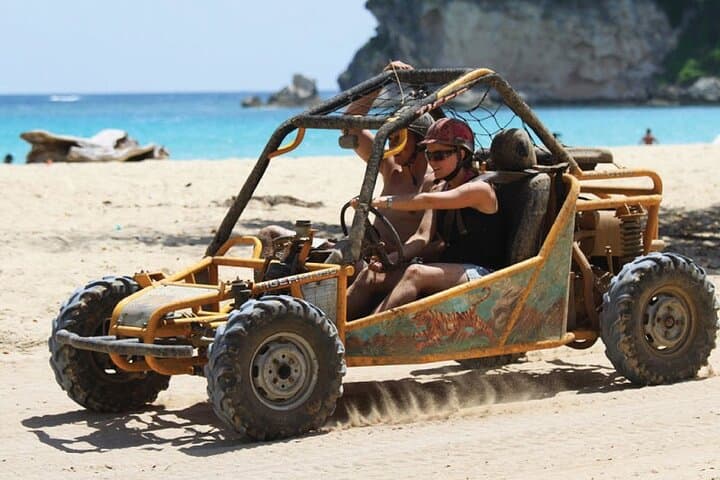
The first taste of dust comes before the ocean. You climb into a low-slung hunting buggy with the motor humming beneath you, and the road unspools as a rutted ribbon of coral sand and scrub. Palm trunks flash by in rhythm, a rooster somewhere starts its day, and the driver nudges the throttle—there’s a purposeful lift in the buggy that feels like acceleration into another pace of life. By the time the resort high-rises drop out of view, you’re not just outside the gates of Punta Cana; you’re inside a version of the Dominican Republic where every turn brings something honest: a village square, a family-run cocoa drying rack, a cave entrance with an old Taino name.
This half-day tour—roughly 200 minutes from pickup to drop-off—packs contradiction in a fun, approachable way. It’s part thrill-ride and part rural cultural exchange. The route threads the small community of La Seiba del Salao, where you’ll step from the buggy into a house that opens like a living museum: beans drying on racks, a ceramic pot of hot coffee, and a demonstration of cocoa turning into chocolate the old way. You’ll taste manajuana—a Dominican herbal spirit—swapped with a friendly local who talks about storms and harvests and which crops survived the last season. Then you swing through limestone country to Macao Cave, an inland cenote folded into the bedrock, cool blue water cradled by dripping stalactites. The cave feels intentional, intimate—a place the island’s earliest inhabitants used as refuge and ritual. A swim here is short and bracing: the water is cooler, the light filtered, the sound of dripping rock surprisingly loud after the buggy’s motor.
From there the tour ends the emotional arc on Macao Beach: a public, washed-white curve of sand bordered by leaning palms and the Atlantic. The break offers 15–30 minutes to roll in the surf, take postcard pictures beneath leaning coconut trees, or stand on the sand with salt drying on your skin and watch local surfers carve lines when the swell cooperates. The whole experience folds together geology, colonial and pre-colonial history, and local foodways in a way that’s immediate and tactile.
Geologically, this stretch of eastern Hispaniola is young coral-and-limestone at the mercy of the Atlantic. The seams and caves are the slow work of rain and rock; the cenotes you visit are essentially collapsed limestone chambers where groundwater pooled and the Tainos—who inhabited these shores long before Columbus—found freshwater and sacred spaces. Culturally, the tour’s village stop is a reminder that Punta Cana is not only a strip of all-inclusives. La Seiba del Salao’s thirty-odd houses represent a living economy: farmers who still dry coffee and farmers who still barter labor, all within an easy buggy drive of 21st-century tourism.
Practicalities matter here in a way they often don’t in glossy travel copy. There’s no real elevation to speak of—this is coastal, near sea level—so the exertion comes from the elements, not the trail. Expect bumpy, dusty tracks and tight, short bursts of speed on the open stretches. The tour is family-friendly; children can ride but should be securely belted and comfortable with open vehicles. The operator provides helmets and safety orientation, but if you’re prone to motion sickness, choose a middle-seat and communicate with your guide before you go.
Why would someone pick this over a beach catamaran or an inland hike? Because it’s a compact way to get multiple kinds of travel payoff in one morning: social connection, an archaeological sweet spot, a cool cave dip, and then a beach stop—plus the sheer grin of off-road driving. At about $45 per person with instant confirmation and free cancellation, it’s also a relatively low-risk way to leave the resort and see more of the island’s human scale.
Timing and logistics are simple enough. Morning departures are best: the light is better for photographs, the air is cooler, and village life is in motion—people on porches, coffee steaming. Bring closed-toe shoes for the uneven cave floor and flip-flops for the beach. A waterproof phone pouch keeps your camera dry on the buggy and makes the cave-and-beach seconds safe. Hydrate before you go; even in the shade of the cave, the Caribbean sun is persistent.
Be mindful of how you interact in the village. This isn’t a staged set; these are homes and livelihoods. Ask before photographing inside houses, and buy a small bag of cocoa or a handmade trinket if you can. Environmentally, stick to marked areas on the beach, avoid taking shells, and don’t touch coral if you chance upon shallow reefs while swimming. Small behaviors preserve the very authenticity that makes the tour meaningful.
If you want a quick, transportive way to add texture to a Punta Cana vacation, the buggy loop is a good bet. It doesn’t pretend to be the island’s deepest cultural excavation, but it is honest, lively, and practical: a morning that puts you in direct contact with land, labor, and limestone, all while delivering a few high-speed, salt-wind moments you won’t forget.
What to know before you go: expect a mix of comfort and grit, pack smart, and go curious. Whether you linger over a cup of village coffee or turn your face to the surf at Macao Beach, this is a small, efficient reminder of why travel—when it’s done with attention—still has the power to rearrange what you notice about a place.
Trail wisdom
Small choices, better day.
Hydrate Before You Board
Bring a full water bottle—the dry dust and sun from the buggy make you thirstier than you expect.
Closed-Toe Shoes for the Cave
Wear sturdy sandals or trainers for the uneven, wet cave floor and switch to flip-flops for the beach stop.
Protect Your Phone
Use a waterproof pouch or case for the buggy’s dust and the beach’s spray—phones get dusty fast inside open vehicles.
Be Respectful in Villages
Ask before photographing inside homes and consider buying a small local product to support the community.
Local knowledge
Read the place, not just the route.
Watch for native species including Brown pelicans and frigatebirds hunting offshore, Occasional sea turtle tracks on Macao Beach during nesting season.
Keep an eye out for wildlife during the transition between areas and habitats. Respect distance guidelines.
Support village economies by buying small goods and avoid removing shells or coral; coastal erosion and litter are local concerns—pack out what you pack in.
Follow the guide's instructions on size limits, ethical handling, and leave-no-trace practices.
Local cocoa drying racks in La Seiba del Salao—ask to see the fermenting and drying process. A quieter stretch of Macao Beach west of the main access where locals gather at sunrise
Locally recommended viewpoints and quiet spots known best to local operators.
The Macao Cave system and nearby cenotes were used by the indigenous Taíno people for freshwater, shelter, and ceremonial use; the region later became part of colonial agricultural zones supplying cocoa and coffee.
Maritime roots and regional tradition shape the waterways and working coasts.
Seasonal guide
Four versions of the same landscape.
Spring
Best forWarmer seas · Fewer crowds than peak winter · Good surf conditions occasionally
ChallengesOccasional showers late in the season · Variable road conditions after heavy rain
Spring combines warm water and lively village activity—expect good light for photos and occasional short rains.
Summer
Best forWarmest water · Lush inland vegetation · Long daylight hours
ChallengesHigher humidity and heat · Possible afternoon thunderstorms · More rough tracks after storms
Summer is hot and green; mornings are ideal before afternoon showers make trails muddy.
Fall
Best forFewer tourists post-summer · Comfortable sea temps · Lower hotel rates
ChallengesHurricane season risk (Aug–Nov) · Unpredictable surf and weather windows
Autumn can be quieter but carries a higher storm risk—book with flexible cancellation and check forecasts.
Winter
Best forDry weather and blue skies · Peak visibility for photos · Calmer, reliably warm conditions
ChallengesPeak tourist season (higher prices) · Buses and beaches busier
Winter (Dec–Apr) is the optimal season for clear skies and stable conditions—expect more people at popular stops.
Operator details
What the booking data adds.
Included
- ✓Air-conditioned vehicle
- ✓Crash helmet
Not included
- —Handkerchief
- —Sunglasses
Good to know
- ✓Wheelchair accessible
- ✓Infants and small children can ride in a pram or stroller
- ✓Public transportation options are available nearby
- ✓Specialized infant seats are available
- ✓Transportation options are wheelchair accessible
- ✓Not recommended for travelers with spinal injuries
- ✓Not recommended for pregnant travelers
- ✓Not recommended for travelers with poor cardiovascular health
- ✓Suitable for all physical fitness levels
Pack with intention
What to bring.
Good to know
Common questions.
The tour is approximately 200 minutes (about 3 hours 20 minutes); it includes hotel pickup, a guided buggy route, village stop with tasting, visit and swim at Macao Cave, and a beach stop at Macao Beach.
Plan the edges
The details that make the day easier.
Macao Cave is part of the island’s limestone karst system and was used by Taíno people for freshwater and shelter; Macao Beach is also known locally for its surf-friendly waves.
After the tour, head to a small beach palapa at Macao for fried fish (pescado frito), fresh ceviche, and coconut water. In Punta Cana or Bavaro, try a plate of ‘la bandera’—rice, beans and stewed meat—and seek out locally run cafes that roast their own coffee beans for a truer taste of the region.
- Closest airport
- Punta Cana International Airport (PUJ); Typical driving time to meeting point: 30–50 minutes from major resorts; Cell service: generally reliable near towns, limited in cave; Permits: none required for day tours—respect private property and public beach rules.
This area’s coastal and cave habitats are sensitive—pack out trash, avoid taking shells or coral, and support community tourism by purchasing local products rather than imported souvenirs.
Explore by topic
Follow the threads.
Keep exploring
Make the story part of the trip.
Set out from Bass Harbor for a private, customizable day on Blue Hill Bay — lighthouses, puffins, seals, and the chance to feel Acadia from the water. Small groups, local captains, unforgettable views.
In four hours you can move from shaded canyon ferns to wind-scoured coastal ridgelines, guided by someone who knows where the light—and the hidden views—live. This private half-day hike on the Monterey Peninsula or Big Sur is compact, curated, and perfect for travelers who want depth without a multiday commitment.
 Related story
Beneath a sky of shifting light, Skaftafell’s ice reads like a map of time. This three-hour guided glacier hike mixes technical instruction with geology and culture: compact, safe, and unforgettable.