
What the day feels like
Before the sun breaks over Accra’s skyline you’re already on the road, the city shrinking into a ribbon of asphalt and roadside market stalls. The bus hums east toward the Volta Region; the air cools, and fields of cassava and plantain take on a different scale—greener, moister, more intent. By midmorning you step off the minivan into a small town where a thin mist clings to the hills and the sound of water comes not as a trickle but as a promise. This is the rhythm of the Trekking Eco Volta Adventure Tour from Accra: a day that stitches villages, rainforest trails, and waterfalls into a single, solid experience.
The tour is best understood as an immersion rather than a checklist. Logistics are direct: expect a 10–13 hour day (6–13 hours on the trail and transfer time included), a private-guide format, and a price that starts around USD 320. What you’re buying, however, is time in a landscape that has pulled the region’s communities and natural features into a productive, modest ecotourism circuit—think Wli Falls and forested ridgelines near Mount Afadja, interspersed with village visits and a chance to meet guides who understand both the flora and the social fabric of these hills.
Geology and geography set the stage. The Volta highlands sit at the transition between Ghana’s central lowlands and the lush hills along the border with Togo. The terrain is a mosaic of steep ridgelines, river-cut gorges, and basalt outcrops—the kind of place where rainfall persists later in the season and waterfalls gather enough volume to feel like a force. Wli Falls, the most common waterfall visited on day trips from Accra, carves a vertical line through older sedimentary rock and a band of schist, creating both a dramatic drop and a spray-damped microclimate that preserves an unusual assemblage of ferns and endemic butterflies.
Culture here is as much a part of the visit as the trails. The region is predominantly Ewe, with villages that maintain cocoa farms, palm stands, and smallholder agriculture. Guides are often from nearby communities and double as cultural interpreters—explaining local taboos near sacred groves, describing how palm wine is tapped, or pointing out indigenous species used in traditional medicine. Small-scale eco-projects—monkey sanctuaries, community-run craft centers, and guided-for-hire village trails—are the backbone of sustainable tourism in the area.
On trail the experience is tactile and precise. Typical hikes included in this tour range from short sanctuary walks (1–2 km) to longer cascades and ridge circuits (4–8 km). Expect mixed surfaces: well-worn earth, exposed roots, occasional rock-stepped sections, and slippery stretches after rain. Elevation gains are modest relative to alpine objectives—between 200 and 500 meters on most hikes—but the humidity amplifies effort. Plan for a full day: morning transfers, a midday waterfall stand or picnic, an afternoon village stop, and an evening return to Accra.
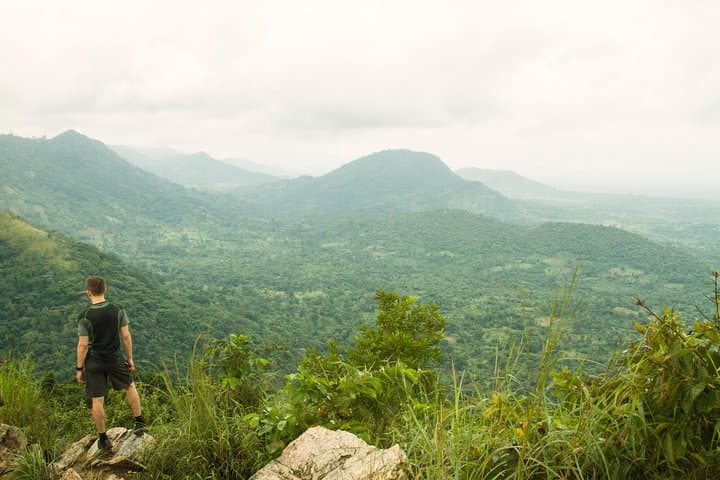
Why go? It’s compact but complete. In a single day you can move from urban Accra to an ecological hotspot, stand beneath one of Ghana’s tallest waterfalls, and trace a trail up to a ridgeline that overlooks the eastern lowlands. The tour is accessible to hikers who are comfortable with sustained walking, and it’s particularly rewarding for travelers who want to pair cultural contact with outdoor time without committing to multi-day logistics.
Practical notes that make the day smoother: start early (departure around 5–6 a.m. typical), wear closed-toe hiking shoes with decent tread, carry 1.5–2 liters of water and electrolyte snacks, and pack a light rain shell—torrential squalls can develop quickly, even during the dry season on higher ridges. Guided entry fees and small community donations are usually included or clearly explained by your tour operator; bring cash for incidental purchases and tips. The private-tour format of this product gives flexibility—if you want a longer waterfall approach or a scenic picnic on a ridge, ask while booking.
Respect for place matters socially and environmentally. Trails pass through community lands and sacred groves; sound and courtesy go a long way. Photography is welcome, but confirm before photographing people, and avoid approaching wildlife. Many local initiatives rely on tourist dollars—buy handmade crafts directly from artisans, and consider tipping your guide for an informative, safe trip.
For the practical-minded: the full outing fits into a long day from Accra—expect 4–5 hours of driving total depending on traffic, with two to four hours of walking depending on chosen stops. The tour is best in the dry months (November–March) for more stable trails and clearer views, though the falls are fuller in the tail end of the rainy season (September–October) if you don’t mind mudier steps.
Ultimately, the Trekking Eco Volta Adventure is a concentrated way to feel Ghana’s eastern hills—the waterfalls that dare you to stand in their spray, the ridgelines that push your lungs a little harder, and the village rhythms that remind you travel is a social exchange. It’s not an expedition; it’s a carefully curated doorway into the Volta’s living landscapes, and it leaves you with tangible impressions: the smell of wet earth, the taste of fresh palm wine (if offered), and a handful of photos that actually look like the place.
If you want a day that balances attainable trekking with cultural insight and a real rainforest payoff, this is the route—efficient, immediate, and responsibly minded. Book early for dry-season slots, and come prepared to trade the city’s static heat for the forest’s living, shifting cool.
Trail wisdom
Small choices, better day.
Start Early
Depart Accra around 5–6 a.m. to avoid mid-day heat and traffic and to maximize time on the trails.
Grip Matters
Wear trail shoes with good tread—wet rocks and root-strewn paths are common near waterfalls.
Hydrate Smart
Carry 1.5–2 liters of water plus electrolytes; humidity raises exertion even on mild ascents.
Support Locals
Bring small cash for community fees, local guides, and craft purchases—this directly benefits conservation and livelihoods.
Local knowledge
Read the place, not just the route.
Watch for native species including Colobus and Mona monkeys (in sanctuaries), A variety of rainforest birds including hornbills and sunbirds.
Keep an eye out for wildlife during the transition between areas and habitats. Respect distance guidelines.
Community-based ecotourism funds trail maintenance and small conservation projects; respect trail restrictions and avoid single-use plastics to reduce impact.
Follow the guide's instructions on size limits, ethical handling, and leave-no-trace practices.
A short walk upstream from the main waterfall for quieter pools. Village craft stalls where artisans make carved drums and hand-dyed textiles
Locally recommended viewpoints and quiet spots known best to local operators.
The Volta highlands have long been home to Ewe communities whose agricultural and forest practices shape local landscapes; sacred groves still protect certain forest patches.
Maritime roots and regional tradition shape the waterways and working coasts.
Seasonal guide
Four versions of the same landscape.
Spring
Best forLush greenery · Fewer tourists
ChallengesOccasional early rains · Muddy trails
Spring (March–May) keeps the hills green with occasional showers—expect softer trails and abundant plant life.
Summer
Best forFuller waterfalls · Dense rainforest foliage
ChallengesHeavy rains (Apr–Oct) · Slippery paths
Summer rains swell waterfalls and make forests vibrant; trails can be muddy and more challenging.
Fall
Best forClearer skies post-rain · Good wildlife visibility
ChallengesVariable weather · Residual trail muddiness early in season
Fall (Sept–Nov) transitions from wet to dry—late rains can still affect footing but views begin to clear.
Winter
Best forDry trails · Easier driving conditions
ChallengesCooler mornings · Limited waterfall volume late in dry season
The dry season (Nov–Mar) offers the most reliable hiking conditions and better visibility.
Operator details
What the booking data adds.
Included
- ✓entrance fees
- ✓Air-conditioned vehicle
- ✓Fuel surcharge
Not included
- —Lunch
Good to know
- ✓Not recommended for travelers with spinal injuries
- ✓Not recommended for pregnant travelers
- ✓Not recommended for travelers with poor cardiovascular health
- ✓Travelers should have a high level of physical fitness
Pack with intention
What to bring.
Good to know
Common questions.
Expect roughly 3.5–5 hours each way depending on traffic and the exact Volta destination—your tour operator will provide pickup details.
Plan the edges
The details that make the day easier.
Mount Afadja (Afadjato) is Ghana’s highest peak at approximately 885 meters, and Wli Falls is widely regarded as the tallest waterfall in Ghana—both are key natural draws in the Volta Region.
After the hike, try local Ewe dishes like banku with fresh fish or fufu with light soup at a village eatery, sample palm wine if offered, and browse small craft stalls for carved drums and hand-dyed textiles.
- Closest airport
- Kotoka International Airport (ACC) in Accra
- Typical drive
- 3.5–5 hours from Accra to Volta highlights
- Cell service
- Generally reliable near towns, patchy on trails
- Permits
- Small local entrance fees often apply; inform operator of dietary needs.
This tour supports community-run sites—pack out trash, avoid single-use plastics, and purchase crafts directly from artisans to ensure income stays local.
Explore by topic
Follow the threads.
Keep exploring
Make the story part of the trip.
Set out from Bass Harbor for a private, customizable day on Blue Hill Bay — lighthouses, puffins, seals, and the chance to feel Acadia from the water. Small groups, local captains, unforgettable views.
In four hours you can move from shaded canyon ferns to wind-scoured coastal ridgelines, guided by someone who knows where the light—and the hidden views—live. This private half-day hike on the Monterey Peninsula or Big Sur is compact, curated, and perfect for travelers who want depth without a multiday commitment.
 Related story
Beneath a sky of shifting light, Skaftafell’s ice reads like a map of time. This three-hour guided glacier hike mixes technical instruction with geology and culture: compact, safe, and unforgettable.