
What the day feels like
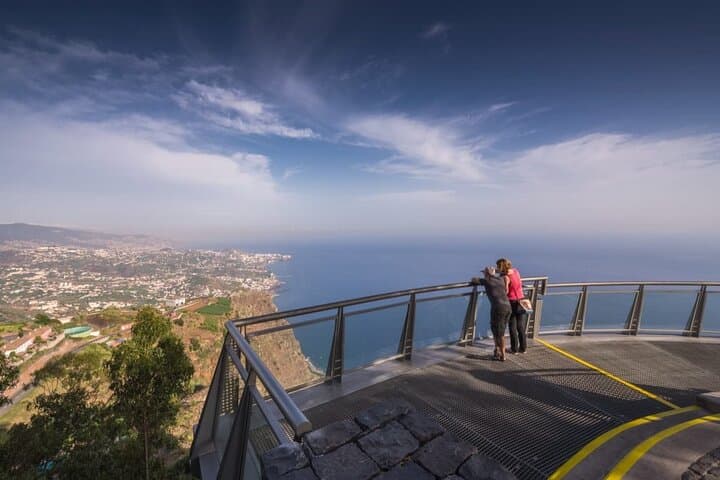
It starts with the wind, the kind that feels older than the town it sweeps through: salty, brisk, and somehow conversational. You climb into a tuk‑tuk in Funchal—small, nimble, and open to the world—and the island broadens in every direction as the driver slides you west along coastal switchbacks. Houses cling like bookmarks to steep terraces, terraced farms fan out in patchwork, and the Atlantic unfurls into a vast, blue argument below. After twenty minutes the road tightens, the air gains a different temperature, and the cliff appears: a sheer wall dropping 580 meters to the sea, crowned by a glass platform that dares you to look down. This is Cabo Girão.
On the A great tuk-tuk adventure Tour at Cabo Girão - Skywalk, the theatrical spectacle is both engineered and elemental. The attraction is the skywalk itself—a cantilevered glass platform that extends from the cliff edge and offers an unmediated view straight down to the ocean. But the ride, the stops, and the smaller sights between Funchal and the cliff make the three‑hour loop feel like a private documentary of Madeira: seaside villages, old levada channels tucked into the mountainside, and viewpoints where local farmers still tend plots carved from rock.
Geology here reads like an ancient manual. Madeira is volcanic—its spine is a succession of lava flows, cooled and folded into complex terraces. Cabo Girão is a remnant of those processes: a volcanic escarpment cut by erosion and the relentless pull of the ocean. From the skywalk the cliff face shows vertical columns and layers—visual echoes of eruptions and time. That geology is practical, too; the fertile terraces you pass were built by human hands to catch and hold soil where gravity and rain would otherwise sweep it away.
Culturally, the coastal villages you glimpse—Câmara de Lobos and its fishing harbor, for example—hold onto a slower rhythm that still defines Madeiran life. Tranquil fishing boats, a hand-built network of stone terraces, and the smell of wood smoke from ovens where bolo do caco (a garlic flatbread) is warmed give the island a tangible flavor. Tuk‑tuk tours are often run by locals who know the roads, the best lookout for late-afternoon light, and where to stop for a quick poncha (the local sugarcane spirit) if you want an authentic sip.
Practically speaking, this tour is accessible. It’s a three‑hour, private drive-and-walk experience—ideal as a half-day outing from Funchal. You’ll spend most time seated in the tuk‑tuk, but there are short walks to viewpoints. The skywalk itself is wheelchair and stroller accessible up to the platform (check with the tour operator for current access notes). Expect wind on the platform; the glass floor can be disorienting for anyone prone to vertigo. For photographers, the changing light along the coast and the unobstructed viewpoints make for a rewarding shoot—bring a polarizer and a wide lens.
Safety is straightforward: the skywalk is secured and engineered to withstand the elements, but common‑sense precautions apply. Keep a hand on the rail if the gusts pick up, wear shoes with grip if you plan to step out to get a low camera angle, and secure loose hats. The tuk‑tuk drivers are practiced on narrow roads and steep grades, but if you’re uneasy with heights you may prefer to ride and look in from the seat rather than step out to the edge.
Beyond the main attraction, the tour opens a few lesser-known windows into island life. Look down from the cliff and you’ll see those vertiginous agricultural terraces and the small farms that still produce sugarcane, bananas, and grapes for Madeira wine. On clear days boats trail white wakes on the horizon below—dolphins and, with luck, migratory whales are common offshore. The whole loop gives a condensed sense of Madeira’s contradictions: rugged, remote coasts and highly cultivated slopes shaped by centuries of human adaptation.
When to go matters. Early morning light softens the cliff and the air is often calmer; late afternoon brings dramatic shadows and sunset at the cliff can feel cinematic. Summer delivers steady skies but crowds; shoulder seasons—April through June or September—offer a quieter experience with pleasant temperatures. For planning, book the three‑hour private tuk‑tuk if you like a personalized pace and flexibility to stop for photos.
What you’ll remember after the glass, the levadas, and the coastal turns isn’t just the view—it’s the way transportation changed the experience. A tuk‑tuk is by design intimate: the landscape feels immediate, the driver’s local knowledge filters into the ride, and the stops are purposeful rather than pass-through. For a traveler short on time, it’s a compact, high‑value way to see what makes Madeira feel like an island stitched together by stone and sea.
If you’re planning this trip, think layers, sun protection, and a sense of curiosity. Keep your camera charged, and let the open design of a tuk‑tuk do the rest: the island’s profile will unfold like a map, and the skywalk will ask you, gently and irrevocably, to step closer to the edge.
Trail wisdom
Small choices, better day.
Layer up for changing winds
Even on sunny days the cliff is exposed—bring a light windbreaker to stay comfortable on the platform.
Book mornings or late afternoons
Early light reduces haze and late afternoons give dramatic shadows and sunset opportunities.
Secure loose gear
The open tuk‑tuk and cliff breezes can send hats and lens caps airborne—use straps and pockets.
Mindful footing on the glass
The skywalk floor is safe but can be slippery when wet—wear grippy shoes.
Local knowledge
Read the place, not just the route.
Watch for native species including Atlantic bottlenose dolphins, Common shearwaters (seabirds).
Keep an eye out for wildlife during the transition between areas and habitats. Respect distance guidelines.
Respect terraces and signs—stick to viewpoints and paths; local agriculture depends on soil stability, so avoid trampling terraces and carry out all trash.
Follow the guide's instructions on size limits, ethical handling, and leave-no-trace practices.
Câmara de Lobos harbor for fresh seafood and photos of traditional boats. Levada do Norte short trailheads near the cliff for a quick levada experience
Locally recommended viewpoints and quiet spots known best to local operators.
Cabo Girão has been a landmark for sailors and local farmers for centuries; its cliffs and terraces were formed by volcanic activity and maintained by traditional agriculture.
Maritime roots and regional tradition shape the waterways and working coasts.
Seasonal guide
Four versions of the same landscape.
Spring
Best forWildflowers · Mild temperatures · Fewer crowds
ChallengesOccasional rain · Variable wind
Spring brings green terraces and comfortable temperatures—perfect for clear views and quieter tours.
Summer
Best forStable weather · Longer daylight · Boat sightings offshore
ChallengesPeak tourist crowds · Stronger sun exposure
Summer offers reliable skies for ocean views but expect more visitors at the skywalk.
Fall
Best forGolden light · Harvest scenes · Milder crowds
ChallengesOccasional Atlantic storms · Shorter days
Autumn light accentuates the cliffs and terraces—ideal for photographers and cooler walks.
Winter
Best forDramatic seas · Lower visitor numbers
ChallengesWind and rain · Reduced visibility
Winter can be dramatic and raw; be prepared for wind and quick weather shifts.
Operator details
What the booking data adds.
Included
- ✓Blanket
- ✓Insurance
- ✓Pick up & drop off anywhere within Funchal
- ✓Local driver/guide
Not included
- —Pick up & drop off outside Funchal (upon request/ additional cost)
- —Tickets for tourist attractions are extra cost
- —Skywalk, glass platform access Fee, 5€ per person
Good to know
- ✓Service animals allowed
- ✓Public transportation options are available nearby
- ✓Suitable for all physical fitness levels
Pack with intention
What to bring.
Good to know
Common questions.
The private tour runs approximately three hours and includes transport from Funchal, guided stops, and the skywalk visit.
Plan the edges
The details that make the day easier.
Cabo Girão’s cliff rises approximately 580 meters above sea level and is one of the highest sea cliffs in Europe—its glass skywalk was installed to showcase the dramatic drop and coastal terraces.
After the skywalk, head down toward Câmara de Lobos for grilled seafood and bolo do caco; sample a poncha at a waterfront bar and watch fishermen mend nets—these small meals and rituals give the island context beyond the view.
- Closest airport
- Cristiano Ronaldo Madeira International Airport (FNC); Driving distance from Funchal: ~20–30 minutes (varies with traffic); Trailhead
- meeting point
- pick-up in Funchal, viewpoint has parking; Cell service: generally available at viewpoints; Permits: none required for the skywalk; Tour type: private, instant confirmation.
The cliff and surrounding terraces are fragile—stay on designated paths, avoid leaving litter, and choose local guides who respect agricultural plots to minimize erosion and community impact.
Explore by topic
Follow the threads.
Keep exploring
Make the story part of the trip.
 Related story
Less than two hours from Nairobi, Kereita Forest pairs hands-on canopy adventure with quiet montane trails and a sobering colonial history—perfect for families, teams, and curious travelers seeking a full-day pulse of nature.
Set out from Bass Harbor for a private, customizable day on Blue Hill Bay — lighthouses, puffins, seals, and the chance to feel Acadia from the water. Small groups, local captains, unforgettable views.
In four hours you can move from shaded canyon ferns to wind-scoured coastal ridgelines, guided by someone who knows where the light—and the hidden views—live. This private half-day hike on the Monterey Peninsula or Big Sur is compact, curated, and perfect for travelers who want depth without a multiday commitment.